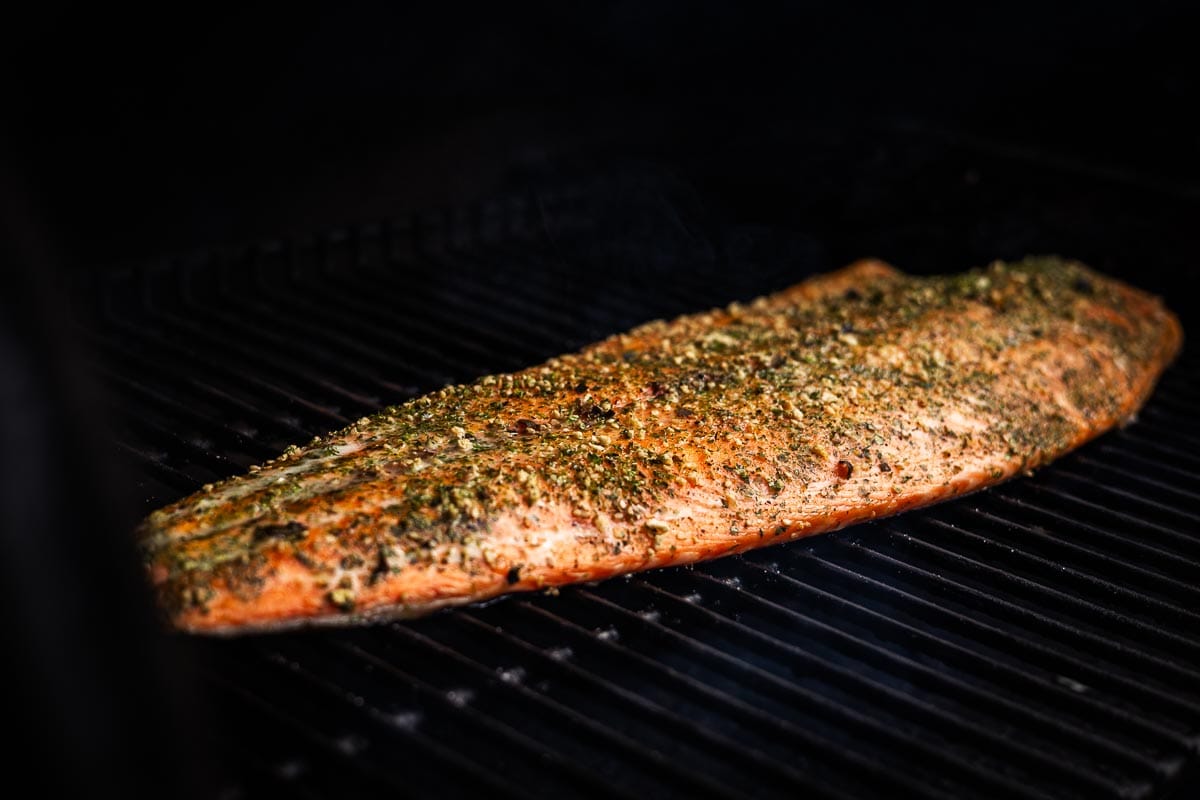
Whenever we have guests over, I love serving a whole side of hot-smoked salmon. It looks impressive on the table and, when cooked properly, tastes phenomenal. In this guide, I’ll show you why smoking salmon slowly at a low temperature makes such a difference. I’m willing to bet many of your guests will never have tasted salmon quite like this.
Disclaimer: This post contains affiliate links. All opinions expressed are personal and honest.
Last updated: June 3, 2026
Cooking salmon may seem fairly straightforward, but it often goes wrong. The result is usually pale, dry, and disappointingly bland. In this guide, I’ll explain how to avoid those mistakes and prepare a juicy side of hot-smoked salmon on your own grill or smoker. Properly cooked leftovers are excellent the next day as well, served cold or at room temperature with fresh bread or in a pasta salad. Ready to get started?
Hot-smoked salmon: direct vs. indirect heat
There is rarely only one correct way to cook something. We often treat personal preferences as hard rules and overlook the advantages of other techniques. That applies to cooking a whole side of salmon on the grill as well. You can use either direct grilling or indirect grilling. Each method has its strengths and suits a different situation. Before explaining why I prefer to hot-smoke a whole side of salmon, let’s take a closer look at both options.

Direct heat: speed, searing, and grill marks
With direct grilling, the salmon sits directly above the heat source. You can learn more about grilling over direct heat in my separate guide. This method works particularly well for thin salmon fillets or whenever you want crisp skin and pronounced grill marks. The intense heat cooks the exterior quickly while the center can remain moist and juicy.
The Maillard reaction adds another layer of flavor as the surface browns, fat renders, and natural sugars caramelize. For some people, crisp salmon skin is almost non-negotiable. The drawback is that direct heat leaves very little room for error. If your fire is too hot or you look away for too long, the salmon can dry out quickly.
Advantages of direct grilling
- Speed: Direct grilling is ideal when you are short on time and want to get dinner on the table quickly.
- Grill marks: High heat produces attractive grill marks while adding extra flavor through browning. A cast-iron sear grate and a good wide spatula can make the job easier.
- Crisp texture: The skin side of the salmon can develop a pleasant, lightly crisp finish.
When to use it: Choose direct heat for thin salmon fillets or smaller portions. It is particularly useful when you want a quick cook with distinct grill marks and plenty of Maillard browning. One practical tip: place the salmon in a fish grilling basket, especially when the bars of your grill grate are spaced far apart.

Indirect heat: even cooking and smoke flavor
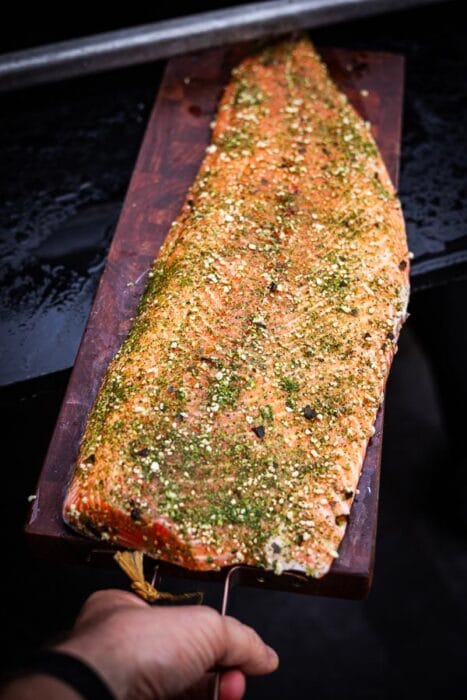
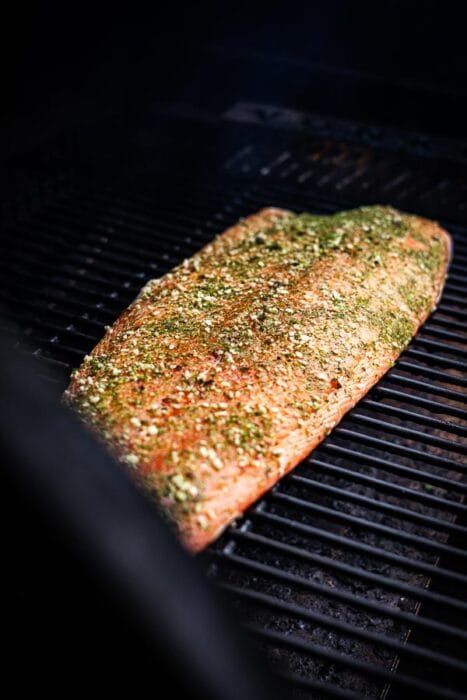
When using indirect heat, the salmon is placed away from the burning charcoal or protected by a heat deflector. This keeps it away from the most intense radiant heat. You can find a more detailed explanation in my guide to indirect grilling. At lower temperatures, this becomes true low-and-slow BBQ. At higher temperatures, we would normally call it roasting. Low-temperature indirect cooking is particularly well suited to larger sides of salmon that need to cook slowly and evenly. It also gives you time to build a subtle smoke flavor with the right smoking wood, although you should not expect crisp skin from this method.
Advantages of indirect cooking
- Even cooking: Indirect heat prevents the outside from overcooking while the thickest part of the salmon is still raw.
- Better moisture retention: Because the heat is gentler, the entire side of salmon stays moist and juicy.
- Smoke flavor: Indirect cooking gives the salmon time to absorb clean wood smoke, providing a different kind of flavor development than the Maillard browning created by direct grilling.
When to use it: Indirect heat is generally the better choice for a large side of salmon that needs to cook evenly from end to end. It is also the method to choose when you want to experiment with different wood-smoke profiles while making hot-smoked salmon.
Are you thinking about buying a kamado grill? You may be wondering whether this low and slow recipe will work on your new kamado. The first answer is simple: yes, provided that you install a plate setter or heat deflector for indirect cooking.

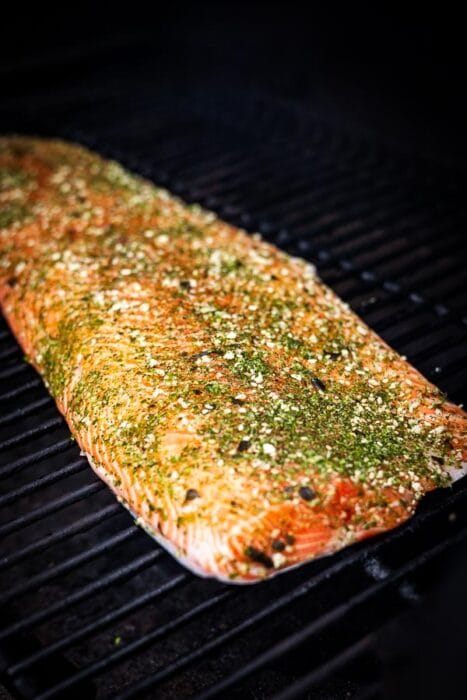
Smoking requires precise temperature control.
If you cook on the grill regularly, the same skill is essential when making our Quick Pulled Pork in six hours, where we use a higher but equally stable cooking temperature.
Internal temperature: the key to juicy salmon
Overcooking is easily the most common mistake people make with salmon. Anyone who thinks they dislike salmon may simply never have tasted it properly cooked. Too often, salmon is left on the heat until it is completely cooked through. What remains is a dry, dull-looking piece of fish with very little flavor and a texture that crumbles slowly in your mouth.
Salmon is naturally rich in fat, and that fat provides much of its flavor and juiciness. Cook the fish too far and the rendered fat is forced out along with much of that flavor. At approximately 55°C (131°F), the proteins begin to contract and set, changing from a softer structure into a firm one—similar to what happens when egg whites cook. That is exactly what you want to avoid if your goal is tender, juicy salmon.
Using a thermometer vs. checking by eye
Fortunately, there are several ways to keep salmon from overcooking. The clearest and most reliable approach is to use an instant-read or probe thermometer. Insert it into the thickest part of the salmon and remove the fish from the grill when it reaches an internal temperature of 50°C (122°F). Let it rest briefly before serving.
You can also get reasonably close without a thermometer by paying attention to what the fish is telling you. As the salmon cooks, small white beads of albumin begin to appear on the surface. You will usually notice them near the tail first because that end is thinner and cooks faster. Press the thick part of the fillet gently. When the salmon begins to separate into moist flakes under light pressure, it is ready.


What is the best wood for hot-smoked salmon?
Several types of smoking wood work well with salmon, but the amount of wood and the duration of the smoke matter just as much as the species. Even a mild wood can produce an unpleasant result if you use too much of it, especially when stale, dirty smoke cannot escape from the grill. Once you have good airflow and a clean-burning fire, you can start exploring the character of different woods. If you are not accustomed to smoked food, begin with a mild, slightly sweet wood such as beech, cherry, or alder.
Smoking Woods for a Whole Side of Salmon
- Beech: Beech wood is often used for smoking fish, including salmon. It produces a mild and subtle smoke that complements the delicate flavor of the fish without overpowering it.
- Oak: Oak wood delivers a stronger smoke flavor than beech. Its robust, earthy character can stand up to the richness of salmon, but it may taste too intense if you are not used to heavily smoked food. Use it sparingly.
- Alder: Alder wood is known for its mild, slightly sweet smoke. It is a classic match for salmon because its subtle character supports the fish instead of covering it up.
- Fruitwood: Fruitwoods such as apple and cherry wood add a gentle sweetness and a light fruity aroma. They pair naturally with salmon and are forgiving enough for anyone smoking fish for the first time.
- Mesquite: Mesquite produces a powerful and distinctive smoke flavor that can easily overwhelm salmon. If you want to use it, dose it carefully. Mesquite is generally better suited to short, hot cooks, such as grilling fish on a wooden grilling plank like the one used for this plank-smoked Salmon (in this case Cedar) or the Mesquite one I’ve used for the plank smoked Cod.
When selecting your smoking wood, consider both your personal preference and the intensity you want to achieve. Beech, alder, apple, and cherry are reliable choices for salmon because they complement the fish without overpowering its natural flavor.


My preferred method for hot-smoked salmon
I am a huge fan of crisp skin on grilled fish, but for a whole side of salmon, I am happy to give it up. Low-temperature indirect cooking is easily my favorite method. I have never eaten salmon with a better combination of flavor and texture. Smoking the fish at a grill temperature of 75°C (167°F) allows the entire side to cook slowly and evenly.
The slow cook also gives the salmon plenty of time to absorb clean smoke. Combined with an internal temperature of 50°C (122°F), that produces an exceptional balance of texture and flavor. The fat renders gently instead of being forced out, keeping the smoked salmon rich and juicy.
At this temperature, the salmon is cooked while the proteins have not yet tightened excessively. The result is a buttery, tender texture that almost melts in your mouth. For me, this is exactly what hot-smoked salmon should be.

Why this hot-smoked salmon Works
Preparing a whole side of hot-smoked salmon is a fantastic way to cook for a group. Smoking it slowly at a low temperature preserves its juiciness while adding a subtle wood-smoke flavor and a buttery texture. The method requires some preparation, but the result—a perfectly cooked, flavorful side of smoked salmon—is well worth it. Use a reliable thermometer and cook the thickest part to an internal temperature of 50°C (122°F) so the salmon retains its natural fat, moisture, and flavor. Have fun!

Hot-smoked salmon side with Furikake
Equipment
- Grill or smoker
- Heat deflector for indirect cooking
- Pellet smoker tube, if using pellets
Ingredients
FOR THE SALMON
- 1 whole skin-on side of salmon approximately 1.5 kg / 3.3 lb
- 2 tablespoons Samasaya Furikake Japanese seasoning
- 1 tablespoon dried dill
- 1 teaspoon nanami togarashi Japanese chili seasoning optional
- Alder wood pellets for the smoker tube or a few chunks of alder smoking wood
FOR THE WET BRINE
- 2 liters / 8½ US cups water
- 100 g / 3.5 oz salt
- 50 g / 1.8 oz sugar
- 4 bay leaves
- A few sprigs of fresh dill
Instructions
PREPARE THE WET BRINE
- Combine the water, salt, sugar, bay leaves, and fresh dill in a large pot or bowl.
- Bring the mixture to a boil and stir until the salt and sugar have completely dissolved. Remove it from the heat and allow the brine to cool completely.
- Place the skin-on side of salmon in the cold brine. Make sure the fish is completely submerged.
- Cover and refrigerate the salmon in the brine for 1 to 2 hours.
DRY AND SEASON THE SALMON
- Carefully remove the salmon from the brine and rinse it briefly under cold running water.
- Pat the salmon thoroughly dry with paper towels and place it skin-side down on a cutting board.
- Season the top evenly with the furikake, dried dill, and nanami togarashi, if using.
PREPARE THE GRILL OR SMOKER
- Set up your grill or smoker for indirect cooking at approximately 75°C / 167°F.
- Fill a pellet smoker tube with alder pellets and light it at one end. Alternatively, add a few chunks of alder wood to the charcoal.
- Allow the wood to burn cleanly before adding the salmon. You want a thin, clean stream of smoke rather than thick white smoke.
HOT-SMOKE THE SALMON
- Lightly grease the grill grate to help prevent sticking.
- Place the seasoned salmon skin-side down on the grill grate, away from direct heat.
- If you are using a pellet smoker tube, place the lit tube at the bottom of the grill or smoker.
- Close the lid and let the salmon smoke and cook slowly.
CHECK THE INTERNAL TEMPERATURE
- Insert a meat thermometer into the thickest part of the salmon.
- Remove the salmon from the grill when it reaches an internal temperature of approximately 50°C / 122°F.
- Keep in mind that the internal temperature may rise slightly while the salmon rests.
- If you do not have a thermometer, gently press the thickest part of the fillet. The salmon is ready when it begins to separate into moist flakes under light pressure. Small white beads of albumin on the surface are another sign that the fish is approaching doneness.
REST THE SALMON
- Let the hot-smoked salmon rest for a few minutes before slicing. This allows the heat to settle and helps preserve its moisture.
SERVE
- Cut the salmon into generous portions and serve it while still warm.
- This hot-smoked side of salmon works well as an appetizer or main course. Serve it with a fresh orzo salad, grilled vegetables, crusty bread, or another light side dish.
Notes
Frequently asked questions about hot-smoked salmon
What makes low-temperature hot-smoked salmon so good?
Smoking salmon indirectly at just 75°C (167°F) allows it to cook slowly and evenly. The fat renders gently without the proteins tightening excessively, producing a pronounced but balanced smoke flavor and a buttery texture. This is The BBQ Bastard’s favorite method for cooking a whole side of salmon.
What is the difference between direct and indirect heat when cooking salmon?
With direct heat, the salmon cooks directly above the charcoal or burners. This is ideal for thin fillets when you want crisp skin and plenty of browning. With indirect heat, the salmon sits away from the fire or behind a heat deflector. This gentler setup is better for large sides of salmon because the center can cook evenly without the exterior drying out.
Why is the internal temperature of hot-smoked salmon so important?
Salmon dries out quickly once it is overcooked. Aim for an internal temperature of 50°C (122°F). At around 55°C (131°F), the proteins begin to contract more firmly, which you can recognize by the white beads of albumin appearing on the surface. As the proteins tighten, moisture and rendered fat are pushed out of the fish.
What is the best smoking wood for hot-smoked salmon?
Choose mild or slightly sweet woods such as alder, beech, apple, or cherry. These woods complement salmon without overpowering its delicate flavor. Use stronger woods such as oak sparingly, and be particularly careful with mesquite because its smoke can become too intense very quickly.