
The best charcoal briquettes are not simply the ones that burn the longest. For low-and-slow barbecue, you want steady heat, a predictable shape and ash that does not choke the fire. For direct grilling, quick ignition and strong heat may matter more. This guide helps you choose the right briquette for a kettle grill, charcoal smoker or compact grill, and explains when lump charcoal is still the better fuel.
Transparency & Affiliate Disclosure: As an Amazon Associate and member of other affiliate programs, I earn from qualifying purchases. If you purchase through links on this site, The BBQ Bastard may earn a small commission at no additional cost to you. All opinions remain completely personal and honest. Product formulas and availability may change, so always refer to current packaging and manufacturer instructions.
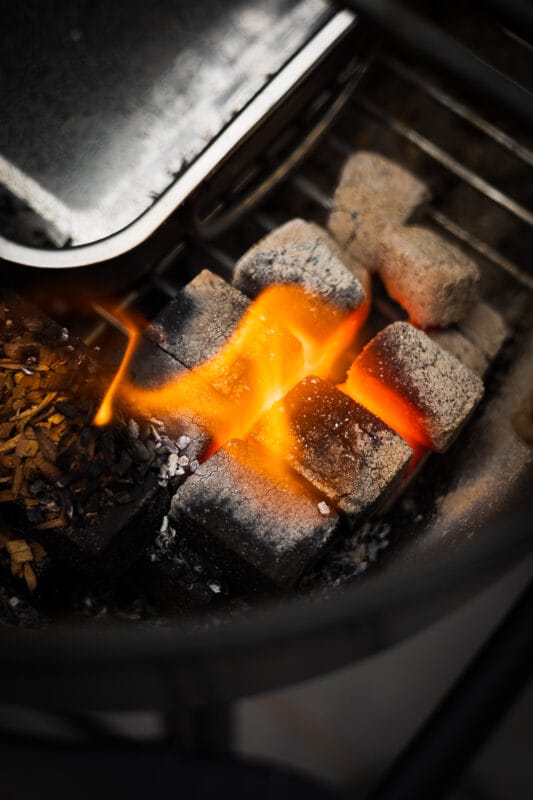
I use briquettes less often than I once did because most of my cooking now happens over live fire, on a pellet grill or in a kamado. When I fire up my Barbecook Magnus kettle, however, I still use the remains of a supply of Flamy coconut briquettes that I bought when I learned they were going off the market. Their compact shape, controlled burn and low ash became my reference point. This guide starts with that real experience, then looks at the products an American griller can actually buy today.
A note for U.S. readers: I am based in Belgium. Some American briquettes in this guide are not consistently available to me locally, so I have not cooked with every current U.S. product myself. Where personal experience ends, I rely on current manufacturer information, published burn tests and recurring feedback from experienced grillers and barbecue communities. I label that distinction throughout the guide instead of presenting second-hand research as my own test.
Best charcoal briquettes at a glance
- Best widely available starting point: Kingsford Original. It lights quickly, is easy to replace almost anywhere in the U.S. and gives you a consistent baseline. Expect more ash than with some premium hardwood briquettes.
- Best research-based choice for long cooks: B&B Competition Oak. A controlled comparison by The Virtual Weber Bullet found that B&B burned longer than Kingsford Original and Franklin briquettes, although Kingsford lit faster and appeared to burn hotter.
- Most relevant coconut option in the U.S.: FOGO Coconut Briquets. They are much closer to the coconut fuel I know from Europe than a standard American pillow briquette, but an independent test also found that their burn time and ash production did not fully match every marketing promise.
- Simple hardwood formulation: Royal Oak 100% All Natural Hardwood Briquets, made from hardwood charcoal and vegetable starch according to the manufacturer.
- Premium large-format option: Jealous Devil Max XL. Its oversized shape may suit long, steady cooks, but larger is not automatically better for a tight snake or a fast sear.
If you want one practical answer: start with Kingsford Original when price and availability matter most, or B&B Competition Oak when you prioritize a longer burn in a kettle or charcoal smoker. Choose FOGO if you specifically want to explore coconut briquettes. The best bag for your grill is the one that holds the temperature you need without producing so much ash that airflow becomes a problem.

What are charcoal briquettes?
Charcoal briquettes are compressed pieces of fuel with a consistent shape and weight. That uniformity is their main advantage. Instead of sorting irregular pieces of lump charcoal, you can count, stack and arrange briquettes in repeatable patterns. This makes them especially useful for the snake method, charcoal baskets and the Minion method.
Not every briquette has the same composition. Traditional American pillow briquettes may combine wood char with other carbon-rich and mineral ingredients plus a binder. All-natural hardwood briquettes are generally made from hardwood charcoal held together with a plant-based starch. Coconut briquettes use carbonized coconut shells and usually a food-grade starch binder. Extruded rods or hexagonal pieces can be made from compressed hardwood charcoal and may have a hole through the center.
A binder is not automatically a defect. Charcoal powder does not hold a briquette shape by itself, so starch is common even in products marketed as natural. Transparency matters more than a vague “chemical-free” slogan. Look for a product that identifies its fuel source, is sold for cooking and provides clear use and storage instructions.

Charcoal briquettes vs. lump charcoal
| Characteristic | Charcoal briquettes | Lump charcoal |
|---|---|---|
| Shape | Uniform and easy to count or stack | Irregular pieces that vary by bag |
| Temperature control | Predictable in repeatable setups | Responsive, but piece size affects airflow |
| Ash | Usually more; the amount varies widely | Usually less mineral ash |
| Best fit | Kettles, bullet smokers, snakes and charcoal baskets | Kamados, fast temperature changes and high-heat grilling |
| Main drawback | Ash can restrict airflow during a long cook | Small fragments and uneven pieces make each load less repeatable |
Choose briquettes when predictable heat and an orderly fire layout matter most. They are ideal for a kettle grill or bullet smoker running at roughly 225–275°F / 107–135°C for several hours. Their uniform size helps one piece ignite the next at a controlled pace.
Choose lump charcoal when fast response, high heat or low ash matter more. I normally use lump in a kamado because it reacts well to fine vent adjustments and does not usually build the same dense bed of ash. Briquettes can work in some kamados, but always follow the cooker manufacturer’s fuel guidance and make sure ash cannot block the air path.
Neither fuel is universally better. The useful question is what you need the fire to do. For a broader look at fuel, airflow, smoke and cooker setup, see my complete low-and-slow BBQ guide.
Coconut briquettes vs. hardwood briquettes
| Characteristic | Coconut briquettes | Hardwood briquettes |
|---|---|---|
| Raw material | Carbonized coconut shells, usually with a starch binder | Charred hardwood, often with vegetable starch |
| Shape | Cubes, flat squares or extruded rods | Usually pillows; some oversized or extruded forms |
| Ignition | Dense products can need more time | Often easier to light in a chimney |
| Burn behavior | Usually steady; quality differs between brands | Predictable, with substantial variation in heat, duration and ash |
| Availability in the U.S. | More limited and often sold at a premium | Widely available at hardware, grocery and big-box stores |
Are coconut briquettes automatically better?
No. Good coconut briquettes can be dense, uniform and mild in aroma, but the category is not a guarantee of low ash or an exceptionally long burn. The Naked Whiz tested FOGO Coconut Briquets and found very high maximum heat, mild smoke and good reusability. The same test rated their burn time lower than expected and measured more ash than lump charcoal, although less than many other coconut products they had tested.
That is a useful reminder: compare products, not just raw materials. A well-made hardwood briquette can outperform a mediocre coconut briquette in the cooker that matters to you.
Are coconut briquettes more sustainable?
Coconut shells are a by-product of the coconut industry, so turning them into fuel can make useful use of a residual material. That alone does not prove that every coconut briquette has the lowest environmental impact. Carbonization, binder, packaging and long-distance transport also matter. A clear origin and composition are more meaningful than a large green claim on the bag.
How to choose good charcoal briquettes
1. Read the composition
Look for a bag that identifies the main charcoal source and any binder. “Natural” is a broad label, not a performance measurement. Hardwood plus vegetable starch is simple and easy to understand, but a more complex traditional briquette can still be safe and useful when it is manufactured specifically as cooking fuel. Avoid mystery fuel with no meaningful product information.
2. Pay attention to ash
Ash is not only a cleanup issue. During a long cook it can collect around the fire and beneath the charcoal grate, reducing the oxygen supply. A grill that starts well and slowly loses temperature may not need more fuel; it may need better airflow. This matters most in compact kettles, bullet smokers and cookers with a small ash area.
3. Match the shape to the fire
Standard pillows and compact cubes are easy to arrange in a snake. Oversized briquettes may burn longer, but fewer pieces fit in the same basket and their large contact surfaces do not always suit a narrow fuse. Rods or hexagonal briquettes with a center channel allow air to move through and around the fuel. In theory, that extra surface and airflow can help ignition and high-heat performance, but density and composition still matter.
Novelty briquettes: shape is not performance
You can even find briquettes pressed into decorative shapes such as skulls. They look great while the charcoal is still visible, but the shape alone tells you very little about burn time, temperature or ash. Unless a direct comparison proves otherwise, treat novelty charcoal as a visual extra. For a controlled snake, a regular pillow or cube is usually easier to stack and dose.

4. Observe smoke and smell during ignition
Charcoal produces smoke while it is lighting. A sharp or unpleasant odor that lingers is a warning sign. Let the fuel establish a clean burn before food goes on the grill. Briquettes are the heat source; if you want a particular smoke profile, add a suitable chunk of smoking wood rather than relying on an unclear aroma from the fuel itself.
5. Compare cost per cook, not only cost per bag
A cheap 16 lb / 7.3 kg bag is not a bargain if much of it becomes dust, produces excessive ash or needs frequent refueling. A premium briquette is not automatically economical either. Note how much fuel you use, how long it holds your target temperature and how much solid charcoal remains. That gives you a much better comparison than price per pound alone.

Best charcoal briquette type for each cooking style
| Cooking style | Practical choice | Why it works |
|---|---|---|
| Low and slow in a kettle | Uniform hardwood or coconut briquettes | Easy to stack in a snake and predictable as the fire travels |
| Bullet or barrel smoker | Long-burning briquettes with manageable ash | Stable heat with fewer refueling interruptions |
| Direct grilling | Fast-lighting briquettes, premium hardwood briquettes or lump | Strong heat and a short startup matter more than maximum duration |
| Snake method | Standard pillows or compact cubes | Consistent contact between pieces gives an orderly burn path |
| Kamado | Usually lump charcoal | Good response to fine vent control and generally less ash |
| Compact tabletop grill | Fuel size specified by the manufacturer | Fit and airflow are critical in a small firebox |
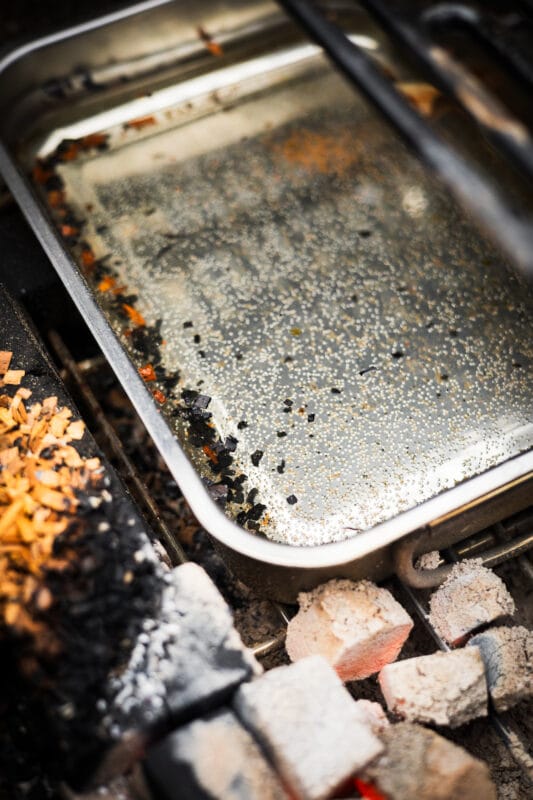
Fire layout matters just as much as the brand. My guide to direct and indirect grilling explains where to place the fuel for each method. If you use a water pan during a long cook, the separate guide on water pans in grills and smokers explains what the pan can—and cannot—do.
The charcoal briquettes I would shortlist in the U.S.
This is not a personal head-to-head ranking. I have not cooked the same meat in the same American grill with all five products. It is a shortlist based on current product information, controlled comparisons where available and recurring recommendations among experienced grillers. I would still test a new bag in my own cooker before trusting it with an overnight brisket.
Kingsford Original: the widely available baseline
Kingsford Original is the practical American reference because it is easy to find, usually competitively priced and designed to light quickly. Kingsford states that the current briquettes use natural ingredients sourced in North America and are ready in about 15 minutes. In the 2022 Virtual Weber Bullet comparison, Kingsford lit faster and appeared to burn hotter than the tested B&B and Franklin briquettes.
The tradeoff is ash and duration. In that same comparison, B&B burned longer. Kingsford is therefore a sensible all-round and budget baseline, especially for burgers, chicken, sausages and shorter kettle cooks. It would not be my automatic first pick when maximum burn time and minimal ash are the priorities.
Looking for reliable, fast-lighting fuel for high-heat grilling and weekday sessions? Kingsford Original delivers predictable heat and consistent performance every single time.
B&B Competition Oak: the long-cook candidate
B&B says its Competition Oak briquettes are made from charred oak held together with vegetable starch. The larger, dense briquette is frequently recommended for smokers and longer kettle sessions. The most useful independent evidence I found is the 2022 burn comparison: B&B took longer to light than Kingsford but burned the longest of the three products tested.
That makes B&B the first American bag I would try for a long snake or Minion setup. It is still not a universal winner. Weather, cooker geometry, vent position and the number of lit starter coals can reverse an apparent advantage in a real cook.
Looking for extreme burn times in your smoker or kettle? These dense, natural oak briquettes burn clean and slow, making them ideal for long Snake or Minion setups.
FOGO Coconut Briquets: the closest U.S. match to my coconut reference
FOGO’s current briquettes are made with coconut shells and plant-derived binders. Their square, dense format is closer to the European coconut cubes I know than a standard pillow briquette. The independent Naked Whiz review found mild smoke, little breakage, excellent maximum heat and good reusability.
The same review gives the product a necessary dose of realism: burn time was only average within the coconut category and ash was still high compared with lump charcoal. FOGO is therefore the American coconut briquette I find most interesting to explore, not a proven replacement for my old Flamy stock.
Royal Oak All Natural: a straightforward hardwood alternative
Royal Oak describes its 100% All Natural Hardwood Briquets as American hardwood charcoal bound with vegetable starch. That simple formulation makes it an interesting alternative for grillers who want the convenience of a pillow briquette without a long list of additional materials.
I would consider it an all-round option for grilling and smoking rather than declare it better than B&B or Kingsford without a current side-by-side test. Regional stock can also change, so local availability may decide whether it is genuinely practical.
Want the uniform shape of a pillow briquette without artificial additives? Made from 100% natural hardwood and vegetable starch, Royal Oak offers a clean-burning, versatile middle ground for both direct grilling and smoking.
Jealous Devil Max XL: premium size, different fire geometry
Jealous Devil says Max XL briquettes are made from South American hardwood without borax, limestone or coal dust. They are roughly twice the size of a standard briquette. A larger piece can be useful when you want a substantial, long-lasting coal bed, but it changes the way the fire fits in a basket or snake.
I would test Max XL for indirect cooking or a broader charcoal basket before using it for a narrow snake. For searing, total lit surface area can matter more than the size of each piece. A premium bag is only worthwhile if its shape matches the way you build your fire.
Twice the size of standard briquettes and made from 100% South American hardwood with zero fillers. Ideal for holding long-lasting heat in charcoal baskets and large indirect setups.
Current specifications: Kingsford Original, B&B Competition Oak, FOGO Coconut Briquets, Royal Oak All Natural and Jealous Devil Max XL. Independent comparisons: 2022 Kingsford, Franklin and B&B burn test and FOGO coconut briquette review.
European briquettes and my Flamy reference
If you are cooking in Europe, or looking to understand the benchmark behind this guide, the briquette landscape looks quite different. Popular European options like EcoBrasa, KOKOKO CUBES, TOM COCOCHA, and Greek Fire focus heavily on dense coconut blocks or extruded logs. While these specialized fuels can be hard to import or find in North America, understanding how they perform provides the baseline for how I evaluate heat stability, burn duration, and ash volume in any bag of charcoal.
Flamy coconut briquettes: the fuel I actually know
Flamy briquettes were dense, square coconut blocks that burned hot and steadily while leaving relatively little ash in my setup. When I learned they would disappear from the market, I deliberately bought extra boxes. I still use the remaining pieces in my Barbecook Magnus. That is the personal experience behind this guide; it is not a current product recommendation because the briquettes are normally no longer available.
TOM COCOCHA: the closest match to Flamy I have used
I have also cooked with TOM COCOCHA coconut briquettes, sometimes listed online as Tom Coco. Of the coconut briquettes I have personally used, these came closest to my old Flamy cubes. They were compact, burned hot and steadily, and left a similarly manageable amount of ash in my setup. This is based on my own cooks rather than a controlled side-by-side test, so I would not claim that both products performed identically.
Searching for high-density coconut fuel? Tom Coco cubes burn exceptionally hot and steady with minimal ash, making them one of the closest matches to classic square coconut blocks.
EcoBrasa Cubes: the most familiar European successor
EcoBrasa coconut briquettes use a compact, solid cube that looks closest to my old Flamy blocks. European grillers regularly praise their steady burn and manageable ash, although community reports suggest that experience can vary between batches. Once my Flamy supply is gone, EcoBrasa is the first European product I want to compare with that old reference. I will judge ignition time, usable duration, temperature stability, odor and remaining ash rather than simply asking which one gets hottest.
KOKOKO CUBES: coconut fuel with an air channel
KOKOKO CUBES are also made from coconut-shell charcoal, but they have a hole through the middle. McBrikett states that the briquettes use tapioca starch as a binder. The center channel exposes more surface to oxygen and lets air pass through a stack. In theory, that may help them ignite more readily or react more strongly with the vents open.
That does not prove they burn hotter or better than a solid cube. Density, composition and fire layout still influence the result. I have not yet tested KOKOKO directly against Flamy or EcoBrasa, so it remains my second European test candidate rather than my winner.


Greek Fire: a hardwood rod, not coconut charcoal
Despite the name, Greek Fire is not a coconut briquette. It is a long extruded hardwood-charcoal rod with a center channel. European retailers and experienced grillers generally describe it as a high-heat, long-burning fuel that needs patience during ignition. Its shape is interesting for a deep charcoal bed or high-heat cooking, but less convenient when you want to build a neat snake from small pieces.
A published European Greek Fire test describes removing individual leftover rods with long tongs and briefly quenching them in water outside the grill. Treat that as a product-specific practice, not a general charcoal method. Hot charcoal, water and steam are a dangerous combination. Never pour water into a hot grill or kamado. For a grill designed to close down, shutting the lid and all vents is the calmer general method.
Why my old Weber experience is not a U.S. verdict
I tried Weber briquettes in Europe several years ago and did not enjoy them. A thick ash shell stayed around the pieces, restricted airflow and allowed part of the fire to fade. Other European grillers reported similar issues, although later tests and product updates have not produced one consistent verdict. Because the current American market and formulations are different, I do not use that experience to judge this or another U.S. product.
My test plan: when my Flamy supply finally runs out, I want to compare EcoBrasa and KOKOKO in Europe. If I can source the relevant products fairly, FOGO Coconut and B&B Competition Oak are the U.S. references I would add. Until that test happens, the recommendations above remain research-based rather than personal winners.


How to light charcoal briquettes cleanly
A chimney starter is the simplest way to light an even batch without lighter fluid. Place a suitable fire starter beneath the chimney, add only the amount of charcoal the cook needs and give it enough airflow. Dense coconut cubes and hardwood rods can need more time than standard American pillow briquettes.
- For direct grilling: pour out the chimney when the upper briquettes are beginning to ash over and the heavy startup smoke has cleared.
- For the snake method: arrange unlit briquettes in a consistent row and use only a small group of fully lit briquettes to start one end.
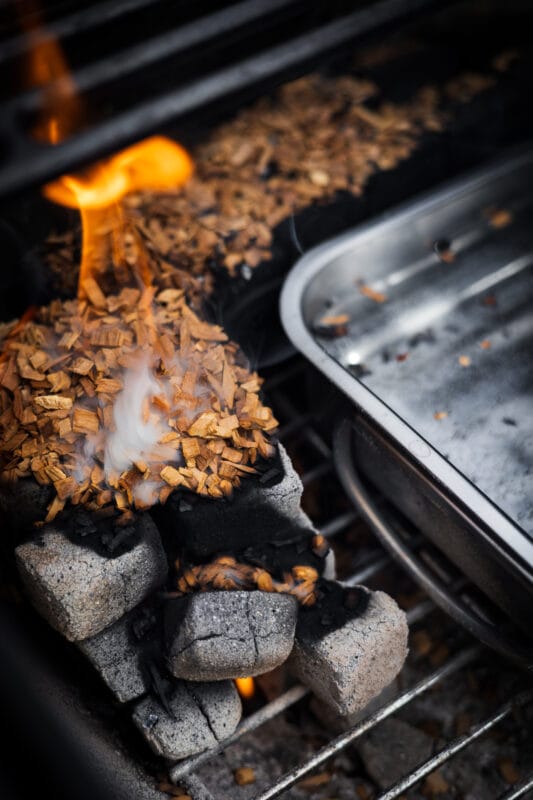
- For the Minion method: place a controlled amount of lit charcoal on or beside the unlit fuel and use the vents to manage how quickly the fire spreads.
- For oversized or extruded fuel: allow more time and open airflow. Break rods only when the manufacturer says that is suitable for the product and your setup.
Do not light a full chimney by habit. For low and slow, a smaller number of lit briquettes gives you time to approach the target instead of fighting an overheated cooker. Once the grill is stable, adjust one vent at a time and wait for the fire to respond.
Skip the lighter fluid entirely. A solid chimney starter gets your briquettes lit faster, cleaner, and more evenly every single time.
How to extinguish, store and reuse briquettes
When the cook is over, close the lid and vents on a grill designed for that method. Starving the fire of oxygen lets it go out gradually. Do not touch, move or store the fuel until the grill and charcoal are completely cold. Solid pieces with enough mass left can be mixed with fresh charcoal during a later cook, although reused briquettes may light more slowly and produce less heat.
Never pour water into a hot charcoal grill or kamado. Sudden steam can burn you and thermal shock can damage parts of the cooker. If the grill cannot be closed down safely, follow its manufacturer instructions and keep hot fuel on a stable, fireproof surface away from people, pets and anything combustible.
Store unused briquettes in a sealed, dry container and keep them off a damp floor. Moisture makes charcoal harder to light and can create more startup smoke. Empty old ash before the next cook so the vents and charcoal grate can supply oxygen freely.

Common charcoal briquette mistakes
| Mistake | What happens | Better approach |
|---|---|---|
| Buying only by price per bag | Dust, ash and extra fuel can erase the saving | Track cost and fuel use per cook |
| Lighting too much charcoal | The cooker overshoots and takes a long time to settle | Start with a controlled amount and build heat gradually |
| Cooking in heavy startup smoke | Harsh aromas can settle on the food | Wait for a stable fire and cleaner smoke |
| Ignoring ash buildup | Airflow drops and the fire fades | Clear the ash area and keep vents unobstructed |
| Changing vents every few minutes | The fire never has time to respond and temperature swings grow | Make one small change, then wait and observe |
| Pouring water into the grill | Steam, splatter and possible thermal damage | Close the vents and let a suitable cooker cool gradually |
Frequently asked questions about charcoal briquettes
What are the best charcoal briquettes?▼
For U.S. grillers, Kingsford Original is the easiest consistent baseline, while B&B Competition Oak is a strong research-based choice for long cooks. FOGO is the most relevant option when you specifically want coconut briquettes. Your cooker and fire layout still determine which performs best.
Are coconut briquettes better than regular charcoal briquettes?▼
Not automatically. Good coconut briquettes can be uniform, hot and mild in aroma, but burn time and ash still vary by product. A quality hardwood briquette may be cheaper, easier to find and better suited to your grill.
Which charcoal briquettes burn the longest?▼
Dense, large hardwood or coconut briquettes often burn longer than quick-lighting standard pillows, but airflow and cooker efficiency matter. In one controlled 2022 comparison, B&B Competition Oak burned longer than Kingsford Original and Franklin briquettes.
Are briquettes good for the snake method?▼
Yes. Their uniform shape is one of the main advantages. Arrange each piece the same way and light only one end so the fire travels slowly through the row. Standard pillows and compact cubes are usually easier to build with than extra-large pieces.
Can I use charcoal briquettes in a kamado?▼
Some kamados can use briquettes, but check the manufacturer’s instructions. I normally choose lump charcoal because it responds well to the restricted airflow and generally leaves less ash to obstruct the fire grate.
How many briquettes do I need?▼
There is no universal count. Grill size, target temperature, wind, outdoor temperature, fire layout and briquette size all matter. Start with the grill and fuel manufacturer’s guidance, then record what works in your own setup.
Do charcoal briquettes expire?▼
Dry briquettes remain usable for a long time. Moisture is the main problem because it makes them harder to light and less predictable. Store the bag in a sealed container, away from rain and damp concrete.
Can I reuse partially burned briquettes?▼
Yes, if they were extinguished safely, are completely cold and still have enough solid mass. Mix them with fresh charcoal because reused pieces may light more slowly and deliver less heat.
Which briquette should I test against my old Flamy stock?
My supply will not last forever. If you have long-term experience with B&B, FOGO Coconut, Kingsford, EcoBrasa or KOKOKO, share what happened in your own grill. Tell me about ignition, steady burn, ash and usable cooking time—not only the highest temperature you saw.
Share your experience in the comments
Follow The BBQ Bastard:


