
In barbecue circles, 203°F (95°C) is often treated as the magic pulled pork temperature. It is also one of the easiest numbers to misunderstand. One pork shoulder may still feel stubbornly tight at that temperature, while another is already falling apart at 198°F (92°C). After cooking dozens of shoulders on kettles, kamados, pellet grills, and bullet smokers, I no longer see one number as a sacred finish line. The thermometer tells you when to pay attention. The pork is truly ready only when a probe slides through the thickest parts with almost no resistance, like warm butter.
This guide explains which internal temperatures matter while smoking pork shoulder, when to wrap, how to measure correctly, and why the rest matters nearly as much as the cook. If you would rather follow a complete recipe, start with my quick pulled pork in about six hours.
Disclosure: This post may contain affiliate links. If you buy through one of these links, I may earn a small commission at no additional cost to you. All experiences and opinions are my own. As an Amazon Associate I earn from qualifying purchases.
What temperature is pulled pork done?
Most pork butts and pork shoulders become easy to pull between 198 and 205°F (92 and 96°C). That is the range where I start checking tenderness seriously. A smaller or particularly tender shoulder may be ready around 198°F (92°C), while a large or stubborn one can need about 208°F (98°C).
If this is your first pork shoulder, it is easy to confuse “the probe goes in fairly easily” with “the probe slides through like warm butter.” The difference sounds small, but it matters. If you think the pork is ready but are not sure, give it another 30 minutes and test it again. As long as the shoulder is wrapped well and you keep an eye on the temperature, that usually gives you better pulled pork than stopping too early.
Quick answer: Most pork shoulders are ready between 198 and 205°F (92 and 96°C). Cook with temperature, but decide by feel. The probe test determines the real finish line.
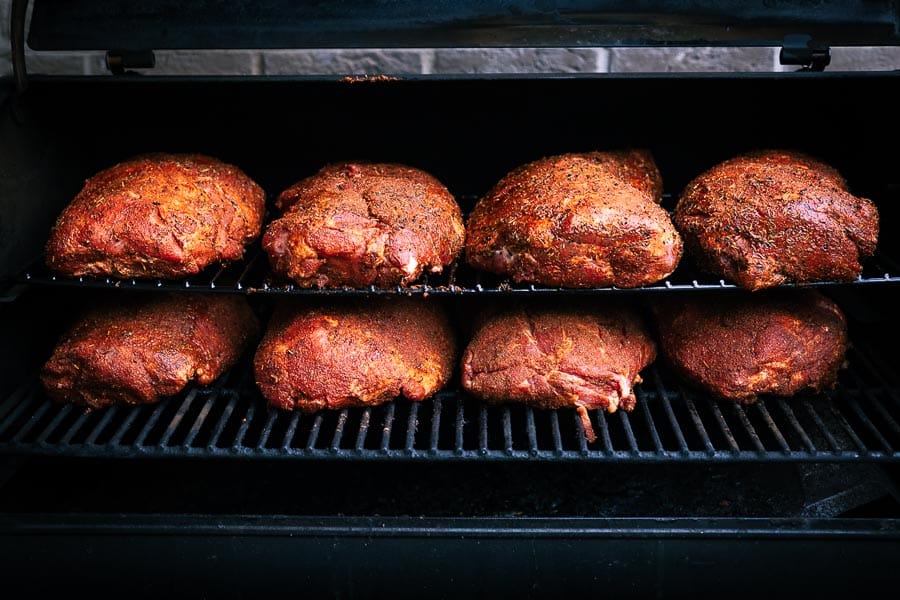
Pulled pork temperature by stage
Internal temperature does more than show how close the pork is to being done. It also helps you understand what is happening during each part of the cook. Treat these ranges as road signs, not rigid deadlines.
| Internal temperature | Stage | What is happening? | What should you do? |
|---|---|---|---|
| Up to about 140°F (60°C) | Early smoke phase | The cool, slightly damp surface takes on smoke readily while the rub begins to set. | Maintain clean smoke and leave the lid closed as much as possible. |
| About 150–170°F (66–77°C) | The stall | Evaporative cooling can slow or temporarily stop the rise in internal temperature. | Wait patiently, or wrap once the bark is properly developed. |
| Usually 160–172°F (71–78°C) | Common wrapping window | The bark should be dark, dry to the touch, and difficult to rub off. | Let the bark make the decision; temperature only identifies the likely window. |
| About 190–198°F (88–92°C) | Approaching the finish | A great deal of connective tissue has softened, but the meat may still resist the probe. | Do not stop automatically. Begin testing around 198°F (92°C). |
| Usually 198–205°F (92–96°C) | Typical finish range | Most shoulders become tender enough to pull cleanly in this range. | Probe several thick areas and decide by feel. |
| Sometimes 205–208°F (96–98°C) | Extended cook | A large or stubborn shoulder may need more time to become fully tender. | Stop as soon as the probe test feels right, then keep the pork wrapped and rest it for at least one hour. |
The stall may begin earlier or later than this chart suggests. There is also no universal temperature at which meat suddenly stops taking on smoke. Surface moisture, airflow, smoke quality, and bark development all play a part.
A reliable instant-read thermometer is one of the most useful tools you can give someone who enjoys low and slow BBQ. If you are comparing thermometers or looking for a broader present, my BBQ gift guide for outdoor cooks contains several practical options.


Safe temperature is not the same as pull-apart temperature
A whole pork roast reaches the USDA safe minimum at 145°F (63°C) followed by a three-minute rest. That is far below the temperature used for pulled pork. You can verify the current guidance in the USDA safe minimum internal temperature chart.
Safety and pull-apart tenderness are different goals. A pork loin or another lean roast can be juicy at its recommended doneness because the muscle fibers have not expelled too much moisture. Keep cooking that same cut, and the fibers tighten while more moisture is pushed out. Pork shoulder can therefore pass through an awkward stage where it is fully cooked but still feels dry and tough.
Keep the goals separate: A juicy pork roast and pull-apart pork shoulder are not aiming for the same texture. Pulled pork usually finishes between 198 and 205°F (92 and 96°C), sometimes closer to 208°F (98°C), but only a successful probe test confirms that the connective tissue has softened enough.
Pork butt, Boston butt, or pork shoulder?
In Belgium, I often cook a neck-end shoulder cut called procureur or spiering. For American readers, pork butt or Boston butt is the closest practical equivalent. All are well-marbled shoulder cuts with enough connective tissue for pulled pork. A picnic shoulder also works, although its shape, skin, and bone structure can change the timing.
Why does pork shoulder need so much time?
Pork butt and pork shoulder contain plenty of connective tissue. During a long cook, collagen gradually converts into gelatin. That process depends on both time and temperature, which is why two shoulders with the same weight and internal temperature may still feel completely different.
Fat renders during the cook and adds flavor and richness, but it cannot compensate for tough connective tissue. A beautifully marbled shoulder may still feel firm at 185°F (85°C). That is not a faulty thermometer; the meat simply needs more time.
As the cook continues, more collagen becomes gelatin. The gelatin cannot force lost water back into the muscle fibers, but it creates a rich, juicy mouthfeel. That is how pork shoulder can begin as a juicy roast, pass through a dry and tough middle stage, and eventually turn into succulent pulled pork. The key is not one high internal temperature. It is the combination of heat, time, fat, gelatin, and a proper rest.


What smoker temperature should you use for pulled pork?
For classic pulled pork, a smoker temperature around 225–275°F (107–135°C) gives you a practical balance of smoke, bark, and cooking time. I vary the temperature intentionally. When I have plenty of time, I often begin around 225°F (107°C) to build smoke flavor and bark. After wrapping, I may raise the pit to about 285°F (140°C) to move the second half along.
If you want the bigger picture behind airflow, clean smoke, and stable indirect heat, read my complete low-and-slow BBQ guide. The setup itself is covered in more detail in my guide to direct vs. indirect grilling.
| Smoker temperature | Advantage | Watch out for | Best use |
|---|---|---|---|
| About 200–225°F (93–107°C) | Plenty of time for smoke and gradual bark development. | The cook can take a very long time, especially through the stall. | A slow start when time is not an issue. |
| About 225–275°F (107–135°C) | A reliable balance of smoke, bark, and cooking time. | You still need a generous time buffer. | The full cook for most pork shoulders. |
| About 275–300°F (135–149°C) | Speeds up the second half without becoming excessively hot. | An unwrapped bark can darken more quickly. | After wrapping or for a deliberately faster cook. |
| About 300–390°F (149–199°C) | Raises the internal temperature quickly. | Less time in smoke, faster moisture loss, and a greater risk of burned sugar. | A controlled hot-and-fast cook, preferably wrapped. |
| Above 390°F (199°C) | Very little relevance for the main cook. | The exterior can burn before the connective tissue becomes tender. | Not recommended for cooking the shoulder from start to finish. |
Once the shoulder is wrapped, raising the smoker to about 285°F (140°C) is perfectly reasonable. Foil or paper protects the surface, and the package prevents much additional smoke from reaching the meat. Finishing in the kitchen oven also works. I still prefer to leave it on the smoker from beginning to end—mostly because I can. 😉
If time is tight, use my six-hour pulled pork method. If you cook on an automatically controlled smoker, my pellet grill guide explains how that system manages heat and smoke.
Why hours per pound only gets you so far
“How long will my 6.6 lb (3 kg) pork shoulder take?” is one of the most common pulled pork questions. The traditional answer is a certain number of hours per pound. That sounds useful, but it is only a rough planning tool.
Thickness, shape, fat content, bone, airflow, weather, smoker temperature, and wrapping time all affect the cook. Two shoulders with the exact same weight may finish hours apart. Build in a generous buffer and aim to finish early. Pulled pork holds and rests well; a tight schedule becomes a problem only when your guests are waiting and the probe still meets resistance.
What is the stall in pulled pork?
The stall is the period when the internal temperature rises very slowly, stays flat, or even drops slightly. It often appears somewhere around 150–170°F (66–77°C), but there is no exact starting point. One shoulder may stall early, another later, and some cooks barely show a flat line at all.
Moisture evaporating from the surface cools the meat, much like sweat cools your skin. The smoker keeps adding energy, but evaporation temporarily carries away nearly as much. In most cases, nothing is wrong with your fire, thermometer, or pork.
- Wait it out: Usually produces the firmest, driest bark, but takes the longest.
- Wrap: Foil or butcher paper reduces evaporation and speeds the shoulder through the stall.
- Raise the smoker temperature: Moving from about 225°F (107°C) to 250–285°F (121–140°C) can shorten the stall without fundamentally changing the method.
Do not wrap automatically when the display reaches 160°F (71°C). Look at the bark first. If it is still pale, wet, or easy to rub off, leave the shoulder uncovered a little longer. The stall tells you that wrapping may become useful; the bark tells you whether the timing is right.


At what temperature should you wrap pork shoulder?
Most pitmasters wrap pork shoulder somewhere around 160–172°F (71–78°C). The better answer is: wrap when the bark has the color and firmness you want. Internal temperature identifies the likely window; the surface determines the exact moment.
| Method | Speed | Bark | What should you know? |
|---|---|---|---|
| Heavy-duty aluminum foil | Fastest | Softest | Traps steam and liquid very effectively and is easy to wrap tightly. Foil can still leak if it tears or the seams are loose. |
| Unwaxed pink butcher paper | Moderate | Firmer than foil | Breathes more than foil and takes a little more care to close tightly. A damaged or loose package can still lose liquid. |
| No wrap | Slowest | Firmest and most pronounced | Takes more time and leaves the surface exposed to evaporation for longer. |
If you choose paper, use food-safe, unwaxed pink butcher paper. Waxed or plastic-coated kraft paper does not belong in the smoker. For a first pork shoulder, heavy-duty aluminum foil remains the simplest option because it is easier to close tightly.
How to measure pulled pork temperature correctly
Insert a leave-in probe into the thickest muscle, away from the bone and large seams of fat. A probe touching the bone can give a misleading reading. A tip sitting in a soft pocket of fat tells you little about the slowest-cooking muscle.
Use the leave-in probe to track progress. Near the end, check several areas with a fast instant-read thermometer such as a Thermapen. You are not only measuring temperature; you are also feeling the resistance as the tip moves through the meat.
Practical check: If two locations differ by several degrees, move the leave-in probe to the cooler, thicker area and follow the cook there. Always check again before removing the pork from the smoker.
The probe test: how do you know pulled pork is truly done?
Begin the probe test around 198°F (92°C). Push a thin probe, skewer, or instant-read thermometer into several thick sections. Properly tender pork should not feel “almost” like soft butter—it should genuinely feel that way. The tip slides through the hot meat without needing a push. A little resistance from the bark is normal; inside, the probe should not spring back, drag, or catch.
- Probe test: The thermometer slides through several thick areas like warm butter.
- Bone check: On a bone-in shoulder, the bone feels loose and usually pulls out cleanly.
- Structure: The shoulder feels flexible but does not completely collapse when you move it.
If one area still gives clear resistance, continue cooking and test again later. Do not blindly add a fixed number of degrees. Beginners often think “slides in easily” means the same as “warm butter,” but there is a real difference. If you suspect the shoulder is done but still have doubts, cook it for another 30 to 60 minutes and repeat the test.
What if pork shoulder is still tough at 203°F?
It simply is not ready yet. Check that the thermometer is positioned correctly, keep the smoker stable, and give the pork more time. Thick, irregular sections often lag behind. Some shoulders do not become fully tender until 205–208°F (96–98°C). If the meat is wrapped securely and the pit is not excessively hot, patience is usually the right answer.
How long should pulled pork rest?
Let pulled pork rest for at least one hour before shredding it. Two hours can be even better for a large shoulder. This is not wasted time. During the rest, the temperature becomes more even, the structure relaxes, and the liquid in the package settles instead of immediately running across your cutting board.
If the pork finishes much too early, briefly open the wrap to stop the internal temperature from climbing too far. Then close the package tightly so liquid cannot escape. Wrap it in a few clean towels and place it in an empty insulated cooler with no ice packs. A low oven is another option.
During a long hold, verify that the pork stays at 140°F (60°C) or above. The USDA identifies the range between 40 and 140°F (4 and 60°C) as the food-safety danger zone. Set a low oven around 150–170°F (65–75°C) if needed, and rely on the temperature inside the meat rather than the oven dial alone. See the USDA guidance on hot holding and the danger zone.
Important: Rest and hold the shoulder while it is still tightly wrapped, and shred it shortly before serving. A whole shoulder retains heat and moisture better than a pan of separated strands. Mix the collected juices back through the pork after pulling.


A water pan can help stabilize temperature and humidity in some smokers, but it does not make the meat juicy by itself. I explain the difference in my guide to using a water pan in a smoker.
Common pulled pork mistakes
Most problems do not come from one wrong number. They happen when a useful guideline is treated as a rigid rule. This table keeps the fixes practical.
| Common mistake | Why it causes trouble | Better approach |
|---|---|---|
| Removing the pork at exactly 203°F (95°C) | Temperature alone cannot tell you whether all the connective tissue is tender. | Begin probing around 198°F (92°C) and decide by the resistance in several areas. |
| Wrapping too early | Steam softens pale or wet bark before it has properly formed. | Wait until the bark is dark, firm, and difficult to rub off. |
| Adjusting the vents after every small temperature change | Constant corrections often create larger peaks and drops. | Watch the trend and accept a stable range instead of chasing one exact number. |
| Placing the probe against bone or in a fat seam | The reading may not represent the slowest-cooking muscle. | Measure in the thickest muscle and check several areas near the end. |
| Treating the stall as a failure | Adding too much heat can dry or burn the exterior. | Wait, wrap, or raise the smoker gradually to about 250–285°F (121–140°C). |
| Leaving no time buffer | Every shoulder cooks differently, and guests do not enjoy waiting for tough pork. | Aim to finish early, then rest and hold the pork safely. |
| Shredding immediately after cooking | The meat loses heat quickly and its liquid escapes before you can mix it back in. | Rest the wrapped shoulder for at least one hour and pull shortly before serving. |
| Spritzing on a fixed schedule | You cool the surface, wash away rub, and delay bark formation. | Spritz only when the surface actually looks too dry, not because a timer says so. |
Conclusion: temperature guides you, but the probe test decides
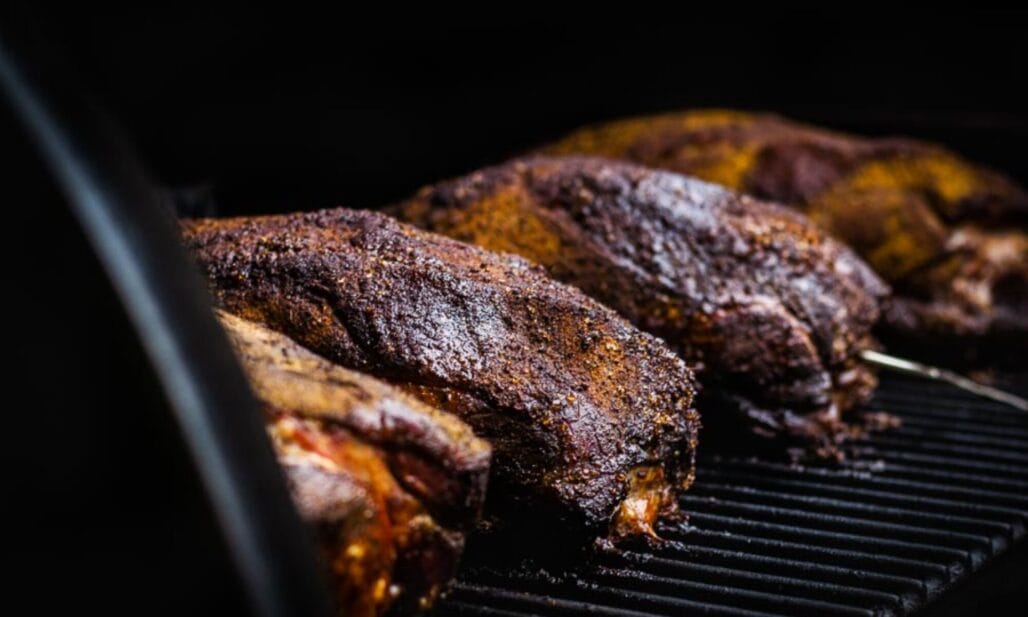
Use 198–205°F (92–96°C) as the normal checking range, but accept that a stubborn shoulder may need to reach 208°F (98°C). Remove it from the smoker only when the probe truly slides through the thickest parts like warm butter. Then keep the pork wrapped and rest it for at least one hour.
That is less tidy than saying “always stop at 203°F,” but it is also the approach that works across different cuts, cookers, and weather conditions. The thermometer gives you direction. Experience begins when you learn to feel what the meat is telling you.
Did this guide help? Share it with a barbecue friend, save it on Pinterest, or tell me in the comments at what temperature your pork shoulder finally passed the probe test. Your experience may help the next pitmaster staring doubtfully at a thermometer.
Enjoy the fire!
Frequently asked questions about pulled pork temperature
Is pulled pork always done at 203°F?
No. Most shoulders finish somewhere between 198 and 205°F (92 and 96°C), but some need about 208°F (98°C). Begin the probe test around 198°F (92°C) and stop only when the thermometer slides through several thick areas like warm butter.
Can I smoke pulled pork at 225°F?
Yes. A pit temperature of 225°F (107°C) is a classic low-and-slow setting. Expect a long cook and leave plenty of margin. After the smoke phase or once the pork is wrapped, you can raise the smoker to about 250–285°F (121–140°C).
Do you have to wrap pulled pork?
No. Leaving the shoulder unwrapped usually creates a firmer bark, but takes longer. Foil speeds the cook the most and softens the bark. Butcher paper falls between the two.
Can you overcook pulled pork?
Yes. Pork shoulder is forgiving, not indestructible. Continuing long after the meat is already probe-tender causes additional moisture loss and can make the texture dry or mushy.
Why is my pulled pork dry?
Possible causes include an unusually lean shoulder, cooking too long, liquid leaking from the wrap, holding the pork too hot, or shredding it too early. Mix the collected juices back into the meat and serve soon after pulling.
What temperature should reheated pulled pork reach?
Cool leftovers promptly and store them airtight with some of the collected juices. Reheat the pork covered until it reaches 165°F (74°C), following USDA leftovers guidance. My favorite finish is a quick sear in a cast-iron skillet with a generous knob of butter. The extra Maillard browning creates crisp edges and even more flavor.
Does bone-in or boneless pork shoulder cook differently?
Both work. A bone gives you one additional physical tenderness check, but it is not required for juicy pulled pork. Shape and thickness often affect cooking time more than the presence of a bone.
How much pulled pork should I plan per person?
For a main course, plan on roughly 5–7 oz (150–200 g) of cooked pulled pork per adult, depending on the buns and side dishes. Raw pork shoulder loses weight through trimming, rendered fat, and moisture loss, so buy more than the final amount you intend to serve.
Serving pulled pork as smaller party bites? Try it in homemade steamed bao buns with a little slaw. Use less meat per bun than you would for a full sandwich.
