
When the sun is shining and the air is filled with the scent of charcoal, you know it’s time to fire up the grill. And what is a backyard cookout without juicy, perfectly cooked BBQ ribs? In this blog post, we’ll walk you through five different ways to prepare ribs on the smoker or grill, so you can become the pitmaster everyone is talking about. There are several methods for cooking ribs, depending on your available time, flavor preferences, and the texture you are aiming for. With this post, I want to inspire you to try a different technique than your usual routine. Each method has its own distinct advantages. It’s hard to point to one single “best” method, so experiment and find the one that delivers your favorite results!
Disclaimer: This post may contain affiliate links. All opinions expressed are personal and genuine.
1. Direct grilling
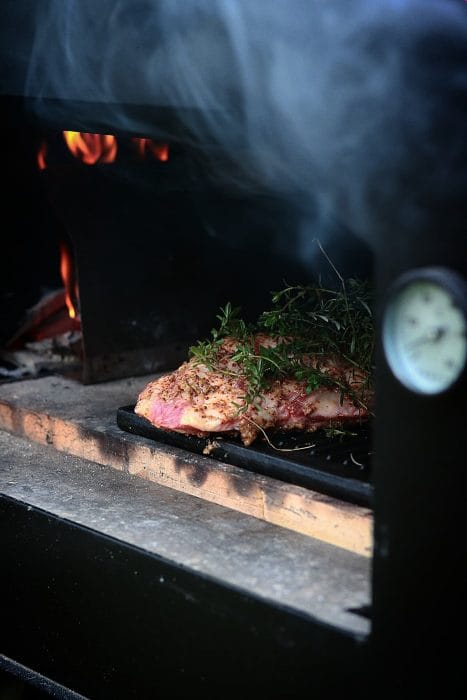
Direct grilling is one of the most common methods for preparing BBQ ribs in Belgium and the Netherlands. This technique is incredibly fast and straightforward, as the ribs are placed directly over hot coals, resulting in a short cooking time of about 10 to 15 minutes per side. Despite the popularity of this method, hot and fast direct grilling has a few downsides. The biggest issue is that the meat often doesn’t get enough time to truly tenderize because it is rapidly exposed to high heat. This can result in tough, chewy ribs that lack the deep, rich flavor developed during a slow cook.
To get better results with direct grilling, there are a few pitmaster tricks you can apply. First, always marinate the ribs beforehand to inject extra flavor and help tenderize the meat. Use an acid-based marinade—incorporating ingredients like lemon juice or apple cider vinegar—to break down the tough fibers. Additionally, you can briefly sear the ribs over direct heat to build a nice crust, and then move them to indirect heat to finish cooking. Just slide the ribs over to the cooler zone of your BBQ once they have the color you want. Close the lid to trap the heat and let the ribs coast for another 20 to 30 minutes. By using this hybrid approach, you get the speed and char of direct grilling alongside the tenderness that indirect heat provides.
Direct grilling technique (Quick summary):
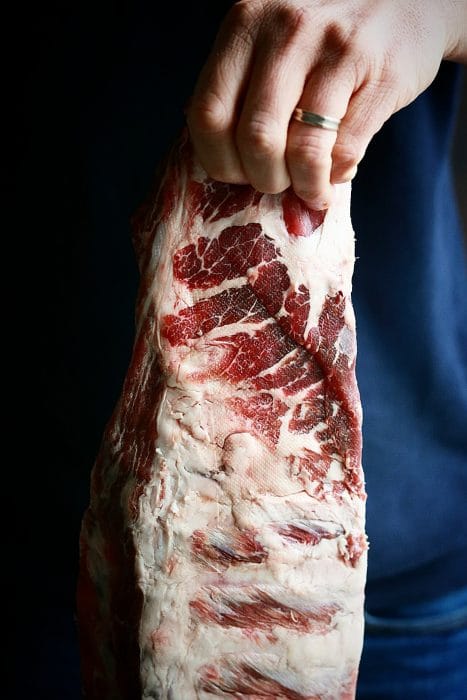
- Remove the membrane (silverskin) from the back of the ribs.
- Soak in an acid-based marinade for 4 to 12 hours to tenderize the meat.
- Grill the ribs directly over the coals for 10 to 15 minutes per side.
- Move away from the direct fire and let the ribs rest or finish cooking indirectly for another 20 to 30 minutes.

| Pros | Cons |
| Fastest method Can be done on any type of grill Requires very few steps | Less control over the final result Firmer texture, higher chance of tough meat Minimal smoke flavor in the end product Higher risk of burning the ribs |
2. The Easterwood method for BBQ ribs (Hot and fast ribs)
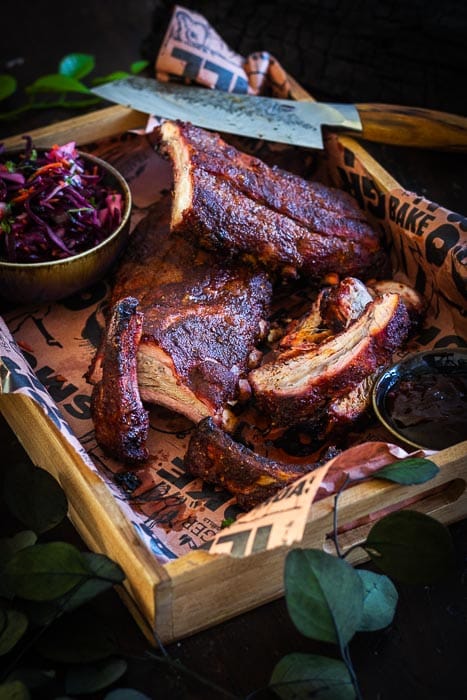
The Easterwood method is named after Frits from Easterwood BBQ, who popularized this hot-and-fast technique in the Dutch barbecue scene. It became famous in 2010 when Frits won a regional BBQ competition by cooking ribs at a higher temperature to beat a strict time limit. Unlike the classic Low and Slow technique—where ribs smoke for hours at low temps—the Easterwood method utilizes a faster cook at a higher temperature (you can read more about it on Noskos’ blog). The ribs are cooked indirectly at around 160°C (320°F), bringing the total cook time down to just 1.5 to 2 hours (for baby back ribs). This is perfect for backyard cooks who are short on time but still want to serve tender, flavorful barbecue. Pro tip: When using this technique, it’s best to use a dry rub with lower sugar content. If your favorite rub is heavy on sugar, drop your grill temperature to 140°C (285°F) to prevent the sugars from burning and turning bitter.
The Easterwood method is a fantastic middle ground between indirect Low and Slow smoking and the rapid pace of direct grilling. While the texture of the ribs differs slightly from the slower methods, they remain incredibly juicy and packed with flavor. Unlike the 3-2-1 method, this technique leaves a beautiful “bite” to the meat—it pulls away cleanly from the bone without turning to mush. The higher temperature ensures the ribs cook faster, while the indirect setup still allows them to absorb a great smoky profile. If you are cooking thicker, meatier spare ribs, you can either bump the temperature up slightly to 175°C (350°F) or simply plan for a longer cook time.
Easterwood method (quick summary):
- Remove the membrane (silverskin) from the ribs.
- Apply a dry rub for flavor and let the ribs sweat for about 30 minutes.
- Preheat your smoker or BBQ to 160°C (320°F).
- Cook the ribs indirectly for 1.5 to 2 hours.
- If desired, brush the ribs with a glaze or BBQ sauce during the last 30 minutes.
- Let the ribs rest for 10 to 15 minutes before slicing and serving.


| Pros | Cons |
| Relatively quick cook time Excellent control over the final texture Perfect bite with clean pull from the bone Beautiful bark formation Solid smoke profile Very hands-off once on the cooker | Less ideal for heavy sugar rubs (can burn) A grill with a lid is absolutely necessary |
3. The low and slow method
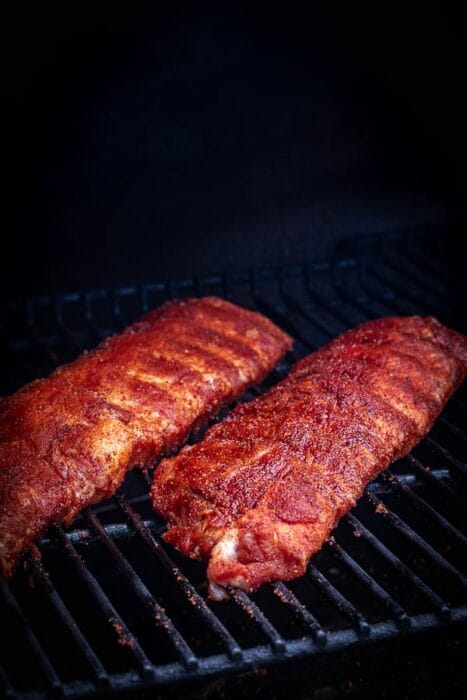
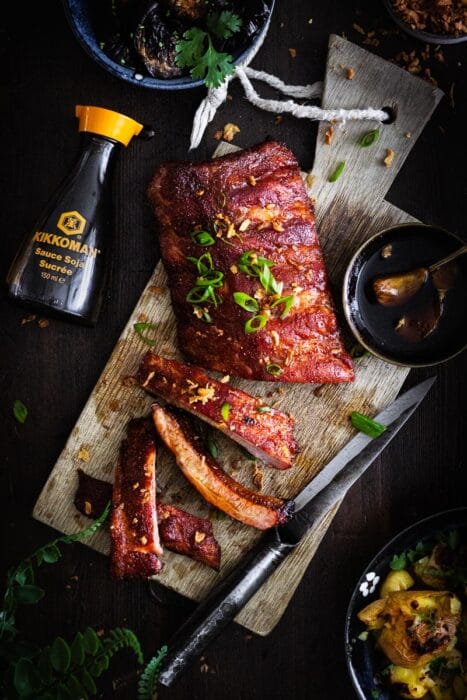
The Low and Slow method is the holy grail of traditional barbecue. It’s all about patience, steady fire management, and low temperatures. With this technique, you smoke the ribs over indirect heat at around 110-120°C (230-250°F). The entire process can take several hours—usually between 3 and 6 hours, depending on the thickness of the meat. During this long cook, the tough connective tissues slowly render down and break apart, resulting in incredibly tender ribs that practically melt in your mouth. For that authentic BBQ joint flavor, throw some wood chunks on the hot coals—woods like oak, hickory, or apple pair perfectly with pork and deliver a deep, mahogany smoke ring.
While this method demands time and a watchful eye, the payoff is a rich, smoky flavor profile that hot-and-fast techniques just can’t replicate. Maintaining a steady temperature can be a bit of a learning curve, especially on a classic charcoal kettle grill. Needless to say, a lid is mandatory! But with good fire management and a little patience, the Low and Slow method yields a feast that your guests will be talking about long after the fire burns out. If your ultimate goal is max juiciness and ribs that literally fall off the bone, I highly recommend looking at the 3-2-1 method below.
Low and slow (quick summary):
- Remove the membrane (silverskin).
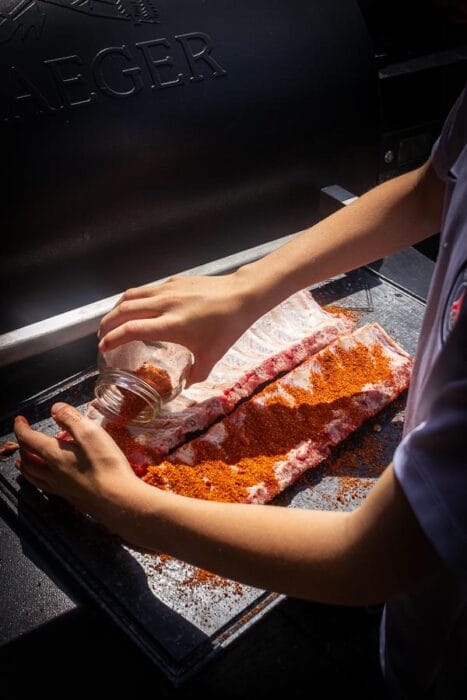
- Apply a generous coat of your favorite dry rub.
- Smoke the ribs indirectly at 110-120°C (230-250°F) for 3 to 4 hours.
- Add smoking wood chunks or chips for authentic BBQ flavor.
- Rest the ribs for 10 to 15 minutes before slicing.
| Pros | Cons |
| Great control over the final cook Excellent bark formation Incredible smoke flavor profile Very hands-off once the temps are dialed in Allows you to showcase your pitmaster skills | A grill with a lid is mandatory Higher chance of drying the meat out if not monitored Slow method requires patience and time management |
4. 3-2-1 method / Texas Crutch for BBQ ribs
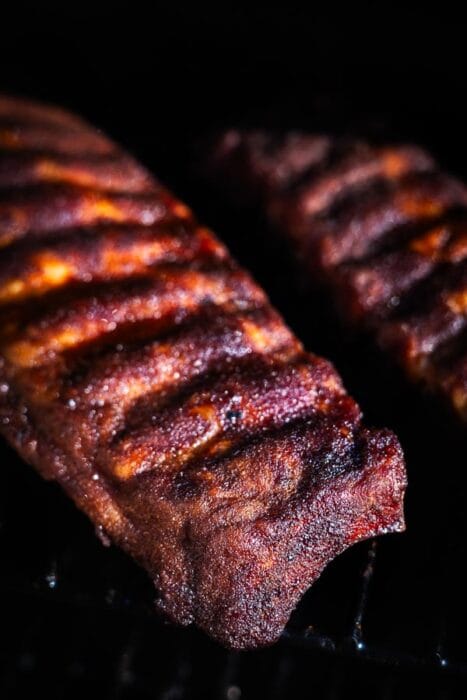
The 3-2-1 method is an incredibly popular technique, especially tailored for heavy, meaty spare ribs. The name lays out the game plan: 3 hours of smoking, 2 hours of wrapped steaming, and 1 hour to set the sauce. During the first phase, the ribs are smoked indirectly at a low temperature of around 110-120°C (230-250°F), building a deep smoke ring and solid bark.
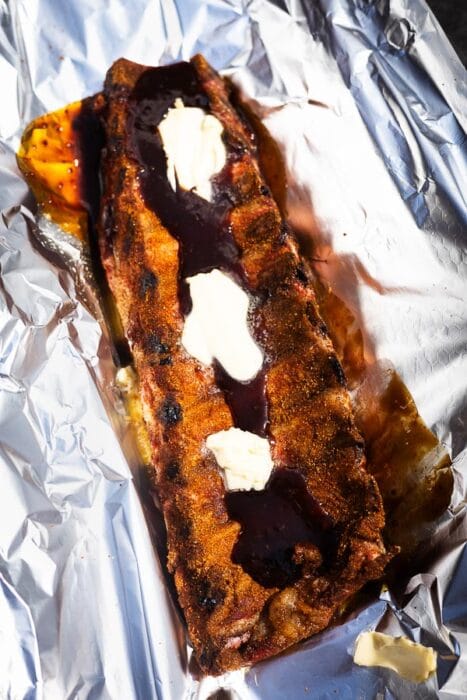
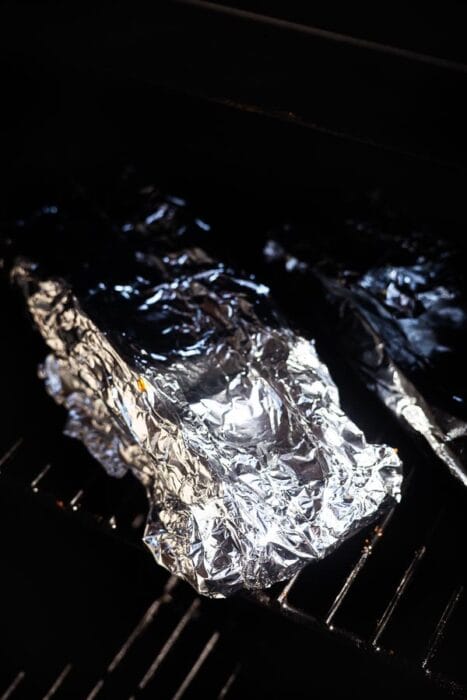
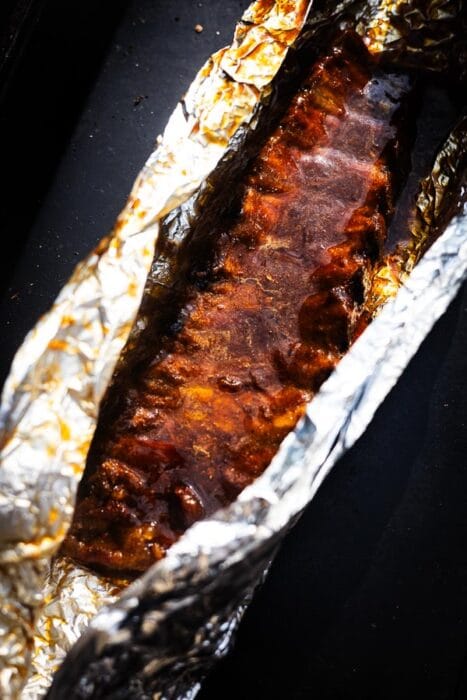
Next, you wrap the ribs tightly in aluminum foil (also known as the Texas Crutch) along with a splash of liquid—usually apple juice, cider, or beer. This two-hour braising phase essentially steams the meat, rapidly breaking down connective tissues and injecting moisture. Finally, you unwrap the ribs, brush them down with your favorite BBQ sauce, and throw them back on the smoker for one final hour to let the glaze caramelize and get beautifully sticky.
This specific timeline is perfect for thick spare ribs, as the extended braise ensures every bit of fat and tissue is rendered out. However, if you are cooking thinner baby back ribs, a full 3-2-1 will turn them to literal mush. For baby backs, you’ll want to modify the timeline to roughly 1.5 hours smoking, 1 hour wrapped, and 30 minutes to set the sauce, avoiding overcooked meat. The 3-2-1 method strikes a fantastic balance between smoke, extreme tenderness, and a sweet, tacky finish, making it a favorite for backyard cooks everywhere. It is, without a doubt, the ultimate method if you belong to the “fall-off-the-bone” fan club!
3-2-1 Method (Quick Summary):
- Remove the membrane (silverskin).
- Apply your dry rub.
- Smoke indirectly at 110-120°C (230-250°F) for 3 hours.
- Wrap tightly in foil with a splash of liquid and cook for 2 hours.
- Unwrap, glaze with BBQ sauce, and smoke for 1 final hour.
- For baby back ribs, modify the times: 1.5 hours smoking, 1 hour wrapped, 30 minutes glazed.
| Pros | Cons |
| Perfect for folks who love tender, fall-off-the-bone ribs Excellent smoke flavor Incredibly juicy result Basically foolproof (but –>) | Requires a grill with a lid Slow cooking process requires patience Involves multiple hands-on steps Requires a good grasp of timing depending on the cut to avoid mushy meat |
5. The foil boat method for BBQ ribs
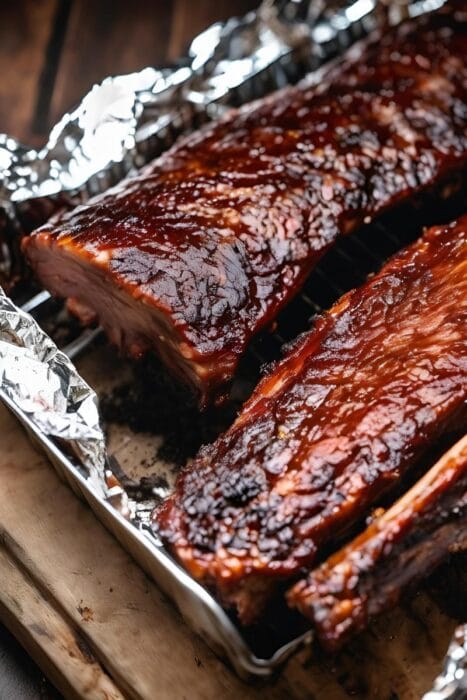
The Foil Boat method is an interesting technique designed primarily to protect the underside of the ribs from drying out due to radiant heat coming from below. Just as the name implies, you craft a small “boat” out of heavy-duty aluminum foil that perfectly hugs the bottom and sides of the rack, leaving the top fully exposed. You place this foil boat directly onto the smoker grates. While you don’t inherently need to add liquid, splashing in a bit of apple juice or beer can help keep the cooking environment humid. The foil boat catches rendering fats and juices, acting as a shield for the meat against harsh heat while technically braising the bottom.
The other big selling point of the Foil Boat method is that it leaves the top of the ribs completely exposed, aiming to protect and develop the bark. However, experiments by fellow creators like Pitmaster X have shown that when done at low temperatures, this method can actually backfire: the ribs developed less bark and ended up with a slightly mushy, unappealing texture. While some cooks swear by the juiciness it provides, the results can clearly be a mixed bag. It’s highly likely that the Foil Boat thrives at hotter temperatures—perhaps combined with the hot-and-fast Easterwood method? If you’re an adventurous cook looking to tinker with new BBQ techniques, it’s definitely worth a test run on your own pit!
Foil boat method (quick summary):
- Remove the membrane (silverskin).
- Apply your dry rub.
- Place the rack in an open aluminum foil boat to prevent drying, adding optional liquid to the base.
- Smoke indirectly at 110-120°C (230-250°F) for 2 to 3 hours.
- Rest the meat for 10 to 15 minutes before carving.
| Pros | Cons |
| Decent smoke flavor Juicy results Foolproof execution Relatively fast cook time Lower risk of burning the bottom | Can yield a strange texture Poor bark development on top Slightly flatter flavor profile Smoke penetration can be inconsistent |
Which BBQ rib technique will you choose?
Every method for preparing ribs on the BBQ comes with its own unique benefits. The direct grilling method is by far the fastest and a solid backup if you’re racing the clock. But if you have a little extra time and a grill with a lid, I will always recommend the slower, indirect cooking methods. My personal favorite is the Easterwood method—it leaves the meat with a fantastic bite, yields massive flavor, and avoids the hassle of messing with aluminum foil. However, the 3-2-1 method, which produces those butter-soft, fall-off-the-bone ribs, is a guaranteed crowd-pleaser and the perfect choice to impress guests who might be less familiar with true backyard barbecue!
Ultimately, you need to test them out for yourself to see which texture and flavor profile hits the mark for you. Which technique is calling your name? Give them all a shot and discover what works best on your pit. Share your experiences and let me know in the comments below or hit me up on social media to tell me which method has become your go-to!
By sharing this article with your fellow pitmasters or by browsing through my other BBQ recipes, you are massively supporting my BBQ blog. You have my eternal gratitude in return! 🔥
Frequently Asked Questions About Cooking BBQ Ribs
What are the most important methods to prepare BBQ ribs?
The primary methods for preparing BBQ ribs discussed in this article are Direct Grilling, the Easterwood method, Low and Slow smoking, the 3-2-1 method, and the Foil Boat method.
What is direct grilling and what are it’s advantages and limitation?
The direct grilling technique involves placing the ribs directly over hot coals, yielding rapid results—usually within 10 to 15 minutes per side. It is incredibly simple and fast, but it can result in tough, less juicy ribs because the meat doesn’t get enough time to slowly tenderize. The major advantage is speed and simplicity; the drawback is a lack of control over tenderness and texture.
What is the Easterwood method and what are the advantages?
The Easterwood method uses a higher indirect cooking temperature of around 160°C (320°F) to fully cook ribs in just 1.5 to 2 hours, making it much faster than standard Low and Slow smoking. The result is juicy, flavorful ribs with a great smoke profile that retain a satisfying “bite” rather than completely falling off the bone. It’s less time-consuming and perfect for pitmasters who want excellent ribs quickly.
What is low and slow cooking and why is it referred to as the classic BBQ ribs method?
Low and Slow is the traditional technique where ribs are smoked over indirect heat at 110-120°C (230-250°F) for anywhere from 3 to 6 hours. This long process breaks down tough connective tissues and renders fat, resulting in incredibly tender meat that practically melts off the bone. While it takes patience and time management, it delivers a deep smoke ring and unmatched texture, making it the gold standard of traditional barbecue.
Why are 321 ribs so popular?
The 3-2-1 method is broken down into three phases: smoking for 3 hours, wrapping in foil with liquid to steam for 2 hours, and finishing unwrapped with sauce for 1 hour. This technique is wildly popular because it creates ultra-tender, sticky, “fall-off-the-bone” ribs with a rich, caramelized bark, making it especially perfect for thick, meaty spare ribs.


