
These Asian-inspired grilled baby cuttlefish are the exact kind of bite I crave on the first warm day of spring: bright with makrut lime leaves, gently spiced with Nanami Togarashi, and finished with a touch of cherry wood smoke. Perfect beside a cold glass of white wine. My initial plan to grill them was delayed due to an unexpected recovery period, but thankfully, frozen baby cuttlefish are available year-round. There’s no need to wait for perfect weather to bring these live-fire flavors to the table.
Disclaimer: This post contains affiliate links. As an Amazon Associate, I earn from qualifying purchases. This comes at no additional cost to you. All opinions remain personal and honest.
How to grill baby cuttlefish:
Quick answer: Thaw the baby cuttlefish completely, drain away all liquid and pat them thoroughly dry. Preheat a cast-iron skillet over high direct heat until it is extremely hot. Cook the cuttlefish in a single, uncrowded layer for 2 to 3 minutes. Carefully pour off excess liquid if necessary. This short, intense cook gives the exterior some color while keeping the cuttlefish pleasantly tender.
The most important choice is not the seasoning—it is how you manage heat and moisture. A lukewarm or crowded skillet makes the cuttlefish steam in its own juices. By the time the surface begins to brown, the texture may already be rubbery. Dry seafood, a fully preheated pan and small batches give you far more control.
If you are building confidence with fish and seafood over fire, start with my complete guide to grilling fish without sticking or drying it out. It explains when grates, a plancha, cast iron or a wooden plank make the most sense.
What is cuttlefish, and is it the same as squid?
Sepia is the culinary name often used for cuttlefish. Cuttlefish, squid and octopus are all cephalopods, but they are not the same animal. Small cleaned cuttlefish may be sold as baby cuttlefish, mini cuttlefish or simply sepia. Those compact little pieces are the right choice for this recipe.
Cuttlefish, squid and octopus compared
| Seafood | How to recognize it | Useful grilling approach |
|---|---|---|
| Cuttlefish or sepia | A broad, compact body with an internal cuttlebone. | Cook very briefly over intense heat, or choose a completely different long, gentle braise. |
| Squid | A more elongated body with visible fins; often sold as tubes and tentacles. | Grill or sear quickly. Larger pieces work well directly on a plancha. |
| Octopus | Eight arms and no elongated tube-shaped body. | Tenderize first, then finish briefly over high heat for color and char. |
For that third method, see my grilled octopus with smoky puttanesca sauce. The octopus becomes tender before it ever reaches the high-heat finishing stage.
How to thaw and prepare baby cuttlefish
Frozen baby cuttlefish work perfectly well here. Let them thaw completely in the refrigerator, drain them and inspect each piece. Even when they are sold cleaned, check the cavity for any hard fragments or remaining membrane. Pat both the outside and the cavity dry with paper towels.
- Thaw completely: Partly frozen cuttlefish will immediately cool the skillet.
- Dry thoroughly: Surface water must evaporate before browning can begin.
- Season at the last moment: Salt can pull additional moisture to the surface.
- Work in batches: Leave enough space for steam to escape quickly.

Why baby cuttlefish should cook hot and fast
For this version, I deliberately choose the hot-and-fast route. Place the skillet on the grill while it preheats, giving the cast iron enough time to store plenty of energy. The cuttlefish should sizzle clearly as soon as it touches the pan. For these small pieces, 2 to 3 minutes is usually enough.
If you use an infrared thermometer, a skillet surface around 450°F (230°C) or slightly hotter is a useful target. Treat that number as a practical indication rather than a rigid rule: the size of the cuttlefish, the amount in the pan and the heat retained by your skillet all matter. Light browning and a tender but springy bite tell you more than the clock alone.
If the cuttlefish releases a puddle of liquid, carefully pour it away. Otherwise, the skillet temperature drops and the seafood begins to simmer instead of sear. Let the empty pan recover its heat before adding the next batch.
If you are choosing a pan for cooks like this, my cast-iron skillet buying guide explains which size, weight and handle design work best beneath a grill lid. Or you can just head over to Amazon and watch the selection of skillets available!
Cherry smoke, makrut lime and Nanami Togarashi
I wanted to keep the flavor profile focused. First, fry the makrut lime leaves briefly in sunflower oil so their aroma perfumes the oil. Add one small chunk of cherry wood to the charcoal and wait for clean, thin smoke before the cuttlefish goes into the skillet. This is a very short cook, so restraint matters more than producing a large cloud of smoke.
Nanami Togarashi is a Japanese seven-spice blend built around chili and citrusy flavors. I use this exact Nanami Togarashi available at Amazon as a finishing seasoning alongside fresh lime zest and cilantro. Add the lime juice only after the cuttlefish has seared. The citrus stays brighter, and you avoid introducing more moisture while you are trying to brown the surface.
Makrut lime leaves may not be available in every standard grocery store, but an Asian market is a good place to look. Buy extra lime leaves and keep them frozen; they are useful in curries, broths and marinades as well.

Why cuttlefish turns rubbery, and how to prevent it
Troubleshooting grilled baby cuttlefish
| Problem | Likely cause | Practical solution |
|---|---|---|
| Rubbery texture | The cuttlefish cooked too long over moderate heat. | Preheat the skillet more thoroughly and keep this baby cuttlefish cook close to 2–3 minutes. |
| Liquid collects in the pan | The seafood was wet or the skillet was overcrowded. | Pat it dry, cook in batches and carefully pour away excess liquid. |
| No browning | The cast iron lost too much heat. | Let the empty skillet recover between batches. |
| Bitter smoke | Too much wood or thick, dirty smoke. | Use one small chunk of mild fruitwood and wait for thin, clean smoke. |
| The citrus tastes flat | The juice, zest and herbs were added too early. | Finish with lime, cilantro and Togarashi after the skillet comes off the heat. |
Once you understand that relationship between contact heat, moisture and timing, the same logic becomes useful for other seafood. My plancha-seared tuna steak uses a larger piece of fish, but it relies on the same idea: build the crust quickly before the center has time to overcook.
A small appetizer with plenty of character
If you enjoy Asian-inspired flavors, this skillet-grilled sepia deserves a place on your appetizer table. It is a simple dish built around contrasts: smoky and savory from the hot pan, fragrant from the makrut lime and lively from Nanami Togarashi. Serve it immediately, preferably with a crisp glass of white wine, and let the fire do the talking. Enjoy!
Did you grill these baby cuttlefish?
Tell me how they turned out and which seasoning you used. Your experience helps other grillers choose the right heat and timing for their first cuttlefish cook.
Leave a comment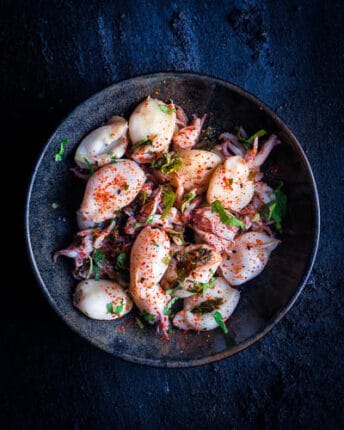
Asian-Inspired Grilled Baby Cuttlefish
Equipment
- Grill
Ingredients
- 20 baby cuttlefish
- 1 Tbsp sunflower oil
- 10 Makrut lime leaves
- 1 lime (zest and juice to taste)
- salt to taste
- 1 pinch of nanami togarashi
- cilantro to taste
Instructions
- When using frozen baby cuttlefish, let it thaw first. Then remove the moisture and pat dry.
- In the meantime, start your bbq for a direct session at a high temperature. Place the skillet on the fire to preheat the pan.
- Add some sunflower oil to the skillet and fry the Makrut lime leaves to release its fragrants.
- Add a chunk of smoking wood between the coals (cherry) and wait until it starts smoking.
- Grill the Sepia in the cast iron skillet at a high temperature for 2-3 minutes. Carefully pour off any excess liquid during cooking.
- Deglaze with lime juice to taste. Season to taste with salt if necessary.
Finish with freshly grated lime zest, finely chopped cilantro and Nanami Togarashi to taste. Have a nice meal!
Frequently asked questions about grilled cuttlefish
How long should baby cuttlefish cook?
Cook fully thawed and thoroughly dried baby cuttlefish for approximately 2 to 3 minutes in a very hot cast-iron skillet. Work in batches so the pan retains enough heat to sear rather than steam the seafood.
How do you keep cuttlefish from becoming rubbery?
For this recipe, use a very short cook over intense heat. Dry the cuttlefish, preheat the skillet thoroughly and avoid overcrowding. A prolonged cook over moderate heat is more likely to produce a rubbery texture.
Is cuttlefish the same as squid?
No. Cuttlefish and squid are both cephalopods, but they are different animals. Cuttlefish have a broader body and an internal cuttlebone, while squid are generally more elongated. Look for products labeled baby cuttlefish, mini cuttlefish or sepia for this recipe.
Can you grill frozen cuttlefish?
Frozen cuttlefish works well, but thaw it completely before cooking. Drain away the liquid and pat each piece dry. Partly frozen or wet cuttlefish cools the skillet and steams instead of browning.
What smoking wood works with cuttlefish?
Use a small amount of mild fruitwood. One small chunk of cherry wood is enough for this short cook. Heavy smoke can quickly overpower the delicate seafood, lime and spices.
What can I use instead of a cast-iron skillet?
A heavy cast-iron griddle or plancha works well. The surface must retain enough heat to evaporate moisture quickly. Avoid a thin pan that loses most of its heat as soon as the cold seafood is added.


