
A steak usually goes over glowing coals. A whole chicken is better placed beside the fire, while pulled pork cooks for hours in a protected zone. Behind those choices lies one of the most important principles in barbecue: are you cooking with direct or indirect heat? Once you understand the difference between direct and indirect grilling, it becomes much easier to decide where food belongs on the grate and when it should move to another zone.
Two separate decisions are often confused here. Direct or indirect describes where the food sits in relation to the heat source. Hot and fast or low and slow describes how intensely and how long it cooks. Direct grilling does not always require extreme heat: a sausage can cook directly over a moderate fire. Conversely, a whole chicken can roast indirectly at 390°F / 200°C. This guide will help you separate—and combine—both decisions.
Disclosure: this post may contain affiliate links. If you buy something through one of those links, I may receive a small commission at no additional cost to you. All experiences and opinions remain personal and honest.
Direct and indirect grilling explained in one minute
Direct grilling: the food sits in the direct radiant heat of coals, a fire, or a burner. This is ideal for quickly developing browning, a crust, and roasted flavors.
Indirect grilling: the food is not directly above or in front of the active heat source, or a heat shield blocks that source. With the lid closed, it cooks more evenly, much like it would in an oven.
The most useful setup: whenever possible, create both a direct and an indirect zone. You can brown food over the fire, then finish cooking—or simply escape the heat—beside it.
A common rule of thumb says that food that cooks in about 20 minutes can go directly over the heat source. That is a useful starting point, but it is not a law. Thickness, fat content, sugar in a marinade, distance from the fire, and the crust you want are at least as important. A thin steak can handle a much fiercer fire than a chicken leg coated in a sweet glaze.


Direct/indirect and hot and fast/low and slow are two separate decisions
This is the key idea in the entire guide. Recipes often use these terms as though they mean the same thing. That creates the impression that direct grilling must always be screaming hot and quick, while indirect grilling must take hours. In reality, you are making two separate decisions.
- Decision 1—position: is the food directly exposed to radiant heat from the heat source, or not? That determines whether you are grilling directly or indirectly.
- Decision 2—intensity and time: are you cooking at a high temperature for a relatively short time, or at a lower temperature for longer? That determines whether the cook is closer to hot and fast or low and slow.
| Combination | What happens? | Typical examples |
|---|---|---|
| Direct + hot and fast | Strong radiant heat and a short cook produce intense browning. | Thin steak, burgers on the grate, shrimp, and thin vegetables. |
| Direct + moderate heat | The food remains above or in front of the heat source, but distance, fuel, or airflow reduces the intensity. | Sausages, satay, chicken skewers, vegetables, and slow grilling on a parrilla. |
| Indirect + hot and fast | A high cooking temperature without aggressive radiant heat underneath the food. | Whole chicken with crisp skin, bread, and quick pulled pork. |
| Indirect + low and slow | Gentle convective heat and enough time for smoke, bark, and connective tissue to develop. | Pulled pork, brisket, ribs, and large roasts. |
The boundaries between those boxes are not rigid. A pitmaster may call 300°F / 150°C hot and fast for pulled pork, while the same temperature feels fairly moderate for a grilled sausage. Always consider temperature together with the food, its distance from the fire, and the type of heat involved.
What is direct grilling?
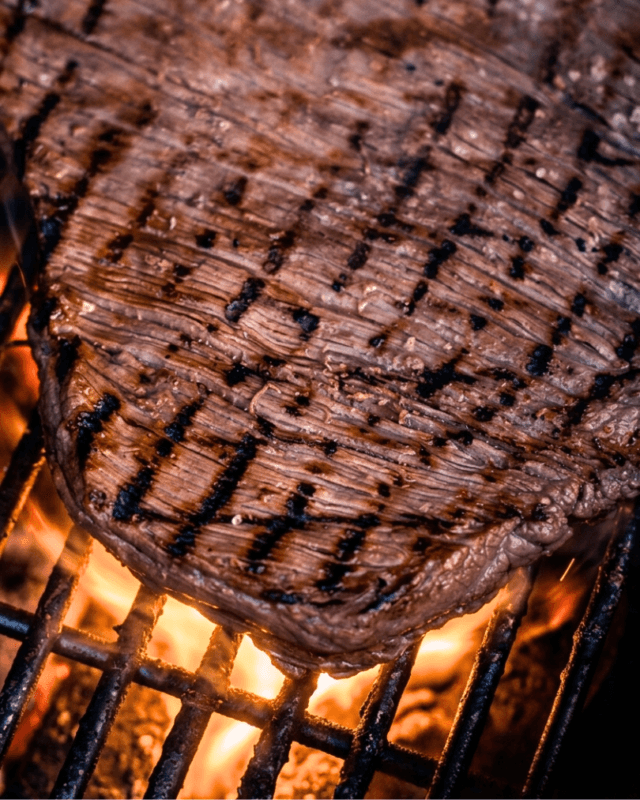
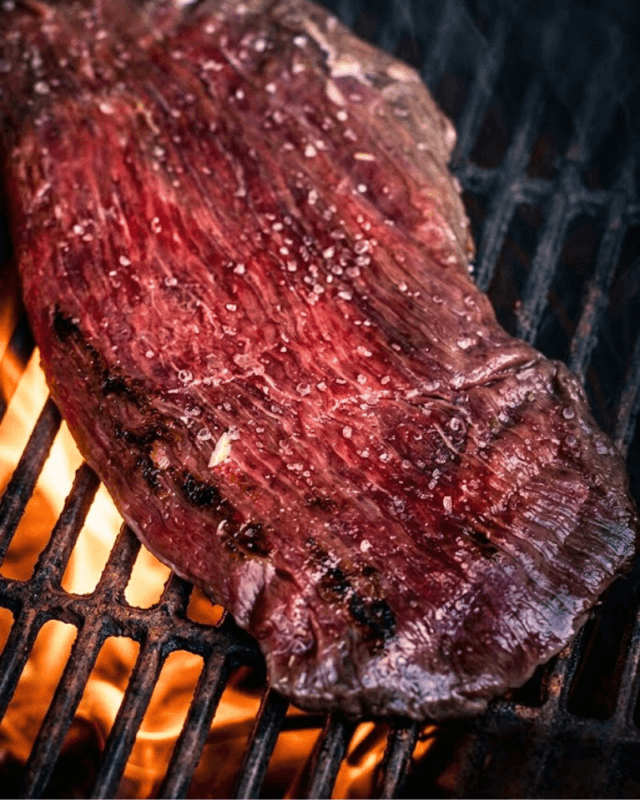
With direct grilling, the food sits above glowing coals, over an active gas burner, or in the unobstructed radiant heat of a wood fire. That radiant energy travels straight from the heat source to the food. A hot grate also transfers heat through direct contact. That contact creates grill marks, although an evenly browned crust usually delivers more flavor than a few dark lines on an otherwise pale surface. A cast-iron grill grate stores plenty of heat for that job.
Direct grilling excels at developing color and roasted aromas. On a sufficiently dry, hot surface, amino compounds and reducing sugars react through the Maillard reaction. Natural sugars in vegetables can brown and caramelize as well. The result is the aroma that draws everyone toward the grill before dinner is even served.
Direct does not have to mean extremely hot
You can control the intensity of direct heat in several ways. Use less fuel, carefully restrict the airflow, raise the grate, or move the food farther from the coals. Over an open fire, a piece of meat can cook quite slowly while still being directly exposed to the fire’s radiant heat. The position of the fire determines the method; distance helps determine how intensely that heat reaches the food.
This distinction matters on a parrilla, a shichirin or konro, and any live-fire setup. A chicken hanging high above a mdest coal bed cooks very differently from a steak sitting just above a fully lit chimney of charcoal. Both are direct cooks, but only one is unmistakably hot and fast. On a compact Japanese tabletop grill, you mainly control intensity through the amount of charcoal and the position of the food. A shichirin or konro-style grill makes that direct style of cooking especially easy to explore.
When does direct heat work well?
- For thin, tender foods that will cook through before the outside burns.
- When you deliberately want a crust, char, or crisp exterior.
- For smaller vegetables, skewers, burgers, sausages, and seafood.
- As a short finishing step after indirect cooking, as in a reverse sear.
- When you can turn, move, and react to flare-ups quickly.


Caveman-style and dirty BBQ: cooking right in the coals
The most extreme form of direct grilling is caveman-style cooking, also called dirty BBQ. You remove the cooking grate altogether and place the food directly on or among the glowing coals. A thick steak develops a deeply roasted crust in very little time, but sturdy vegetables are just as well suited to this technique.
Whole onions, eggplants, leeks, sweet potatoes, celery root, and fennel bulbs can turn completely black on the outside. Beneath that charred shell, the vegetable steams and roasts in its own moisture. Once it is tender, remove the burned outer layer and use the soft, smoky center. I have used this approach with fennel bulbs served alongside salmon, but it works just as well as a standalone vegetable technique.
Use a clean bed of fully lit lump charcoal or pure hardwood embers. Avoid treated wood, unknown briquettes, and coals that still carry lighter-fluid residue. Blow or brush loose ash from a steak before serving it. Sugary marinades and foods that drip heavily are poor candidates because they burn quickly and muddy the clean flavor of the cook. Use clean, food-safe natural lump charcoal.
Watch the fat and sugar. Dripping fat can produce flames, while sugar in rubs and glazes can burn before the food is done. A brief flame is not automatically a problem, but cooking in yellow flames for an extended period can leave soot and bitter flavors. Move the food to the indirect zone instead of chasing the flames.

What is indirect grilling?
With indirect grilling, the food does not sit directly above the active heat source. On a kettle grill, move the coals to one or both sides. On a gas grill, turn off the burner underneath the food. In a kamado, place a heat deflector between the fire and the grate. A traditional pellet grill cooks mostly with indirect heat by default because a diffuser and drip tray shield the fire pot. A compatible kamado heat deflector turns the cooker into an effective outdoor oven.
With the lid closed, hot air circulates around the food. The grill now behaves like a charcoal-, gas-, or pellet-fired oven. Radiant heat from hot components and the cooker walls still plays a role, but one side of the food is no longer exposed to the full energy of the fire. That allows the center to come up to temperature without burning the bottom.
Indirect grilling is not automatically smoking, and it is not automatically low and slow BBQ. You can smoke a roast at 230°F / 110°C, roast a chicken at 375°F / 190°C, and bake bread at a still higher temperature. In every case, the food can be shielded from strong direct radiant heat underneath.
When does indirect heat work better?
- For large, thick foods that need more time to cook through.
- For bone-in chicken, whole poultry, and other foods that brown quickly on the outside.
- For delicate fish or foods that dry out or fall apart easily.
- For food cooked in a pan, as well as bread, cakes, and other oven-style dishes.
- When you want to give smoke enough time to add flavor and color to the surface.
- For tough cuts whose connective tissue needs time to soften.
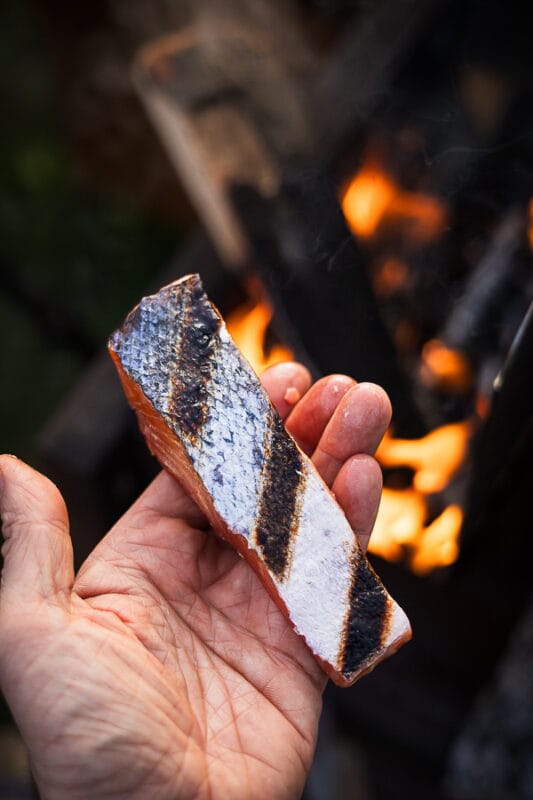
The method applies to more than large cuts of meat. A fatty fish such as hot-smoked salmon also benefits from gentle, indirect heat because it cooks evenly while picking up smoke.

What does hot and fast mean in barbecue?
Hot and fast means cooking at a higher temperature to save time and develop browning more quickly. Exactly how hot depends on the food. For steak, hot and fast may mean well above 480°F / 250°C. For pulled pork, an indirect cook at 285–320°F / 140–160°C is often described as hot and fast because the classic approach usually runs around 220–250°F / 105–120°C.
The term tells you nothing about the food’s position. A steak can be grilled hot and fast over direct heat, while a whole chicken can be roasted hot and fast with indirect heat. My six-hour pulled pork also cooks indirectly despite the higher pit temperature and shorter cook.
Remember this: direct versus indirect is about the route the heat takes. Hot and fast versus low and slow is about cooking intensity and duration. You can combine those decisions freely as long as they suit the food and the result you want.
When should you choose direct or indirect grilling?
Do not look only at the name of the dish. Consider its thickness and structure, how much fat it contains, what is in the marinade, and the finish you want. The table below is a practical starting point. An internal-temperature thermometer remains important: time and pit temperature are guidelines, but the food tells you how far the cook has actually progressed.
| Food or goal | Best starting method | Why? | Possible finish |
|---|---|---|---|
| Thin steak or chop | Direct | Build a crust quickly without heating the center for too long. | Rest briefly off the grill. |
| Thick steak or bone-in rib steak | Indirect | Cook more evenly with a narrower gray band beneath the crust. | Finish directly with a reverse sear. |
| Burger, sausage, or skewer | Direct, moderate to high heat | Smaller portions cook relatively quickly and benefit from browning. | Move to indirect heat if the outside browns too quickly. |
| Chicken leg or whole chicken | Indirect | The center has time to cook safely without burning the skin. | Crisp over higher indirect heat or brown very briefly over direct heat. |
| Pulled pork, brisket, or ribs | Indirect | Connective tissue needs time; direct radiant heat would burn the surface too early. | Unwrap near the end if the bark needs to firm up again. |
| Fish fillet | Indirect or gentle direct heat | The right choice depends on thickness, firmness, and whether the skin is attached. | Finish briefly skin-side down over direct heat for extra texture. |
| Vegetables | Either | Thin slices can go directly on the grate; whole root vegetables can cook indirectly or roast caveman-style among clean, glowing coals. | Char directly for more roasted flavor, and remove the burned outer layer after dirty BBQ cooking. |
| Bread, casserole, or dessert | Indirect | Even ambient heat helps prevent a burned bottom. | Usually unnecessary; rotate the pan if your grill has a noticeably hotter side. |
The best method may change during the cook. Ribs, for example, can be prepared at different temperatures and with very different techniques. My comparison of five methods for cooking BBQ ribs shows how direct grilling, hot-and-fast cooking, and low-and-slow barbecue produce different results. If you want to explore the best-known wrapped method in more detail, see the 3-2-1 method for baby back ribs.
How to create direct and indirect zones in six steps
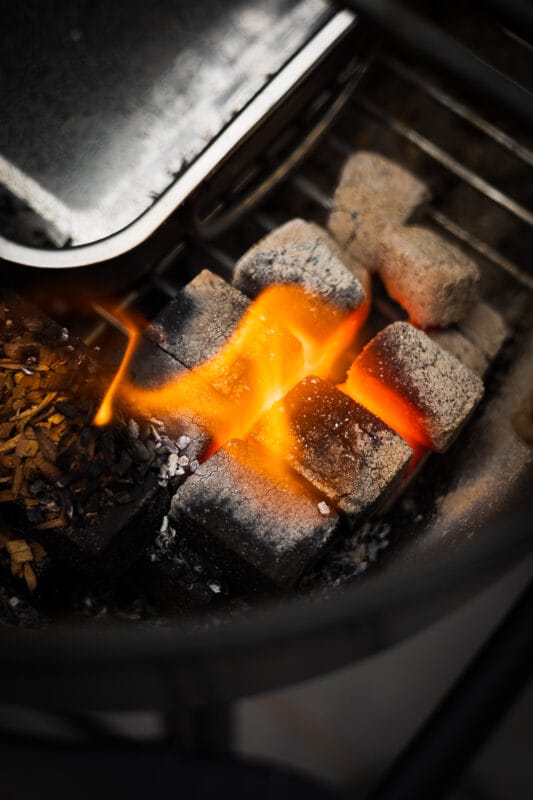
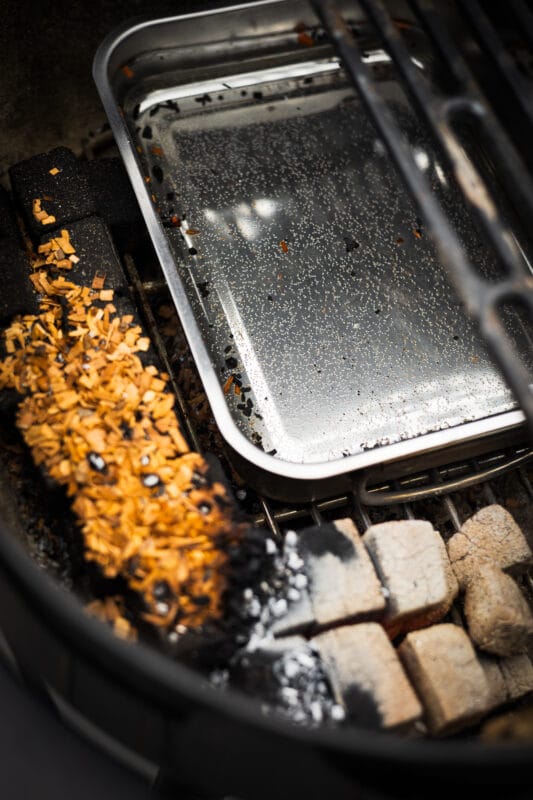
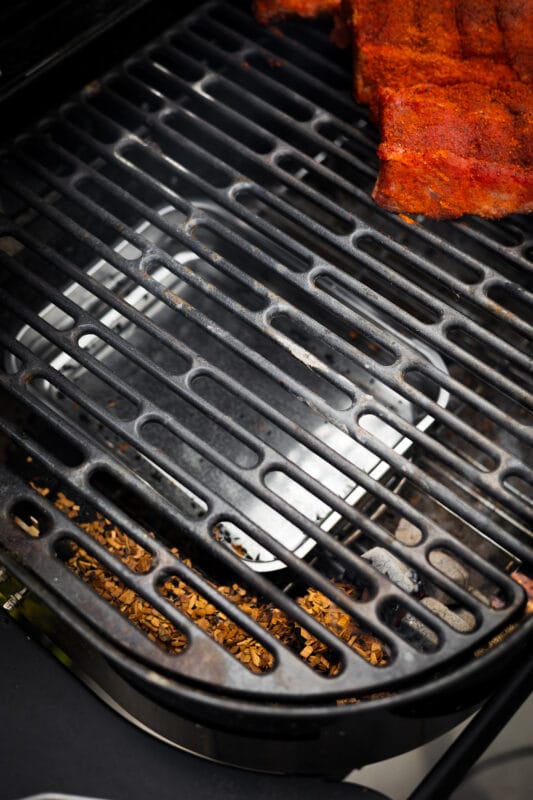
If there is one setup that makes almost every backyard cook easier, it is a two-zone fire. Even if you plan to grill everything directly, an empty section of the grate gives you control. Food can finish cooking there, stay warm briefly, or escape flare-ups.
- Light the grill gradually. Do not automatically use a full load of fuel. The amount of burning charcoal determines how much energy is available. For long charcoal cooks, the fire-management section in my low and slow BBQ guide explains the fundamentals.
- Place the fuel on one side. Build a clearly defined hot zone above the coals and leave the other side empty. Two charcoal baskets placed together make that boundary easy to see. Charcoal baskets are convenient but not essential.
- Place the food according to what it needs. Grill thin or small foods over the direct zone to build a crust and roasted flavor. Put thick, delicate, or sufficiently browned foods on the indirect side so they can finish more gently.
- Use the lid deliberately. A closed lid can help even during direct grilling: circulating heat cooks the top while the reduced oxygen supply suppresses flare-ups. If the outside has enough crust but the center is not ready, move the food to the indirect zone before closing the lid. On a kettle, position the exhaust vent above the indirect side when possible so heat and smoke travel past the food. When opening a hot kamado, lift the lid only an inch or two at first and pause before opening it fully. A sudden rush of oxygen can cause a dangerous flashback.
- Measure where the food is cooking. The lid thermometer may not show the same temperature as the cooking grate. During longer cooks, an ambient probe next to the food gives you more useful information. A reliable grill thermometer makes this easier.
- Move the food instead of panicking. Is it getting too dark? Are flames rising, or is a sugary glaze turning sticky too quickly? Shift the food to the indirect zone and let the fire settle down.
My standard advice: always leave at least a small section of the grate without an active heat source underneath it. That safety zone takes almost no effort and saves dinner surprisingly often.
This Spanish chickpea and chorizo salad uses both zones at once: the peppers char over direct heat while the skillet cooks more gently beside the fire.


Direct and indirect grilling on every type of BBQ
Kettle grill or charcoal grill
Move the coals to one side for a simple 50/50 setup. The grate above the coals is your direct zone; the section without coals underneath is your indirect zone. If you place the coals in two strips along the outer edges, you can grill directly above both strips while creating a large indirect zone in the center. That works well for a whole chicken, roast, or rack of ribs.
A drip pan in the empty zone catches fat and juices, but it does not automatically need to contain water. Water affects temperature stability and humidity, while an empty pan mainly keeps the grill cleaner and may shield direct radiant heat. My guide to using a water pan in a smoker explains when water actually helps.
Kamado
Without a heat deflector, you cook directly over the charcoal. A full ceramic deflector creates an indirect oven. Half-moon deflectors are particularly useful because they let you build direct and indirect zones at the same time. Keep the stored heat in mind: once a kamado becomes very hot, bringing it back to a low temperature takes time.
Gas grill
Direct grilling takes place over an active burner. For indirect cooking, turn off one or more burners and place the food above the unlit section. On a three-burner grill, an arrangement with the outer burners on and the center burner off often works well for a roast or whole chicken. The exact knob position matters less than the temperature measured beside the food.
Pellet grill
Most pellet grills shield the fire pot with a diffuser and drip tray. That means they operate as an indirect convection oven by default, even when the controller is set to a high temperature. Some models include a direct-flame opening or a separate sear zone. A hot cast-iron griddle can also create a strong crust, but the food then receives mostly contact heat from the plate rather than direct radiant heat from the flame.
That difference explains why a pellet grill produces excellent indirect results but may not create the same steak crust as charcoal sitting just below the grate. You can read more about the design, advantages, and limitations in my complete pellet grill guide.
Plancha
On a plancha, the food sits directly on a hot metal surface. Conduction is the main form of heat transfer because the plate touches the food. For that reason, “direct grilling” is not always the clearest description; cooking or searing on the plancha is more precise. Different heat zones across the plate still provide the same practical control as direct and indirect zones on a grill. See how that works with a delicate protein in my grilled tuna steak on the plancha.
Open fire and parrilla
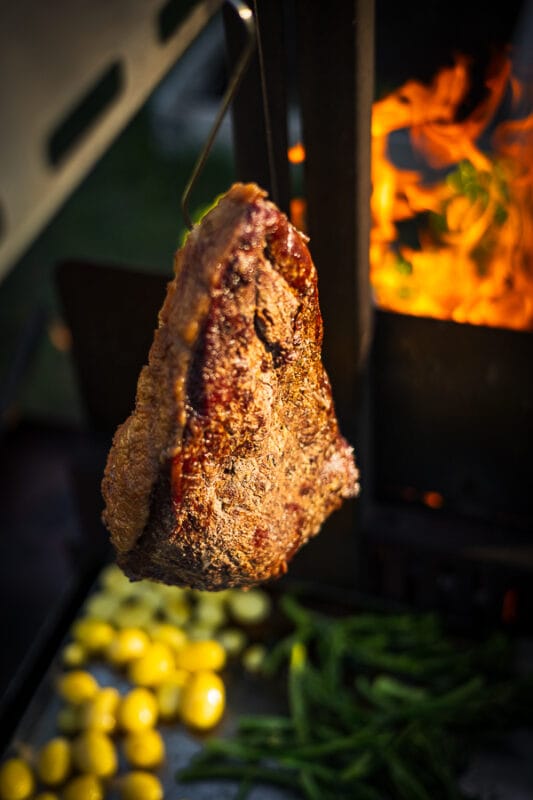
With live-fire cooking, control depends less on a number shown on the lid and more on placement. Directly above a coal bed, beside a wood fire, higher on a chain, or farther across a parrilla grate: every movement changes the amount of radiant heat reaching the food. A piece of meat can therefore cook directly yet slowly when the distance is large enough. That is precisely why direct grilling and hot and fast should not be used as synonyms.
This style is not limited to meat. In my cedar plank salmon over an open fire, the plank shields the fish from the most aggressive heat while the flames and embers still shape the cook. It is another good example of why the route and intensity of heat matter more than a rigid label.

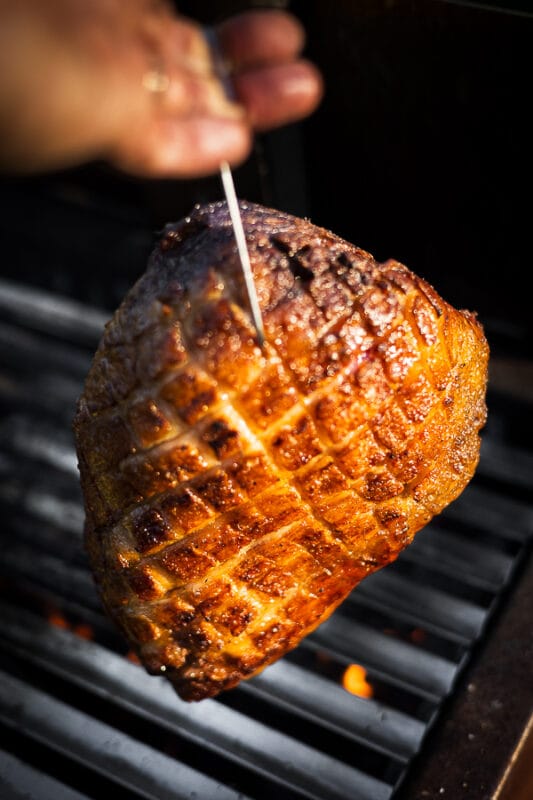
Combining indirect and direct grilling: initial sear vs. reverse sear
The decision does not have to be permanent. Many of the best BBQ cooks use both zones. The indirect side gives you control over the center; the direct side builds crust and roasted flavor. Which zone comes first depends on the food.
1. Initial sear: direct first, then indirect
With an initial sear, also called the classic sear-and-roast method, you brown a thick cut over direct heat first. You then move it to the indirect side so the center can finish more gently. This works well when the fire is already hot and you want to start building a crust immediately. Be careful with a very thick steak, though: the outer layers continue cooking during the indirect phase.
2. Reverse sear: indirect first, then direct
For a reverse sear, cook a thick steak gently in the indirect zone first. When the center is just below your target temperature, pat the surface dry if necessary and sear it very briefly over intense direct heat. This produces an even interior with a powerful crust. Allow for carryover cooking and use a fast thermometer instead of relying on time alone.
You can see the complete process in this reverse-seared bone-in ribeye, including the gentle indirect cook and final high-heat crust.
3. Cook indirectly, then set the glaze over controlled heat
Chicken wings, ribs, and glazed vegetables can cook indirectly first. Apply a sweet glaze only when the surface is dry and the food is almost done. Then let it caramelize briefly over moderate direct heat or in a hotter indirect zone. Stay close: the difference between glossy and burned can be less than a minute. The same principle keeps the coating on these beer-glazed chicken wings from scorching.
4. Brown directly, hold briefly over indirect heat
When you are grilling for a group, the indirect zone also serves as a buffer. Cooked sausages, skewers, or vegetables can wait there briefly while the next batch sits over the fire. Do not hold them indefinitely, and follow safe hot-holding practices for perishable food, but use the zone to help bring everything to the table together.
Which BBQ temperature belongs to which technique?
Temperature ranges help you start a recipe, but they never tell the entire story. A lid thermometer measures the air in one location. It does not measure the radiant energy reaching a steak just above the coals, nor does it tell you the true surface temperature of the grate or a cast-iron plate. Treat the values below as working zones, not laws of nature.
| Cooking zone | Target temperature inside the BBQ | Usually used for | Direct or indirect? |
|---|---|---|---|
| Very gentle smoking | 195–220°F / 90–105°C | Delicate smoked foods such as hot-smoked salmon. | Indirect |
| Classic low and slow | 220–275°F / 105–135°C | Pulled pork, brisket, ribs, and other large cuts. | Indirect |
| Roasting | 350–430°F / 175–220°C | Whole chicken, vegetables, bread, and oven-style dishes. | Usually indirect |
| Grilling and searing | About 430°F / 220°C and above | Steaks, burgers, thin vegetables, and quick finishing steps. | Direct or on a hot plate |
| Pizza and very high-heat baking | 570°F / 300°C and above | Pizza with balanced bottom and top heat. | Hybrid: a stone or heat shield protects the base while hot air—and sometimes flames—moves across the top through the dome. |
For pizza, “as hot as possible” is not automatically correct. The temperature of the stone, the heat above the pizza, the dough formulation, and the bake time must work together. That is also why pizza is better described as a hybrid setup than as a purely indirect cook.
Whichever method you choose, use an instant-read thermometer and check large or irregular pieces in more than one place. The precise safe temperature depends on the food and, in some cases, how long it remains at that temperature. That nuance belongs in the individual recipe. For current minimum internal-temperature guidance, consult the official USDA safe minimum internal temperature chart.

Common direct and indirect grilling mistakes
| Problem | Likely cause | Practical solution |
|---|---|---|
| Black outside, undercooked center | The food stayed over excessively intense direct heat for too long. | Use smaller portions, or move the food to indirect heat and finish it with the lid closed. |
| Poor crust | A wet surface, insufficient surface temperature, or an overcrowded grate. | Pat the food dry, preheat the grate or plate thoroughly, and cook in batches. |
| Bitter, sooty flavor | Persistent flames, dirty grease, or thick white smoke. | Move the food to indirect heat, clean the grill, and wait for a clean-burning fire. |
| Indirect zone gets too hot | Too much fuel, too little distance, or stored heat inside the cooker. | Start with less fuel, increase the distance, and adjust the airflow early. |
| Chicken skin stays rubbery | The cooking temperature is too low or the skin is too wet. | Dry the skin and finish at a higher indirect temperature or briefly over direct heat. |
| Glaze burns | A sugary glaze was applied too early over direct heat. | Apply it near the end and set it briefly over controlled heat. |
| Grate temperature differs greatly from the display | The lid thermometer sits in a different location from the food. | For longer cooks, use a separate ambient probe beside the food. |
Should the lid be open or closed?
You can leave the lid open for a very short direct cook, especially if you are turning the food continuously. Still, the lid can be useful during direct grilling: circulating heat cooks the top, and the reduced oxygen supply suppresses flare-ups. If the outside is sufficiently browned while the center still needs time, move the food to the indirect zone before closing the lid. Indirect grilling works best with the lid closed on most cookers. Open it only to check, turn, glaze, or intervene. On a hot kamado, crack the lid carefully and pause before opening it fully so oxygen enters gradually and you avoid a flashback.


Frequently asked questions about direct and indirect grilling
Is direct grilling always hot and fast?
No. Direct grilling only means that the food is exposed to radiant heat from the heat source. With less fuel, greater distance, or a higher grate, you can grill directly over a moderate fire. This is common in parrilla, asado, and yakitori cooking.
Is indirect grilling always low and slow?
No. A chicken can roast indirectly at about 355–390°F / 180–200°C, and bread or oven-style dishes can also cook indirectly at higher temperatures. Pizza is a special case: a stone or heat shield protects the base from an overly aggressive heat source, while hot air and flames may still move across the top through the dome. That is better described as a hybrid setup than a purely indirect cook. “Indirect” describes the food’s position in relation to the direct heat source, not the speed of the cook.
Can you grill directly with the lid closed?
Yes. As long as the food sits over the active heat source, it remains a direct cook. Closing the lid adds convective heat, so the top cooks as well. The restricted oxygen supply helps suppress flare-ups. Be careful when reopening a hot kamado, though: a sudden rush of oxygen can cause a flashback. Lift the lid an inch or two, wait briefly, and then open it fully.
Do you always need a heat shield for indirect grilling?
No. On a roomy kettle or gas grill, you can create an indirect zone simply by placing the food beside the active coals or burners. In a kamado, bullet smoker, or compact grill, a heat shield is often more effective because it blocks direct radiant heat and creates more usable grate space.
Is a pellet grill direct or indirect?
Most pellet grills cook indirectly by default: a metal diffuser and drip tray sit between the fire pot and the food. Models with an open direct-flame feature or a separate sear zone are exceptions. A plancha delivers strong contact heat, but that is not the same as an open flame beneath the meat.
Which zone should you use for chicken?
Indirect heat is usually the safest starting point for chicken legs, wings with a sugary glaze, and whole birds. A higher indirect temperature helps the skin become crisp. Small skewers or thin pieces of chicken can be grilled directly, but always keep an indirect escape zone available and verify the internal temperature. A whole bird such as this Peking-style BBQ turkey also shows how a protected cooking zone and a controlled glaze can work together.
For practical examples, compare this whole chicken on the grill with my examination of the beer can chicken technique. Both rely on a protected indirect zone, but they position the bird differently.
Which is better: direct first or indirect first?
Direct heat is usually enough for thin cuts. For thick steaks, cooking indirectly first and then searing briefly often produces the most even doneness. With larger roasts, searing first and finishing indirectly may be more practical. The result you want—and how quickly your grill can change temperature, determines the best order.
You do not need a large collection of equipment to start grilling, but a reliable thermometer and a few well-chosen tools make controlling direct and indirect heat much easier. My guide to practical BBQ gifts includes ideas for both beginning grillers and experienced outdoor cooks.

The best BBQ method is rarely a choice between two opposing camps
Good fire management is rarely about staying loyal to one zone. It is about recognizing what the food needs at that moment. Use direct heat when you want browning, crust, and speed. Choose indirect heat when the center needs time, even cooking, or protection. Cook hotter when that improves the result, and ease off when distance and patience will build more flavor. Above all, create two zones whenever your grill allows it. You do not have to predict the entire cook perfectly—you can adjust as you go.
Which setup do you rely on most: direct heat, indirect heat, or a combination of both? Share your approach in the comments. You can also learn more about the experience behind these guides on the About The BBQ Bastard page.


