
A water pan in your smoker: some pitmasters swear by it, while others say it does absolutely nothing. Here in Belgium, it probably gets less attention than it does in the American barbecue scene. Still, you will often see a water pan used for low and slow BBQ such as pulled pork, brisket, or ribs. So, does that pan of water really help, or is it just another BBQ myth passed from one smoker to the next? As usual, the truth sits somewhere in the middle. No, a water pan will not magically make your meat juicier. But that does not make it useless. That simple pan can influence temperature control, humidity, smoke adhesion, and bark formation.
Disclaimer: This post contains affiliate links. If you click through and make a purchase, I may earn a small commission at no additional cost to you. All opinions remain honest and my own.
What does a water pan in a smoker actually do?
Let’s clear up one myth right away: a water pan does not make your meat juicier. The most common misconception is that it somehow adds moisture to the inside of the meat. It sounds plausible, but meat does not work that way. As it cooks, its proteins contract and push out moisture. A humid cooking chamber does not stop that process, and your pork shoulder will not suddenly absorb water like a sponge.
Why, then, do so many pitmasters use one during long cooks? Because its effects are indirect. A water pan can influence several things at once:
- temperature stability
- humidity
- smoke adhesion
- bark formation
It is the combination of those effects that makes a water pan useful in the right setup.
To keep your meat juicy and control thermal mass inside the smoker, using a dedicated water tray is essential. If you don’t have one yet, this 5-piece stainless steel prep and marinating set on Amazon is a great kit to look at. Besides holding water in your smoker, it doubles as a dry-brining tray and container for marinating your meat before it hits the grates


Why do pitmasters use a water pan?
1. A water pan helps stabilize smoker temperature
Water has a high heat capacity. In plain English, it can absorb a lot of energy before its temperature rises substantially. At normal atmospheric pressure, liquid water also stays close to 212°F (100°C) while it boils. In practice, the pan acts as a thermal buffer inside your smoker. It absorbs part of the heat, softening sudden temperature spikes as the water heats and evaporates. That difference is most useful during a long low and slow cook. A reliable instant-read thermometer (like this one from amazon) and a separate grate-level probe will help you see what is really happening inside the cooker.
In a kettle grill or offset smoker, where temperatures can react more quickly to airflow and fuel changes, that extra buffer can make the cook easier to manage. It is especially useful when you are:
- making pulled pork
- smoking pork ribs
- cooking brisket low and slow
- running any longer cook of six hours or more
In those situations, a steadier pit temperature can be genuinely helpful.
2. A cooler, moist surface attracts smoke more readily
This is where things get interesting. Smoke compounds deposit more readily on a cool, moist surface. If the outside of the meat stays slightly damp during the first part of the cook, smoke from your wood chunks or smoking wood has more opportunity to settle on it. That can contribute to a deeper smoke profile and more even bark development. The effect matters most early in the cook. Later, as the surface becomes hotter and drier, the difference gets smaller. A water pan is not a flavoring ingredient; it is a tool that can create more favorable conditions for smoke.

Does a water pan work in every smoker?
Not every cooker reacts to a water pan in the same way. Its design makes a big difference. Airflow, insulation, and heat retention all determine how much that pan of water will affect the cook.
In cookers with a lot of airflow, such as offset smokers and classic kettle grills, a water pan can help moderate temperature spikes and keep the surface of the meat moist a little longer. Because warm air is constantly moving through these cookers, the surface dries more quickly and the effect of added humidity can be easier to notice.
A heavily insulated cooker such as a kamado is different. Ceramic retains heat and moisture extremely well, so an additional water pan often has less to offer. In some cases, too much humidity can even slow bark formation and leave you with a softer exterior instead of the firm crust you want from low and slow BBQ.
Cookers where a water pan can be useful
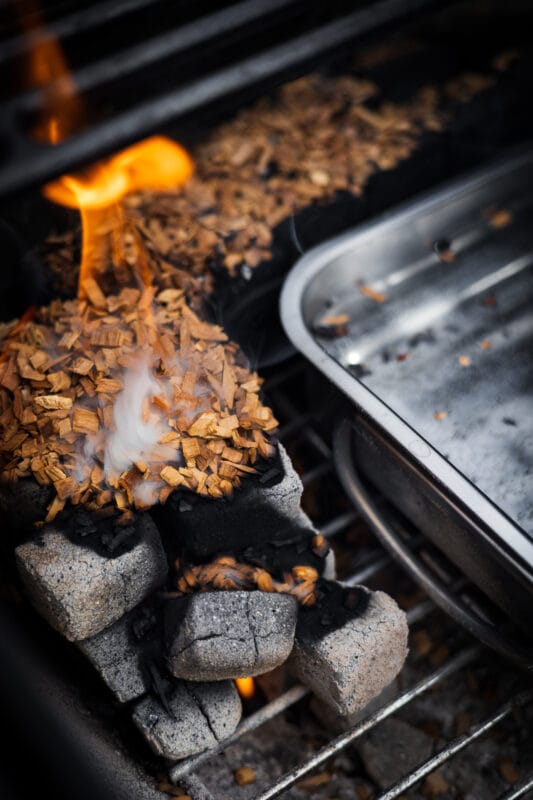
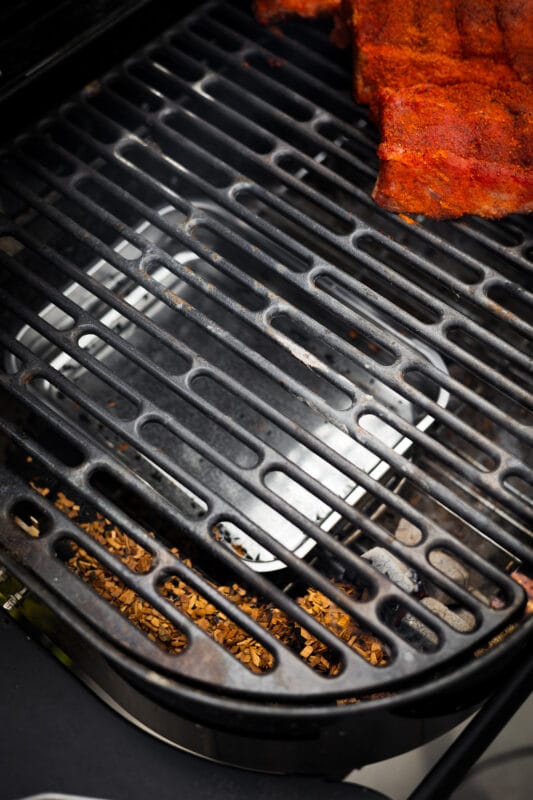
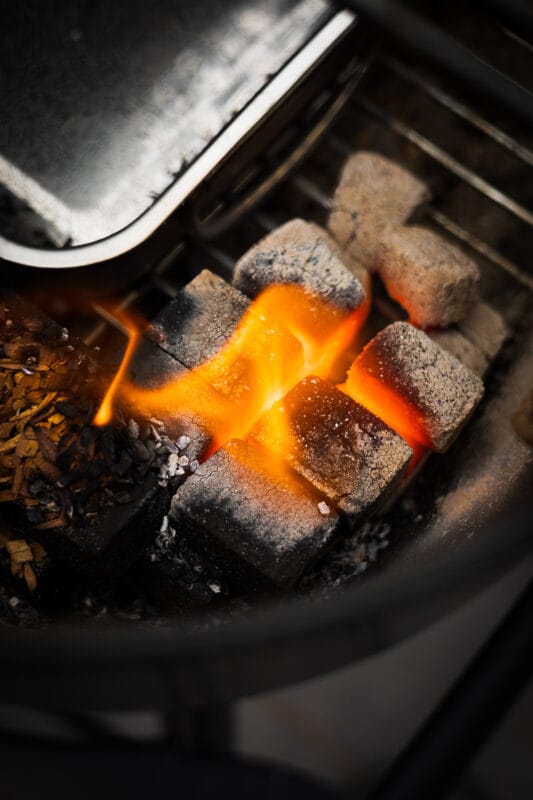
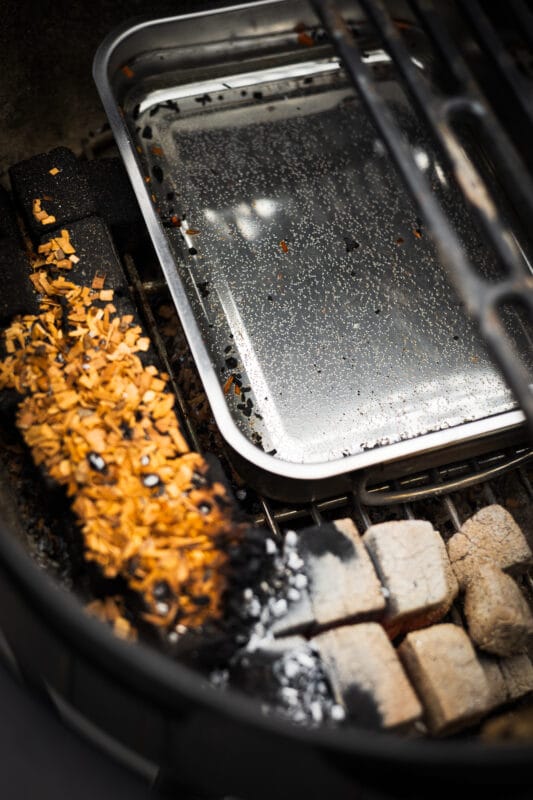
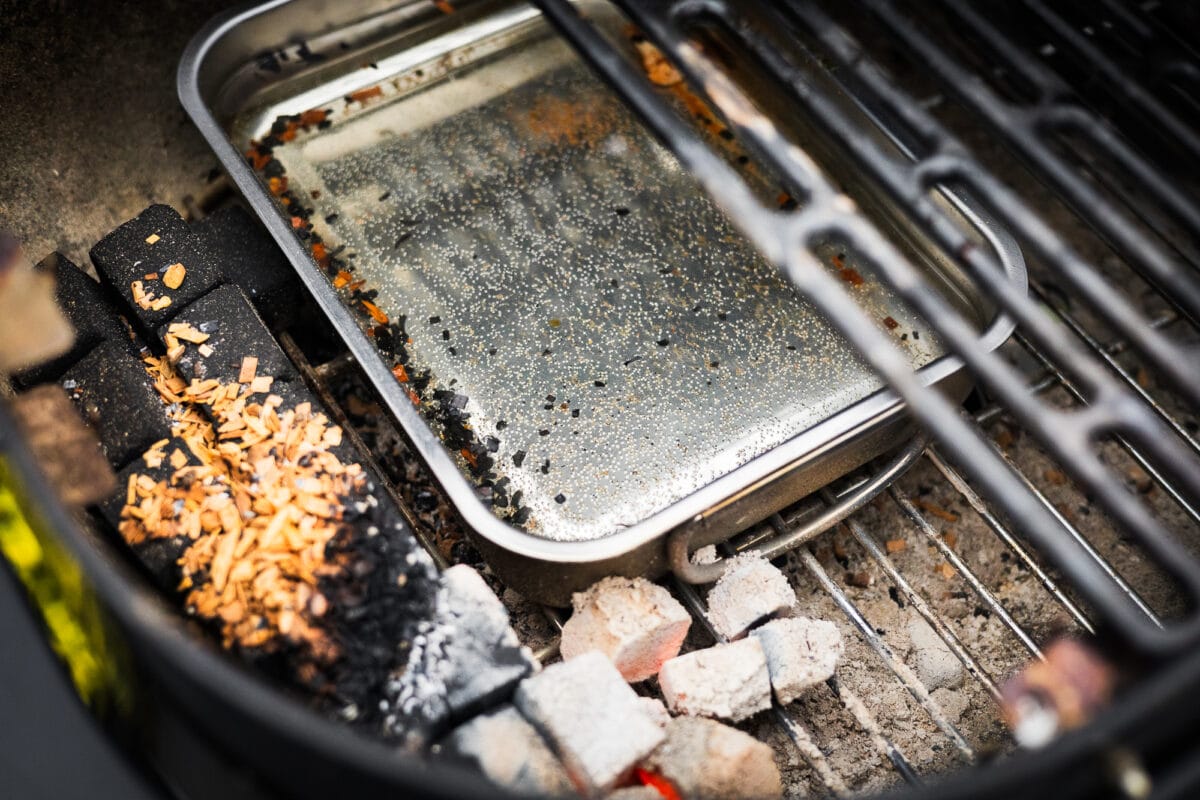
- Classic kettle grill: Kettles usually have relatively thin steel walls and react quickly to changes in fuel and airflow. A sturdy stainless steel roasting pan filled with water can act as a heat buffer and help steady the temperature during a low and slow cook.
- Offset smoker: Offsets move a lot of hot air across the meat. A water pan can soften that dry airflow, slow surface drying, and influence evaporative cooling during the stall. It will not eliminate the stall, but it can make the cooking environment less aggressive.
- Vertical water smoker: In cookers such as a Weber Smokey Mountain or the Barbecook Oskar, the water pan isn’t just part of the design as a gimmick. It also acts as a barrier between the fire and the food, helping create an indirect cooking zone. Removing it changes how heat reaches the cooking grates.
Cookers where a water pan is often unnecessary
- Kamado grill: Ceramic is an outstanding insulator. A quality Kamado like Kamado Joe, Primo or Big Green Egg, needs very little airflow to hold its temperature and naturally retains plenty of moisture. An additional water pan may make the cooking chamber so humid that bark takes longer to set. Use one only when you have a specific reason.
- Pellet grill: Most modern pellet grills regulate heat automatically, so a water pan is rarely needed as a temperature buffer. You can still use a small one when the cooking chamber runs particularly dry, provided it does not block airflow and the manufacturer permits it. In most pellet-grill cooks, however, it is optional rather than essential.
- Open-fire grill: A water pan achieves very little here because the humid air immediately escapes. On a parrilla or Santa Maria-style grill, you control heat through distance, coal placement, and fire management rather than humidity.

When does a water pan add little or no value?
There are situations where a water pan adds very little. On an open-fire grill or Santa Maria-style setup, for example, moisture disperses into the open air almost immediately. You manage those fires through distance and radiant heat, not controlled humidity inside an enclosed cooking chamber.
The same is true for short, hot grilling sessions. When searing a steak at high heat, you want a dry surface and intense heat to encourage browning. A water pan works against that goal. My plancha-grilled tuna steak follows the same basic logic: fast cooking, high heat, and no need for added humidity.
In short: when should you use a water pan?
It depends on the result you need. Are you trying to improve texture, or do you need more temperature stability?
- USE a water pan for: pulled pork, brisket, and long rib cooks such as the 3-2-1 method for baby back ribs, especially in a kettle, offset, or vertical water smoker. These cooks benefit most from stable heat and a less aggressive drying environment.
- SKIP the water pan for: poultry when crisp skin is the priority, or steaks and other foods that need a hard sear. Extra humidity can slow surface drying and browning.
Do not assume every gentle cook needs extra humidity, either. Fish such as hot-smoked salmon on the grill usually cooks for a much shorter time and does not rely on a water pan for a good result.
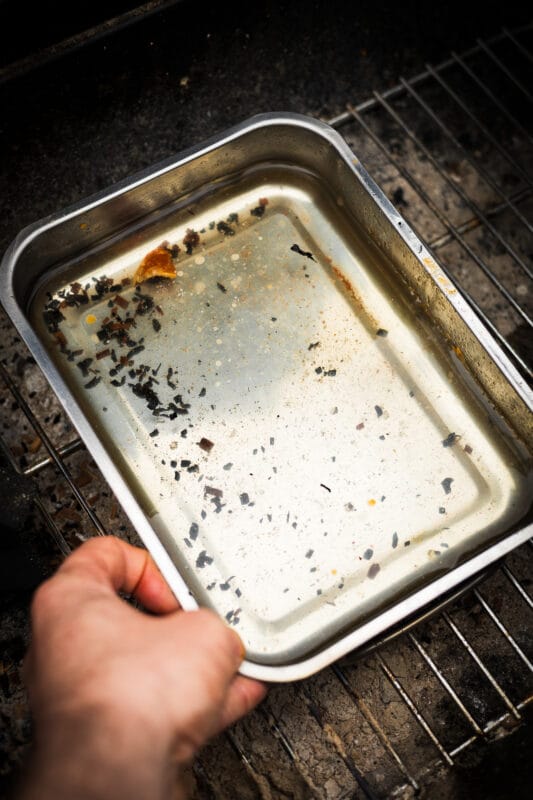
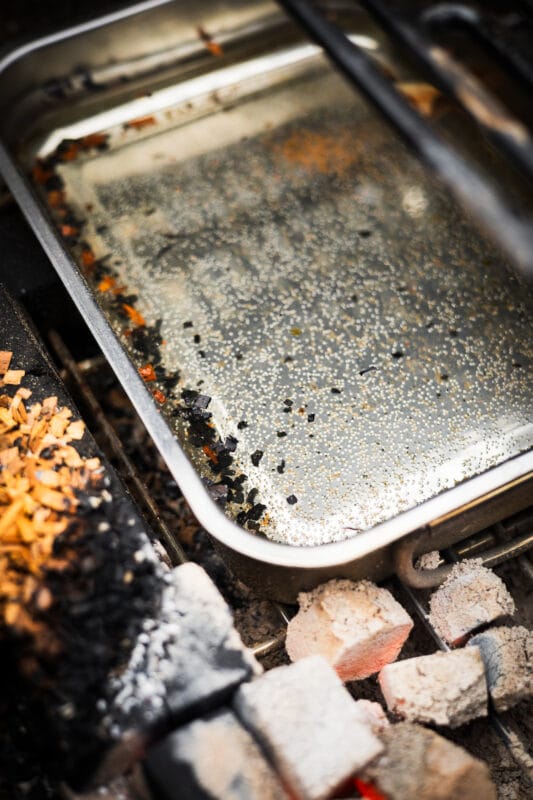
What about beer in your smoker water pan?
Let’s address the familiar habit of pouring beer, apple juice, wine, or cider into the water pan. It sounds appealing and, to be honest, a pan of beer beneath a brisket looks like proper weekend barbecue. In practice, though, it adds far less flavor than many people expect.
As the liquid evaporates, it is mainly water vapor that enters the cooking chamber. Most sugars, flavor compounds, and nonvolatile ingredients remain in the pan. After several hours, you are usually left with a dark, sticky concentrate that smells more like scorched sugar than fresh beer. Your brisket will not suddenly taste like a Belgian Trappist ale because a bottle was simmering underneath it.
If you really want to add another layer of flavor, there are better options:
- use beer in a marinade
- spritz the meat with apple juice or apple cider vinegar from a practical food-safe spray bottle
- work beer into a BBQ sauce, glaze, or reduction
- or simply drink it beside the grill
That last option is probably still the most efficient use. When I do use a water pan, I normally fill it with hot water. It is simple, inexpensive, and does exactly what the pan is meant to do: help regulate heat and humidity during a longer cook.
Conclusion: does a water pan in a smoker really help?
As with most things in BBQ, there is no simple yes-or-no answer. A water pan is not a magic trick that makes meat juicier. It is not useless, either. During long low and slow cooks, it can help stabilize the smoker and keep the surface receptive to smoke for a little longer.
In short, whether a smoker water pan is useful depends mainly on:
- the type of cooker
- the airflow through it
- the length of the cook
- the result you are trying to achieve
In some setups, the difference is barely noticeable. In others, a water pan makes the cooker steadier and easier to control. Treat it as a tool you can use deliberately, not as a mandatory rule for every BBQ session.
How do you use a water pan in your smoker? Do you go by feel, or do you follow the science behind BBQ? Let me know in the comments or reach out through Instagram or Facebook.
Frequently asked questions about smoker water pans
Does adding beer or another liquid to a smoker water pan add flavor?
Hardly at all. Mainly water evaporates, while most sugars and flavor compounds stay behind in the pan. A marinade, spritz, sauce, or glaze is a more effective way to add flavor to the meat.
When is a water pan in a smoker not useful?
A water pan adds little value during open-fire cooking, short high-heat grilling, or in a well-sealed kamado that already retains plenty of heat and moisture. It can also work against crisp skin and a strong sear.
Does a water pan work in every smoker?
No. Its effect depends on airflow, insulation, and cooker design. It is often helpful in kettle grills, offset smokers, and vertical water smokers, but usually less important in kamados and digitally controlled pellet grills.
Why do pitmasters use a water pan when smoking meat?
Pitmasters use a water pan to help stabilize temperature, raise humidity, slow surface drying, and keep the meat’s surface receptive to smoke. Those effects are most useful during long cooks such as pulled pork, brisket, or ribs.
What does a water pan in a smoker actually do?
A water pan indirectly affects temperature stability, humidity, smoke adhesion, and bark formation. It does not force moisture into the meat or automatically make it juicier.
I always received your mail in Dutch, and now I received the same mails again in English. This started around 30-7-2026
Hey Han,
sorry hiervoor. Ik zit momenteel met een blessure thuis en ben van de gelegenheid gebruik aan het maken om een engelse vertaling te voorzien bij mijn blogposts.
Blijkbaar zal er nog een instelling verkeerd staan waardoor ook deze vertalingsupdates worden doorgestuurd. Ik zoek het even uit.
Mvg, Simon.