
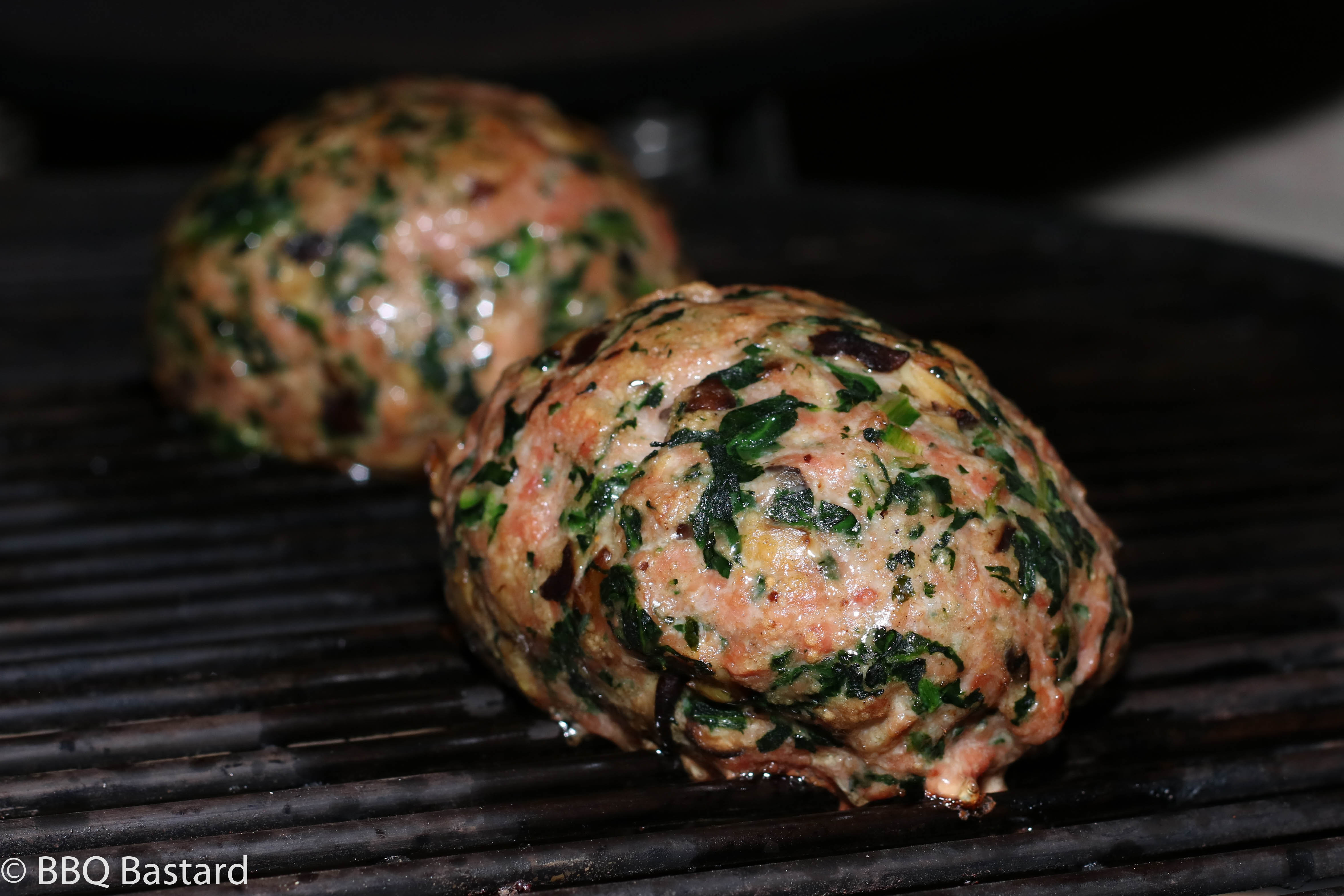
Until I opened Flemish star chef Piet Huysentruyt’s cookbook “Leven en Koken als Piet in Frankrijk“, “caillette” wasn’t even on my radar. It turns out to be a fantastic French classic from the Ardèche: a rustic blend of seasoned pork and leafy greens, traditionally wrapped in caul fat and bake. Juicy pork, earthy greens, and the absolute freedom to adapt a regional French dish into a smoked BBQ experiment? That was all the motivation I needed. I swapped ceps for savory shiitake, dialed back the garlic, and smoked two generous caillettes over lemon wood.
Traditional? Not quite. Worth repeating on your grill? Absolutely.
Disclosure: This post is not sponsored. The cookbook is mentioned solely because it inspired this recipe. As an Amazon Associate, I earn from qualifying purchases made through affiliate links on this page, at no extra cost to you. All opinions and experiences remain entirely my own.
Smoked caillette: the quick answer
Caillette is a rustic French pork-and-greens specialty from the Ardèche and Drôme regions. Traditional recipes blend fatty and lean pork, sometimes including liver, with spinach, Swiss chard, herbs, and spices. The mixture is hand-shaped, wrapped in caul fat (crépine), and baked.
My BBQ version takes a deliberately “modern turn”: ground pork, spinach, shiitake mushrooms, and smoked bacon are shaped into two large caillettes, then cooked indirectly at 300°F (150°C) over mild lemon wood until the center hits 160°F (71°C). Think of them as flavor-packed, smoked French pork-and-vegetable meatballs, crafted for the grill rather than a strict regional reconstruction yet attempting to respect it’s heritage.
If you enjoy working with minced meat, spices, and fresh herbs on the grill, be sure to explore my step-by-step guide on how to make ground meat at home to get the ideal meat-to-fat balance for your patties and sausages.
| At a glance | This recipe | Why it matters |
|---|---|---|
| BBQ setup | Indirect heat at 300°F (150°C) | The caillette cooks evenly without scorching the outside. |
| Smoke | A small amount of lemon, apple or cherry wood | Mild fruit wood supports the pork and mushrooms without burying them. |
| Shape | Two large caillettes of roughly 200 g each | Larger portions are easier to keep intact when you are not using caul fat. |
| Cooking time | About 45–60 minutes | Use time only as a guide; size and grill behavior vary. |
| Internal temperature | 160°F (71°C) | Measure in the center with an instant-read thermometer. |

What is Caillette and what’s the difference with my BBQ Adaptation?
Caillette belongs to the centuries-old pork-butcher tradition of southeastern France. While family recipes vary widely across the region, fatty pork, leafy greens, and aromatic seasonings always form the backbone. In the Ardèche and Drôme, local versions often combine pork throat, belly, or liver with Swiss chard or spinach, wrapped in caul fat (crépine) and oven-baked. Local tourism sources, such as Sources & Volcans, describe it as a signature regional specialty enjoyed both hot and cold.
That traditional framework is useful precisely because it highlights where my smoked BBQ version begins to wander off on its own.
No Caul Fat? No Problem!
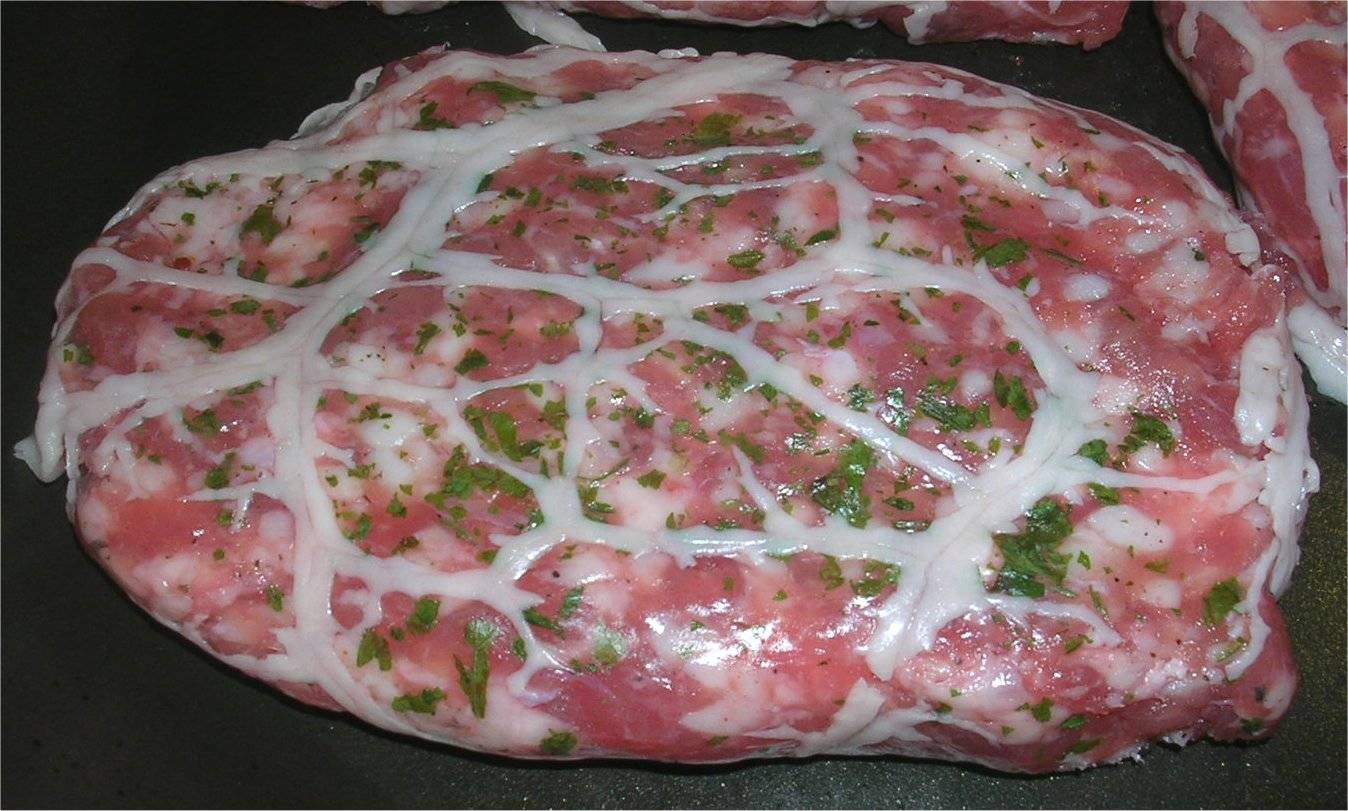
In traditional French butchery, caul fat (crépine), the thin, lace-like membrane from pigs, serves two purposes: it holds the loose meat and greens together and self-bastes the interior as it melts.
Since caul fat can be tough to source at a regular local butcher, I skipped the crépine altogether for this experiment. Instead, I relied on finely diced homemade bacon mixed directly into the ground pork, along with properly squeezed spinach. This gives the caillettes enough natural fat and binding power to hold their shape perfectly on the smoker grate without falling apart or drying out. That said, if you can get your hands on caul fat, I definitely recommend giving it a try!
Caillette is rooted deeply in the French charcuterie tradition. It belongs to that rich heritage of cochonnerie and nose-to-tail butchery, where simple cuts, offal, and fresh greens are transformed into comforting, handcrafted specialties. Interested in exploring more traditional curing techniques, sausages, and cured meats? Be sure to read my comprehensive charcuterie guide to master the essentials of salting, cold smoking, and temperature control.
What does caillette mean in English?
There is no perfect one-word English translation. “French pork-and-greens pâté” is probably the clearest description of the traditional dish, while “French pork meatball” makes the shape easier to understand. Neither translation tells the whole story: caillette sits somewhere between pâté, sausage filling and a large rustic meatball.
Caillette vs. Crépinette: What’s the Difference?
It’s easy to confuse these French charcuterie terms, but they are not the same:
- Caillette: The specific regional dish combining seasoned pork and leafy greens (like spinach or Swiss chard).
- Crépine: The anatomical French term for caul fat—the lace-like membrane used to wrap meat parcels.
- Crépinette: A general category of small, flattened sausages or meat cakes wrapped in caul fat.
In short: A traditional caillette can be wrapped in crépine to become a type of crépinette, but a crépinette doesn’t necessarily contain the leafy greens that define an authentic caillette.
Why this is a smoked BBQ caillette not a traditional version
While rooted in Provencal tradition, this version makes a few intentional adjustments to fit a practical backyard BBQ setup:
- Shiitake instead of ceps: The original recipe that inspired me called for wild ceps (porcini). Lacking a nearby forest, expert foraging skills, or wild mushrooms at the market, shiitakes proved to be an outstanding substitute. They deliver a deep, earthy umami profile that pairs brilliantly with pork and smoked bacon.
- Balanced garlic: I reduced the garlic to just two cloves. Even at this lower amount, the garlic flavor is clearly present without overpowering the delicate herbs and meat.
- Size and moisture balance: Because we are cooking these directly on the smoker grate, moisture control is everything. I slightly dialed back the ratio of greens and mushrooms, squeezed them thoroughly dry, and shaped the mixture into two larger, sturdy caillettes rather than several tiny ones to keep them juicy.
The ingredients and what they do
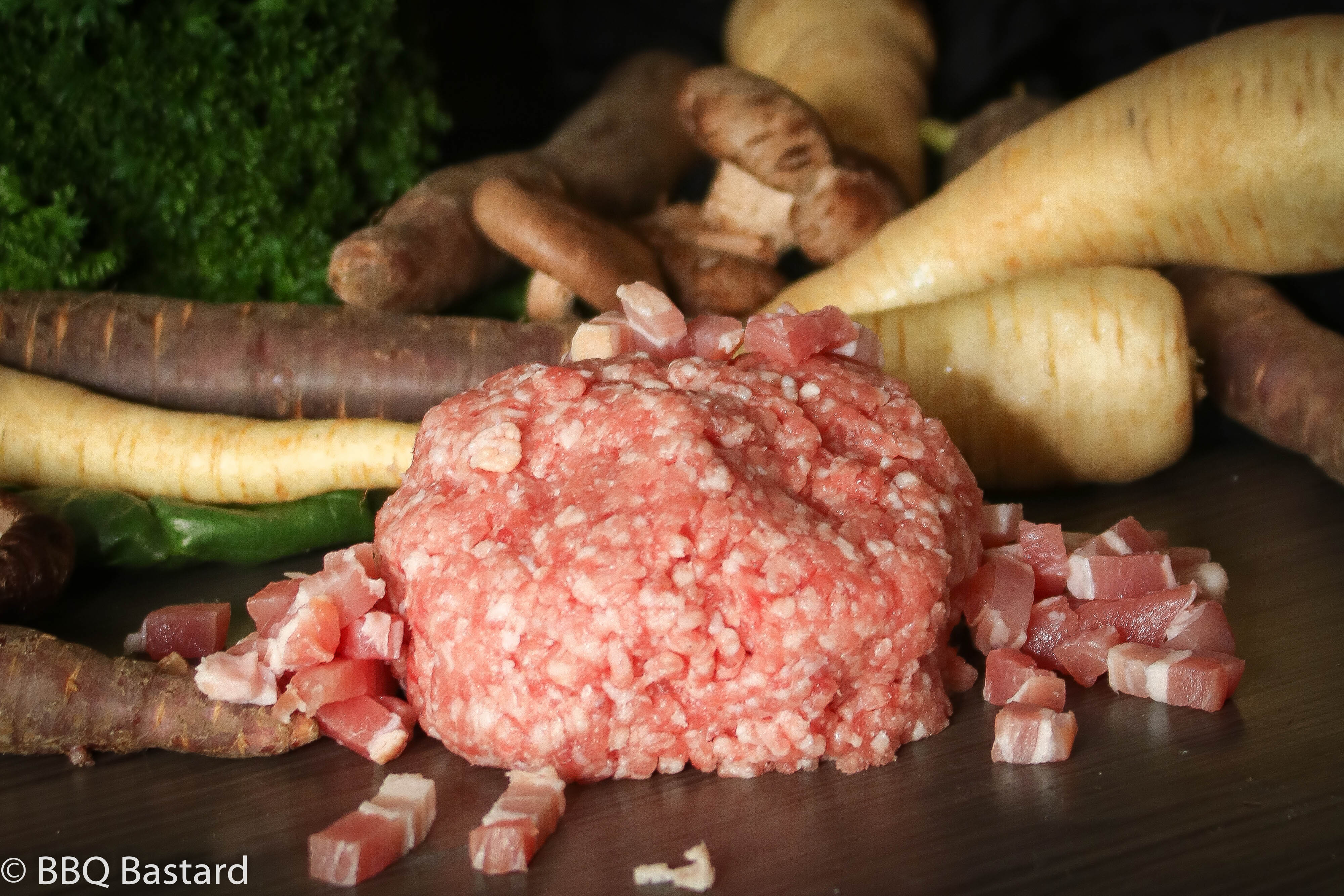
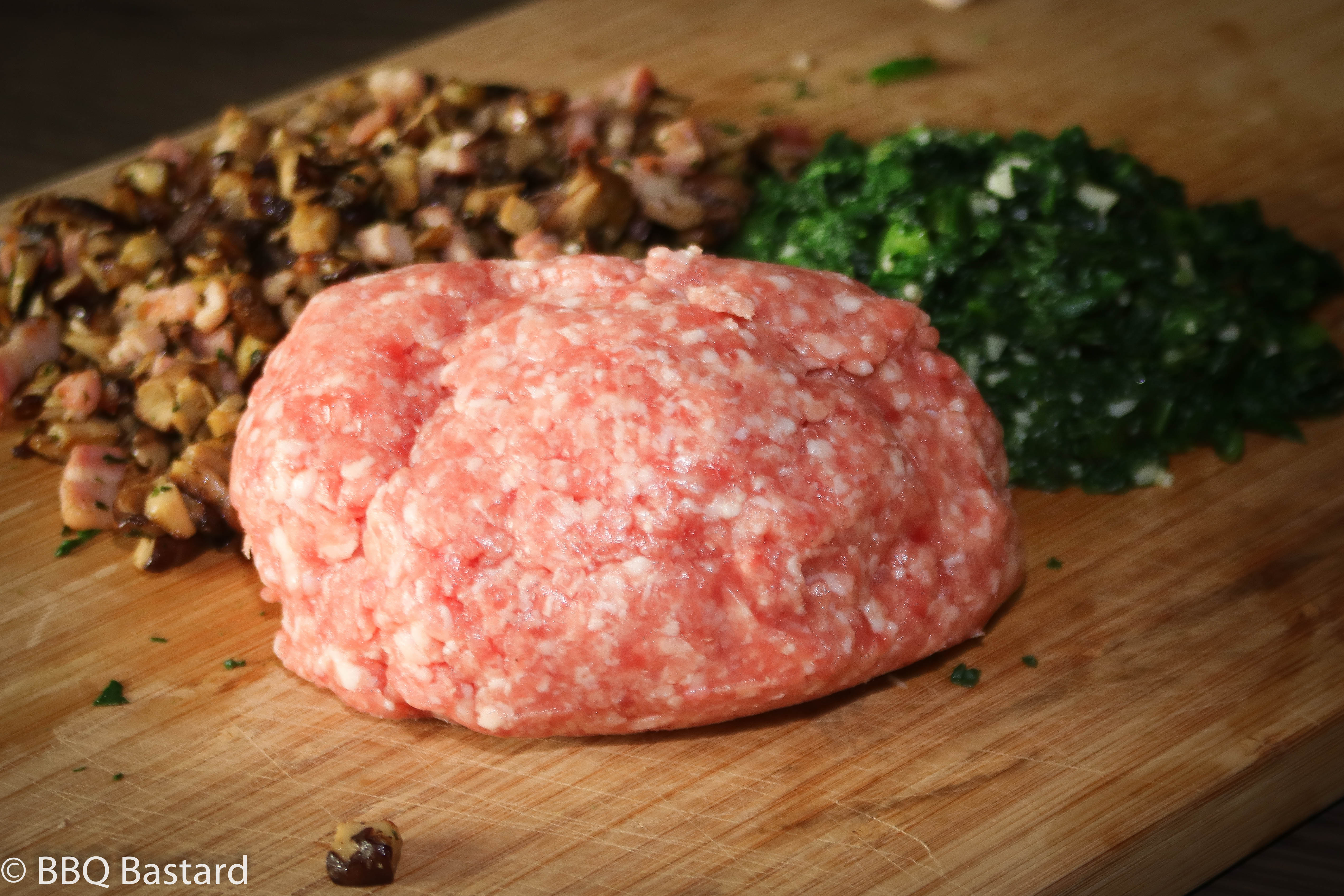
This is a straightforward ingredient list, but balance is everything here. Too much moisture will cause your caillettes to fall apart on the smoker grate, while too little fat leaves them dry. Here is how each component contributes to the flavor and structure:
| Ingredient | Function | Practical note |
|---|---|---|
| Ground meat | The structure and main pork flavor | Ground pork is closest to the traditional idea; a pork-forward mixed blend also works for this adapted version. |
| Spinach | Green, earthy character and moisture | Cook, cool and squeeze it very dry before mixing. |
| Shiitake | Deep savory flavor | Cook until their released moisture has evaporated. |
| Smoked bacon | Fat, salt and an extra smoky layer | Brown it gently before adding the mushrooms. |
| Breadcrumbs | Emergency moisture control | Add only when the cooled mixture still feels too loose. |
| Lemon zest | Freshness and lift | A small pinch is enough; it should not taste like lemon sausage. |
How to make caillette with spinach and shiitake
1. Cook and dry the spinach
Finely mince the garlic. Heat a knob of butter and a splash of olive oil in a skillet. Once the butter turns lightly golden, briefly sauté the garlic until fragrant. Add the washed spinach, season with salt and black pepper, and cook until completely wilted. Transfer to a colander and let it cool completely. Once cool enough to handle, squeeze out every single drop of excess liquid using your hands or a clean kitchen towel, then chop the spinach finely.
2. Render the bacon and sauté the shiitakes
Dice the shiitakes into small, uniform pieces. Toss the smoked bacon into a hot skillet and let the fat render gently before adding the mushrooms. Sauté until the shiitakes are tender and all their released moisture has fully evaporated. Stir in the chopped parsley, black pepper, a pinch of salt, and a subtle touch of lemon zest.
Crucial step: allow this mixture to cool down completely to room temperature before combining it with the raw pork.
3. Mix gentle and test the flavor
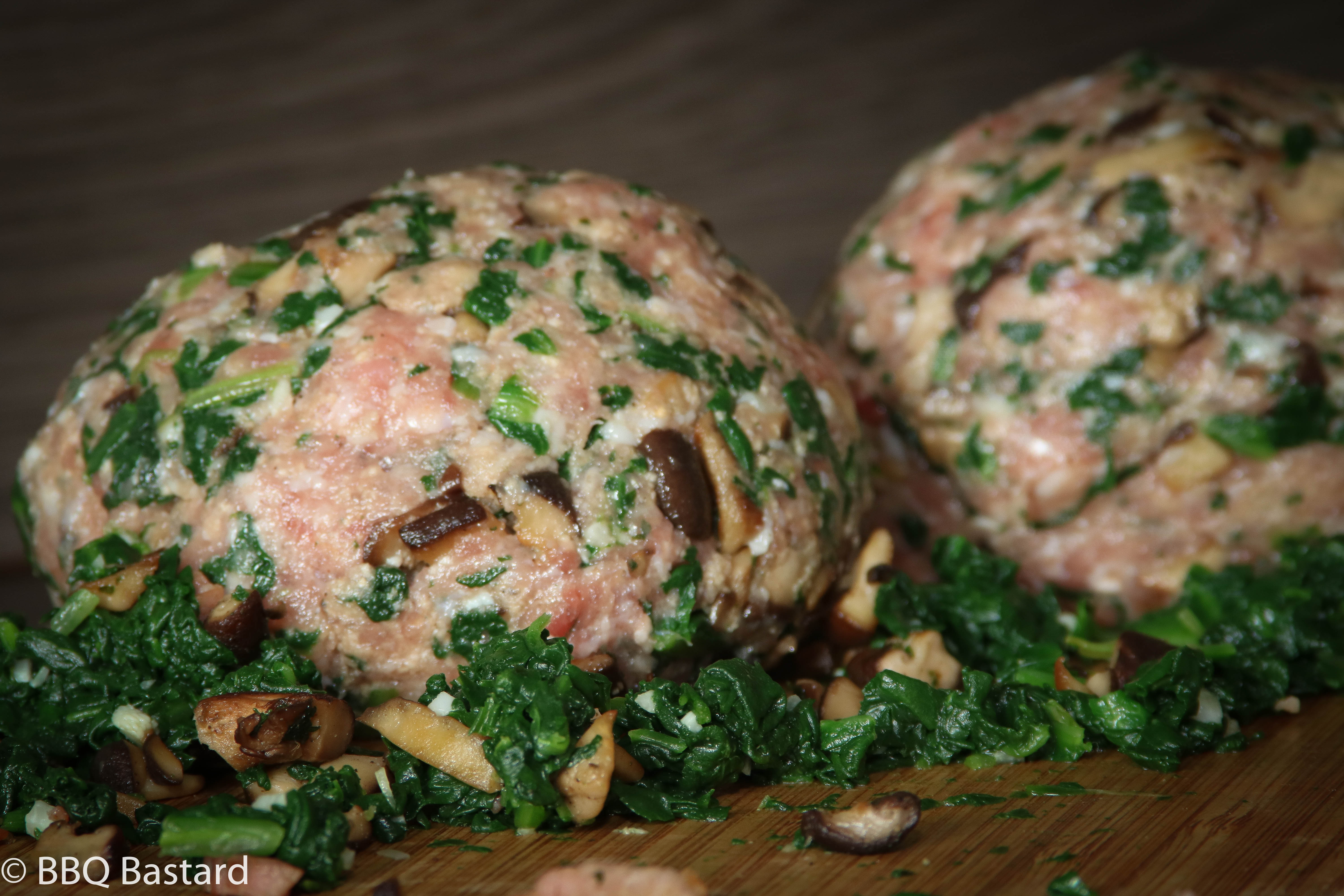
Combine the ground meat with the cold spinach and mushroom mixture. Gently work the ingredients together until evenly distributed, but stop before the meat turns into a dense, paste-like emulsion. If the mixture feels noticeably wet, fold in a tablespoon of breadcrumbs at a time until it tightens up.
Pitmaster Tip: Never taste raw pork mixture. Fry a tiny teaspoon-sized test patty in a hot skillet until fully cooked. Taste it and adjust the salt, pepper, or lemon zest in the main bowl before shaping your caillettes!
4. Shape and chill the caillettes
While traditional recipes often call for small portions, forming two larger caillettes (roughly 200 g / 7 oz each) helps them hold their shape without needing caul fat. Shape them firmly yet gently into smooth rounds. Place the formed caillettes on a plate and refrigerate for at least 30 minutes before grilling—this cold rest firms up the fats so they won’t fall apart on the smoker grate.
BBQ setup, smoke and internal temperature
Set up your grill or smoker for indirect cooking at 300 °F (150 °C):
- Kamado: Insert the heat deflector plates to block direct radiant heat. Check for heat deflectors fitting your set-up on Amazon.
- Kettle Grill: Set up a two-zone configuration, placing the charcoal on one side and the caillettes on the “cooler” side opposite the coals.
- Pellet Grill: Set to 300 °F (150 °C) and allow the pit temperature to stabilize. (If you use a pellet smoker and know our dutch language, check out my book on wood pellets taste better to choose the right hardwood blend).
Choosing the Right Smoke Profile
I used lemon wood for this session. Its gentle, slightly sweet citrus-like smoke profile complements the savory pork, earthy spinach, and shiitakes exceptionally well. Since lemon wood isn’t always easy to source, apple or cherry wood are outstanding alternatives. Use just one/two small wood chunks or a modest handful of pellets, these caillettes only need a subtle kiss of smoke, not a heavy smoke bath.
Pitmaster Tip: Not sure how to set up your specific grill for low-and-slow cooking? Read our complete guide on direct vs. indirect grilling to master two-zone setups and heat control.
Cooking and Target Temperature
Place the caillettes on the indirect side of the grate, close the lid, and let them gently cook until the core reaches an internal temperature of 160 °F (71 °C). This typically takes roughly 45 to 60 minutes, though thickness and airflow matter far more than the clock.
Always measure the temperature using a calibrated instant-read thermometer. Insert the probe horizontally from the side into the thickest part of the caillette so the sensor reaches the true center without leaving a large puncture hole where juices could escape.
No smoker? Bake the caillettes in a conventional oven at 300°F (150°C) until they reach 160°F (71°C) internally. The texture will still work, but you will naturally miss the wood-smoke layer.
EDITOR — AFFILIATE OPPORTUNITIES (check and remove before publishing)
- Instant-read thermometer: most relevant product link near the internal-temperature paragraph. Use the established WPRM/global equipment name for automatic Amazon linking.
- Cast-iron skillet: relevant for cooking both spinach and mushrooms. Prefer the English skillet guide as the first link; add an Amazon product button only if it does not make the paragraph feel commercial.
- Heat-resistant BBQ gloves: optional equipment link in the recipe card rather than forcing another body link.
- Apple or cherry smoking wood: useful Amazon-US candidate if a tested destination exists.
Affiliate URLs must use target="_blank" rel="sponsored nofollow noopener". Do not place Bol.com links in this English post.
How to Serve Smoked Caillette
I served these smoked caillettes with braised purple carrots and roasted parsnip. The caillettes turned out rich, savory, and perfectly balanced, but if I am being completely honest: that parsnip nearly stole the show! The lemon wood smoke provided just enough fruity depth to tie the pork, bacon, and earthy mushrooms together without overpowering the dish.
One of the greatest qualities of traditional caillette is its hot-or-cold versatility:
- Served Hot: Pair warm caillettes with buttery mashed potatoes, roasted root vegetables, or a sharp coarse-grain mustard.
- Served Cold: Once fully chilled in the fridge, slice the caillette thinly and serve with crusty sourdough bread, tangy pickles, and a crisp green salad.
Charcuterie Tip: Cold sliced caillette makes a fantastic addition to a rustic French-style homemade charcuterie board alongside dry-cured hams, cornichons, and a cold Belgian pale ale or crisp white wine.
Storing and Reheating
Cool any leftover caillettes promptly and transfer them to an airtight container. Keep refrigerated at 40 °F (4 °C) or below and enjoy within 3 days.
- Reheating: Warm gently in a 300 °F (150 °C) oven or skillet until heated through to the center. Avoid high heat to prevent the meat from drying out.
- Freezing: Wrap individual portions tightly in plastic wrap and butcher paper (or vacuum seal them with a foodsaver like this one on Amazon) before freezing for up to 3 months. Thaw overnight in the refrigerator before serving or reheating.
Rustic French cooking meets BBQ smoke
Is this exact caillette recipe what a traditional butcher in Ardèche would display in his showcase? Probably not, and I am completely fine with that. This is a personal BBQ adaptation that respects the heart of the original pork, fresh greens, and honest country cooking, while introducing rich shiitakes and a delicate layer of fruitwood smoke.
For me, that is where classic regional recipes become truly fascinating: not by claiming absolute authenticity, but by understanding the fundamentals deeply enough to innovate with purpose, technique, and taste.
Did You Make This Smoked Caillette?
★★★★★
Leave a star rating and share your experience below! Did you stick with caul fat or use Savoy cabbage? Which mushrooms made it into your blend, and what smoking wood did you fire up? Your feedback helps fellow outdoor cooks master this French classic with confidence.
Follow The BBQ Bastard:
Recipe: smoked caillette with spinach and shiitake

Smoked Caillette with Spinach and Shiitake
Equipment
- Lidded BBQ / grill with indirect setup
- 2 chunks Smoking wood Use a mild fruit wood like lemon, apple or cherry
Ingredients
Caillette mixture
- 400 g Ground pork or pork-forward ground meat blend keep refrigerated until mixing
- 25 g Smoked bacon finely diced
- 2 cloves Garlic finely chopped
- 150 g Fresh spinach washed and thoroughly dried
- 150 g Shiitake mushrooms finely diced
- 1 sprig Fresh parsley finely chopped
- Unsalted butter as needed for sautéing
- Olive oil as needed for sautéing
- Salt to taste
- Black pepper to taste
- 1 pinch Lemon zest finely grated; add sparingly
- 15 g Breadcrumbs use only when the mixture is too wet
Instructions
Prepare the filling
- Prepare the BBQ: Set up a lidded BBQ for indirect cooking at 300°F (150°C). For a charcoal grill, prepare one small chunk of mild lemon, apple or cherry smoking wood.
- Cook the spinach: Heat a little butter and olive oil in a cast-iron skillet. Let the butter turn lightly golden, add the garlic and cook briefly. Add the spinach, season with salt and pepper and cook until wilted.
- Drain thoroughly: Transfer the spinach to a colander and let it cool. Squeeze out as much liquid as possible, then chop it finely. Excess moisture makes the caillettes difficult to shape.
- Cook the mushrooms: Add the smoked bacon to the skillet and let some of its fat render. Add the shiitake and cook until tender and their released moisture has evaporated. Stir in the parsley, black pepper, a little salt and a small pinch of lemon zest. Cool completely.
Mix and shape
- Mix: Combine the cold ground meat, spinach and mushroom mixture in a large bowl. Mix until evenly distributed without overworking. Add the breadcrumbs only when the mixture still feels too wet to hold its shape.
- Check the seasoning safely: Do not taste the raw mixture. Fry a teaspoon-sized test patty until fully cooked, taste it and adjust the salt, pepper or lemon zest if needed.
- Shape: Divide the mixture into two portions of roughly 200 g (7 oz) and form compact caillettes. If the mixture feels soft, refrigerate the shaped caillettes for 20–30 minutes.
Smoke and serve
- Smoke: Add the smoking wood and place the caillettes on the indirect side of the BBQ. Close the lid and cook for approximately 45–60 minutes. Use time only as a guide.
- Check the temperature: Measure in the center with an instant-read thermometer. Remove the caillettes when they reach 160°F (71°C).
- Serve: Let the caillettes rest for 5 minutes. Serve warm with braised root vegetables, mashed potatoes or mustard, or chill and slice them for bread and salad.
Notes
EDITOR — RECIPE CARD
Import the accompanying JSON as an update of existing WPRM recipe ID 3473, not as a new recipe. Check the image, servings, times, metric-default display and global equipment links afterward. Existing ratings must remain attached to ID 3473. WPRM should remain the only Recipe-schema source.
Frequently asked questions about caillette
What is caillette made from?
Traditional French caillette combines pork belly, lean pork, and leafy greens like spinach or Swiss chard, seasoned with herbs, salt, and pepper. Many classic recipes include liver or eggs, and the mixture is traditionally wrapped in caul fat before baking or smoking.
What is caillette called in English?
There is no exact direct translation. It is best described as a rustic French pork-and-greens pâté or a baked French meatball. Outside France, it is simply referred to as caillette.
Do I need caul fat to make caillette?
No. While caul fat baste the exterior and holds everything together, you can easily substitute it with blanched Savoy cabbage leaves or simply shape larger caillettes, squeeze out all excess moisture from the greens, and chill them thoroughly before cooking.
Can I make this smoked caillette recipe in the oven?
Yes. Bake them at 300 °F (150 °C) until the internal temperature reaches 160 °F (71 °C). You will lose the signature wood-smoke profile, but the seasoning and tender texture remain fantastic.
Is traditional caillette made with lamb?
Authentic caillette from Ardèche and Drôme is strictly pork-based. While modern variation using lamb exist, they offer a distinctly different flavor profile and are not part of this traditional recipe base.
What internal temperature should caillette reach?
Because caillette uses ground pork, always cook the center to 160 °F (71 °C). Check this at the thickest part using an instant-read thermometer (Amazon) without touching the cooking grate.
Can I prepare caillette ahead of time?
Absolutly. Sauté the greens and mushrooms, let them cool completely, and shape the caillettes up to 24 hours in advance. Store them covered in the refrigerator and place them straight onto the smoker from cold (adding a few extra minutes to the total cook time).
EDITOR — INTERNAL BACKLINKS
This legacy English recipe currently attracts search impressions but needs stronger contextual support. Add at least the first two backlinks after publication:
- English charcuterie hub —
https://www.thebbqbastard.com/en/topics/bbq-recipes/meat/charcuterie/
Suggested copy: “For a cooked regional pork specialty rather than a cured project, try this smoked caillette with spinach and shiitake.” - How to make ground meat —
https://www.thebbqbastard.com/en/how-to-make-ground-meat/
Suggested copy: “Homemade ground pork also works beautifully in this smoked French caillette recipe with spinach and mushrooms.” - Direct vs. indirect grilling —
https://www.thebbqbastard.com/en/direct-vs-indirect-grilling/
Suggested copy: “The same indirect setup is used for these smoked caillettes, which cook gently before reaching a safe center temperature.”
After publishing: test every link, clear cache if necessary and request recrawling. Do not change the existing /caillette/ URL during this optimization.
They look delicious!
Thank you for introducing readers to “cailette”, they look yummy! I love to try things I’ve never heard of.
You’re welcome! You really should get to know them! They’re delicious! They come with a nice history I just read about! They are the traditional meal for the day after butchering the home raised pigs in France! Made from the leftover parts of shoulders and hams
These look sweet Simon. I’m impressed!
Thank you Derek!
I love the ingredients in this recipe. I am sure they taste wonderful!
Thank you for stopping by! The french know how to cook 🙂
Wow! French meatballs sound amazing. Would love to try them.
You really should! They are the best for meatball lovers 😉
Sounds quite tasty Simon. Did you use the caul fat? Interesting no egg is involved to bind. So these hold together well on their own as the recipe states? I’m definitely a meatball lover so will give these a go! Thanks. BTW, where are you located? Happy New Year to you and the family.
Hey Kevin,
I’m from Belgium. The same to you 😉 concerning the caillette, I did not use the Caul fat. That’s why I lowered the amount of spinach. Somebody ther than me succeeded to make them using this recipe, so it should work 🙂
Cheers
I love the history behind this recipe AND it looks and sounds delicious. Thanks for sharing!
Thanks Ange! Glad you like it! Have a nice day!