
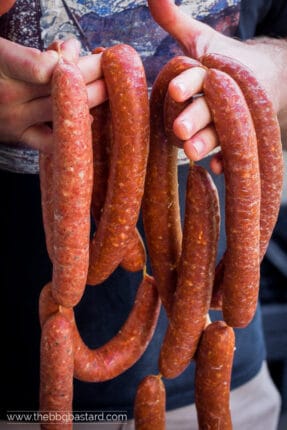
Nothing beats the moment a homemade sausage hits a hot grill and the smell of smoked paprika drifts across the yard. Making homemade chorizo sausage may sound like butcher-level work, but the basic process is surprisingly approachable: keep everything cold, grind it coarse, mix until tacky, stuff the casings, and cook the links safely. You control the balance of pork, fat, smoke, and heat—and this version stays mild enough to serve at a family barbecue.
Disclosure: This post may contain affiliate links. If you buy something through one of those links, I may earn a small commission at no extra cost to you. All opinions and experiences are my own.
What is fresh chorizo?
Chorizo is a family of sausages, not one single formula. Spanish chorizo is often fermented and cured, while Mexican chorizo is generally sold fresh and frequently cooked without a casing. This recipe sits in its own clear lane: it is a fresh, stuffed, Spanish-inspired pork chorizo seasoned with smoked paprika and red wine, then smoked and grilled. It is not meant to represent every regional style.
Fresh chorizo is much easier to make at home than a dry-cured sausage because it needs no fermentation chamber or controlled aging. You grind, season, stuff, and refrigerate the links before cooking them all the way through. Questions from fellow cooks in the Belgian BBQ community inspired me to work out a version with plenty of character but restrained chile heat. Most of its extra smoky flavor comes from the wood on the grill.

What meat and fat should you use?
Use 1 pound 10.5 ounces (750 g) pork shoulder and 8.8 ounces (250 g) pork back fat. That is a repeatable three-to-one ratio of lean meat to fat. The fat brings flavor, but it also keeps the sausage juicy and gives it the right texture. Lean pork alone can turn dry and crumbly.
Cut the meat and fat into roughly 3/4-inch (2 cm) cubes. Chill them in the freezer for 30 to 60 minutes, until very cold and firm but not frozen solid. Chill the grinder knife and plate too, if possible. Cold fat cuts cleanly; warm fat smears and can leave the sausage pasty.
If you want to understand the process in more depth, start with my guide to making ground meat at home. For this sausage, keep the pork shoulder and back-fat ratio specified here.
Build your charcuterie skills
Fresh chorizo is a great introduction to grinding, seasoning and stuffing sausage. When you are ready to explore bacon, lomo, jerky and other curing projects, continue with my complete guide to homemade charcuterie.
What goes into chorizo seasoning?
Smoked paprika, or pimentón, is the center of this recipe. It provides the deep red color and unmistakable smoky backbone. Spanish pimentón de la Vera is available as sweet (dulce), hot (picante), or bittersweet (agridulce). Use sweet paprika for a family-friendly link, or replace part of it with hot paprika to build more heat.
| Ingredient | What it does | What to watch |
|---|---|---|
| Smoked paprika | Adds deep color and smoky flavor | Choose sweet, hot, or a blend |
| Fresh garlic | Builds a savory, pungent base | Mince or crush it very finely |
| Oregano | Adds earthy freshness | Dried oregano disperses well |
| Cumin and fennel | Add warm, aromatic depth | Crush or grind before mixing |
| Salt and black pepper | Season and help develop the bind | Weigh precisely; do not guess by volume |
Cook a test patty before stuffing. Never taste raw sausage mixture. Fry a small spoonful until fully cooked, taste it, and adjust the seasoning while you still can.
Equipment for making chorizo sausage
You can achieve fantastic results with fairly basic equipment when making quality fresh chorizo. However, having the right gear makes a world of difference between struggling in the kitchen and working smoothly, hygienically, and with a professional end result.
- Meat grinder with a coarse grinding plate (6 to 8 mm): Crucial for your chorizo’s texture. A plate that is too fine turns your meat into paste, while a coarse plate ensures that characteristic, artisanal structure where meat and white fat remain clearly visible.
- Vertical sausage stuffer (sausage press) or stuffing horn: Although many meat grinders come with a sausage attachment, a standalone, manual sausage stuffer offers much better control. It prevents the meat mixture from warming up due to friction heat from the grinder motor, plus it leaves both hands free to guide the casing smoothly.
- Digital precision scale (accurate to 0.1 grams): When making sausage, the ratio of meat, fat, and salt is extremely precise. An error of just a few grams of salt can be the difference between a perfectly bound sausage and an inedible, salty bite.
- Large, chilled mixing bowls (stainless steel or glass): Stainless steel conducts and retains cold best. Since low temperatures are essential for protein binding and preserving the fat structure, it is best to use spacious bowls pre-chilled in the refrigerator.
- Meat thermometer: Indispensable for BBQ preparation. Since you first smoke the chorizo low & slow and then briefly sear it, monitoring the core temperature ensures the sausage does not dry out or lose its rendered fat.
- Sausage pricker (or clean thin pin): Crucial for carefully piercing trapped air bubbles in the filled casing before placing the sausages on the grill. This prevents the casing from bursting during cooking.
If you plan to make sausage more than once, investing in proper tools like a reliable meat grinder and a small dedicated sausage stuffer is the biggest upgrade you will notice. It keeps the mixture cold and lets you guide the casing with both hands.
How to make fresh chorizo sausage
1. Prepare the pork, fat, and casings
Cut the pork shoulder and back fat into even pieces and chill thoroughly. Rinse the salted hog casings according to the supplier’s directions, then soak them in cool water. Keep the raw pork and every part that touches it cold throughout the process.
2. Grind the pork coarse
Grind the cold meat and fat through a 5/16-inch (8 mm) plate. Work quickly. If the mixture becomes noticeably soft or greasy, return it to the refrigerator before continuing.
3. Mix until tacky
Add the weighed seasonings, garlic, and red wine. Mix until the meat becomes tacky and begins to hold together. Stop once you have that bind; do not let the mixture become warm or mushy. Cook and taste a small test patty before stuffing.
4. Stuff the hog casings
Slide the casing onto the stuffing tube and fill it slowly and evenly. Fill it firmly, but leave enough give to twist the links without splitting the casing. Prick only obvious air bubbles with a clean sausage pricker.
5. Form and rest the links
Choose the length you want and twist successive links in alternating directions. Set them on a rack, uncovered, in the refrigerator for a few hours. This short rest dries the surface slightly and makes the links easier to handle on the grill.

How to smoke and grill fresh chorizo
Set up the grill for indirect heat at 195–230°F (90–110°C). If that setup is new to you, read the guide to direct and indirect grilling. Add a modest amount of smoking wood and wait for clean, light smoke. Thick, stagnant smoke can make the casing bitter.
Smoke the chorizo over indirect heat until the center reaches about 150°F (65°C). Move the links briefly over direct, high heat to brown the casing, then take them off as soon as the thickest link reaches 160°F (71°C). This two-zone method adds color without leaving the center undercooked. For more on managing a steady low fire, see the low-and-slow BBQ guide.
Fresh chorizo is raw ground pork and must be fully cooked. The USDA safe minimum for ground pork is 160°F (71°C). Check the center of the thickest link with a clean thermometer. Keep raw sausage and its utensils away from cooked food, and refrigerate the links promptly. See the USDA safe-temperature chart.

Common homemade chorizo mistakes
| Problem | Likely cause | Fix |
|---|---|---|
| Dry, crumbly sausage | Too little fat or too much heat | Keep the 75/25 ratio and cook by temperature |
| Greasy, pasty texture | Meat and equipment became warm | Chill everything and pause when the fat softens |
| Loose filling | The mixture was not mixed to a tacky bind | Mix while cold until it clings to itself |
| Split casings | Overstuffing, trapped air, or harsh direct heat | Leave some give, prick visible bubbles, and start indirect |
| Bitter smoke flavor | Too much dirty smoke | Use less wood and maintain clean airflow |
How to store and freeze fresh chorizo
Treat uncooked chorizo like fresh ground pork: keep it refrigerated at 40°F (4°C) or below and cook it within one to two days. For longer storage, portion and freeze the raw links promptly in airtight packaging. Thaw them in the refrigerator, not on the counter. Cooked links can be refrigerated for three to four days.
Please leave a star rating on the recipe card below! Your feedback helps other pitmasters discover this recipe and helps me keep improving these guides for the community.
Rate this recipeHomemade fresh chorizo sausage recipe
Homemade Fresh Chorizo Sausage
Equipment
- Large chilled mixing bowl
- Sausage pricker or sanitized fine needle
- Grill or smoker set up for two-zone cooking
Ingredients
Fresh chorizo
- 1 2/3 lb pork shoulder well chilled and cut into 3/4-inch pieces
- 9 oz pork back fat well chilled and cut into 3/4-inch pieces
- 0.5 oz fine salt weigh this ingredient; volume varies by salt type
- 0.7 oz smoked paprika use sweet pimentón, hot pimentón, or a blend
- 1 1/4 tsp finely ground black pepper
- 1 1/2 tsp ground cumin
- 1 tsp fennel seed lightly crushed or ground
- 2 tsp dried oregano
- 2 cloves garlic finely minced or crushed
- 3 1/2 tbsp dry red wine well chilled
- ground cayenne or hot pimentón optional, to taste
- 6 ft hog casings rinsed and soaked according to the package directions
Instructions
Prepare and grind
- Cut the pork shoulder and back fat into roughly 3/4-inch (2 cm) pieces. Spread them on a tray and freeze for 30 to 60 minutes, until very firm around the edges but not frozen solid. Chill the grinder plate, knife, feed tube, and mixing bowl at the same time.
- Rinse the hog casings inside and out, then soak them in cool water following the supplier’s directions. Keep them refrigerated until you are ready to stuff.
- Combine the salt, smoked paprika, black pepper, cumin, fennel, oregano, and optional chile in a small bowl. This prevents concentrated pockets of seasoning in the sausage.
- Grind the cold pork and fat once through the 5/16-inch (8 mm) plate into the chilled bowl. The fat should remain clearly defined. If it starts to smear or the mixture feels soft, refrigerate it before continuing.
Season and stuff
- Add the seasoning blend, garlic, and cold red wine. Mix firmly by hand or with a paddle on low speed until the mixture becomes sticky, holds together, and leaves a light film on your palm. Work quickly so the fat stays cold.
- Cook a small patty in a skillet until it reaches 160°F (71°C). Taste it and adjust the heat or seasoning if needed. Never taste the raw sausage mixture.
- Load the mixture into the sausage stuffer and slide the prepared casing onto the tube. Fill it evenly without packing it drum-tight. Leave enough casing at both ends to tie it securely, and prick only visible air pockets with a sanitized sausage pricker.
- Form eight evenly sized links, twisting each new link in the opposite direction from the previous one. Place the links uncovered on a rack in the refrigerator for about 2 hours so the surface dries slightly and the seasoning settles.
Smoke and finish
- Set up the grill for two-zone cooking with an indirect zone at 200–225°F (95–110°C). Add one small chunk of mild fruitwood or a modest amount of smoking wood. Wait for clean, light smoke before adding the sausage.
- Arrange the links over indirect heat, close the lid, and smoke until the center of the thickest link reaches about 150°F (65°C). Turn the links once or twice for even color. Use temperature as the guide; grill type, link thickness, and weather can change the timing.
- Move the links briefly over direct heat and turn them frequently until the casings are browned. Remove them as soon as the center reaches 160°F (71°C). Rest for 3 to 5 minutes before serving.

Notes
Frequently asked questions
Is this Spanish or Mexican chorizo?
Can I make chorizo without a sausage stuffer?
Can I use pork belly instead of back fat?
Why did my chorizo turn dry?
How spicy is this recipe?
Homemade sausage is part recipe and part process. Keep clear notes on your paprika blend, smoke wood, and final heat level. Once the basic bind and cooking method are right, the next batch is where you can make this chorizo unmistakably yours.


