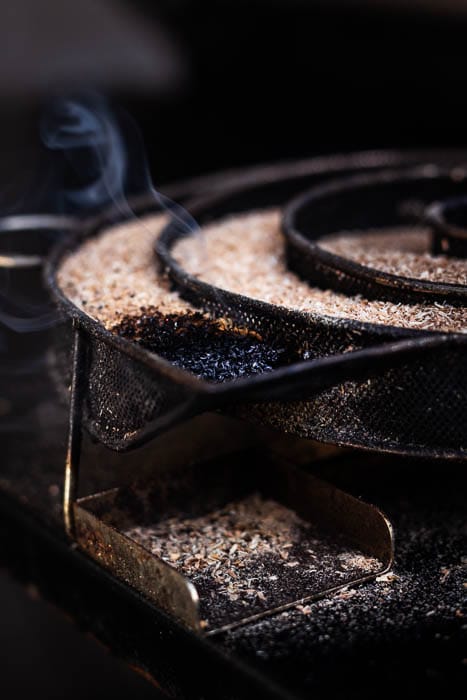
When the weather turns cold, most people pack up their grills for the season. For me, that’s when I get the itch to fire mine back up. Game season brings new ingredients, but cooler weather also makes cold smoking much easier to control. With a cold smoke generator, suitable fuel and enough airflow, you can add smoke flavor to cheese, nuts, salt and carefully prepared fish or meat without cooking the food. This guide explains how cold smoking works, how to keep the chamber below 77°F (25°C) and how to solve the problems that most often interrupt a session.
Disclosure: This post may contain affiliate links. As an Amazon Associate, I earn from qualifying purchases. If you buy through one of these links, I may receive a small commission at no extra cost to you. All opinions are my own.
What is cold smoking?
Cold smoking exposes food to wood smoke without using enough heat to cook it. The smoke usually comes from a small, smoldering quantity of hardwood sawdust or pellets. This adds smoke aroma while cheese remains firm and raw products do not visibly begin to cook.
For my cold-smoking sessions, I keep the temperature at food level below 77°F (25°C) and preferably below 68°F (20°C). Think of this limit as a practical rule of thumb to keep your food from cooking, not an absolute guarantee of food safety. Cold smoking does not cook food. Raw fish and meat still require a reliable product-specific recipe, correct curing, refrigeration and careful hygiene.
Smoke does not automatically destroy harmful microorganisms, and curing alone does not make every raw product safe. The National Center for Home Food Preservation advises using reliable, research-based procedures for home curing and smoking. With meat or fish, follow a complete tested recipe in which cure, time, temperature, refrigeration and the intended final preparation work together. People who are pregnant, very young, older or immunocompromised should avoid raw or undercooked animal foods.

Cold smoking vs. hot smoking
Hot smoking cooks the food while smoke adds flavor. Pulled pork, ribs and hot-smoked salmon are familiar examples. The exact cooker temperature changes with the food, but it is well above the range used for cold smoking.
Cold smoking separates smoke production from cooking. A small ember moves through sawdust or pellets and produces smoke with very little heat. This is useful when you want smoke flavor without melting cheese, roasting nuts or cooking a cured product. It also means that the smoke cannot compensate for an unsafe preparation method.
| Method | Main purpose | Heat | Result |
|---|---|---|---|
| Cold smoking | Add smoke without cooking | Below 77°F (25°C) in this guide | Food remains uncooked unless prepared separately |
| Hot smoking | Cook and smoke at the same time | Depends on the food and desired texture | Food cooks during the smoking stage |
What can you cold smoke?
For a first test, choose something that is already safe to eat and mainly needs flavor. Cheese, salt and nuts allow you to learn how your generator burns without combining that lesson with curing raw fish or meat.
| Food | Why it works | Main consideration |
|---|---|---|
| Firm cheese | Absorbs smoke readily | Keep it cool enough to prevent softening; rest it after smoking |
| Salt and dry spices | Easy way to add smoke to later dishes | Spread in a thin layer and stir occasionally |
| Nuts | Smoke complements their toasted flavor | Use clean, gentle smoke and avoid an excessive session |
| Butter | Takes on smoke quickly | It softens easily, so work in very cool weather |
| Cured fish or meat | Classic cold-smoked products | Use a complete product-specific recipe; smoke alone does not make them safe |
From smoke technique to charcuterie
Cold smoking is often only one step in a larger curing or drying process. If you want to see how smoke fits into bacon, lomo, duck and other meat projects, continue with my complete guide to homemade charcuterie.
What equipment do you need for cold smoking?
Cold smoking doesn’t require a dedicated, high-end smokehouse. As long as you can control airflow and keep temperatures low, your current setup will likely do the job. Here is the essential gear you need to build a reliable cold-smoking setup at home:
- An enclosed but ventilated chamber: a kamado, kettle grill, smoker or pellet grill with controllable airflow.
- A cold smoke generator: a fine-mesh maze for sawdust or a smoke tube made for pellets.
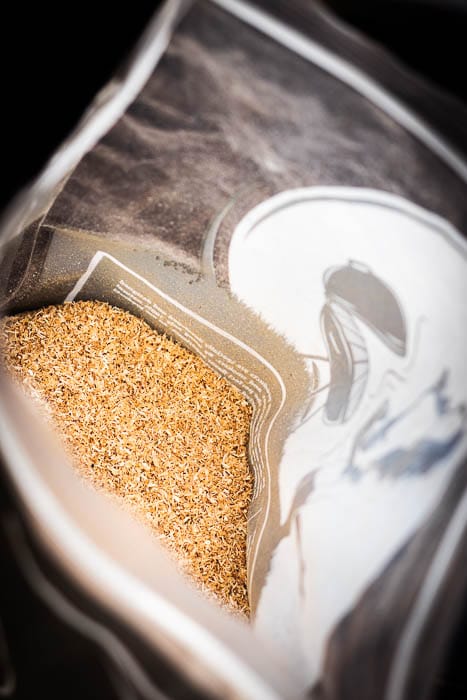
- Dry smoking fuel: use the particle size intended for your generator.
- A reliable ambient thermometer: measure near the food rather than relying only on a thermometer high in the lid.
- A safe ignition tool: usually a small torch or tea light, depending on the generator instructions.
- A grate and drip-proof tray: arrange the food so that air and smoke can move around it.
A grill does not need to be expensive to act as a smoke chamber. It does need to be stable, ventilated and noncombustible. I would not recommend an improvised cardboard box: the generator contains a live ember, and a combustible enclosure adds a fire risk that is easy to avoid.

Which cold smoke generator should you choose?
Cold smoke generators include electric units, pellet tubes and mesh maze-style generators. I do not have personal experience with automated electric models. My best results have come from a fine-mesh spiral filled with dry hardwood sawdust.
In the United States, pellet tubes are often easier to find than fine smoking sawdust. They are practical and widely compatible, but pellets create a larger smoldering mass and can add more heat. A fine-mesh maze or spiral gives me a slower, gentler burn when the correct sawdust is available.
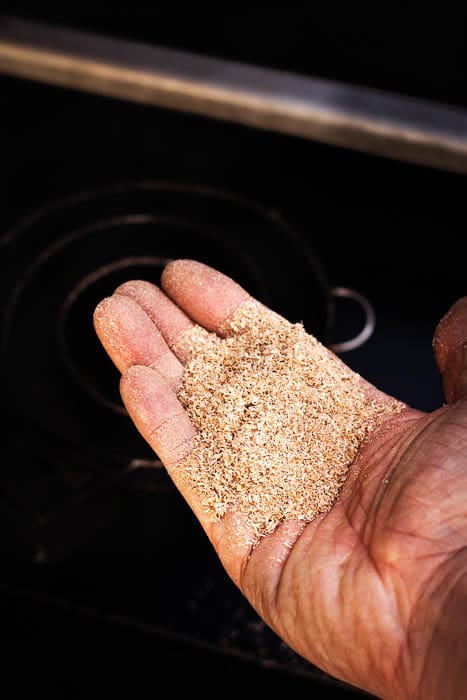
Choose a generator that matches the fuel you can reliably buy. Fine mesh is designed for sawdust; larger holes and tubes are generally intended for pellets or coarser material. A large maze offers more flexibility because you can partially fill it for a short session or use its full capacity for a longer burn.
Choose a fine-mesh maze when you can source properly sized smoking sawdust and want a very low, slow burn. Choose a pellet tube when hardwood pellets are easier to find or you want a simple option that works in many grills. In either case, check the temperature at food level before adding a temperature-sensitive product.
Which sawdust or pellets should you use?
Use clean hardwood smoking sawdust or food-grade hardwood pellets made for cooking. Do not use workshop sawdust, construction scraps, treated wood, painted wood or unknown blends. The fuel must also be dry: damp material is one of the most common reasons a smoke generator goes out.
| Wood | Character | Useful pairings |
|---|---|---|
| Beech | Balanced and fairly neutral | Cheese, salt, vegetables and fish |
| Apple | Mild and lightly fruity | Cheese, pork, poultry and fish |
| Cherry | Soft fruitiness with a deeper color | Pork, duck, cheese and nuts |
| Hickory | Strong and savory | Pork, beef and robust cured meats |
| Oak | Classic, medium-strength smoke | Beef, cheese, salt and oily fish |
How do you use a cold smoke generator?
1. Choose a cool day
Start when the outside temperature gives you a realistic chance of keeping the smoke chamber below 77°F (25°C). A cold evening or night is usually easier than a sunny afternoon.
2. Prepare the food completely
Cheese, salt and nuts need little preparation. Raw fish and meat are different: complete every curing, drying and refrigeration step required by the specific recipe before starting the generator. Never invent curing-salt quantities or interchange different curing salts gram for gram.
3. Fill the maze or tube correctly
Fill a maze loosely and keep neighboring channels separate. If sawdust overlaps between two lanes, the ember can jump across and shorten the burn dramatically. Do not pile it too high. Fill a pellet tube according to its manufacturer’s instructions and leave enough airflow around the fuel.
4. Light one end
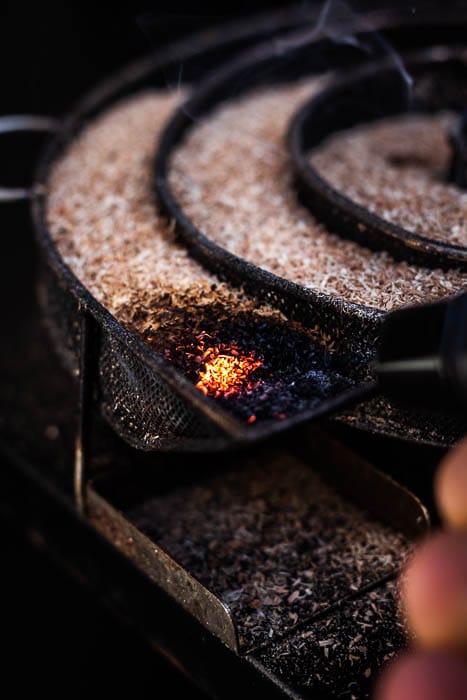
Ignite only one end. Allow it to catch, then extinguish the visible flame so that a small ember remains. The fuel should smolder slowly rather than burn with an open flame.
5. Establish intake and exhaust airflow
The ember needs oxygen and the smoke needs an exit. Open the lower intake enough to sustain the burn and keep the upper vent open enough for a gentle draft. Thick white smoke that hangs motionless in the cooker usually means the airflow is too restricted.
6. Position the food above and away from the generator
Place the generator low in the cooker and keep the food well above it or offset to the side. Do not allow fat or moisture to drip onto the ember. Make sure smoke can move around every surface.
7. Monitor smoke and temperature
Check shortly after ignition that the generator continues to smolder and the temperature remains below 77°F (25°C). In a closed, noncombustible grill or smoker, you do not need to stand beside it every second, but you should verify that the setup is stable and check it periodically. As always, stick to the basic fire-safety guidelines for both your grill and your smoke generator.

How do you cold smoke on a kamado?
A kamado works well as a smoke chamber, but its insulation also retains heat. Remove all burning charcoal and place the cold smoke generator securely at the bottom. Put the food as high and as far from the generator as practical.
Install the ceramic heat deflectors between the generator and the cooking grate. They help shield the food from the small amount of radiant heat produced by the ember. They do not replace temperature measurement: place an ambient probe at grate level beside the food.
Keep both vents open enough to maintain a gentle draft. Closing a kamado almost completely may reduce the temperature, but it can also starve the generator and trap stale smoke. In cool weather the chamber will often remain well below 77°F (25°C), but sunlight, a warm ceramic body or a pellet tube can still raise the temperature. See the next section for the full temperature guidance.
No burning charcoal, generator low in the base, heat deflectors installed, food high in the dome, both vents partly open and an ambient probe beside the food. If the chamber moves above 77°F (25°C), stop and choose a cooler time.
What temperature should you use for cold smoking?
I use 77°F (25°C) as the upper limit for the applications in this guide and prefer to work below 68°F (20°C). Measure where the food sits. A lid thermometer can read differently because warm air collects higher in the chamber.
That makes crisp, chilly weather your absolute best friend here. I plan most sessions for fall and winter. Direct sun can warm a dark grill even when the air feels cool, so move the cooker into the shade before you begin. If you cannot hold a low, stable chamber temperature, postpone the session.
Can you use ice to cool the smoker?
While a tray of ice or frozen gel packs can temporarily drop the chamber temp, it’s rarely a reliable way to salvage an unseasonably warm day. The cooling effect fades, and the extra cold surface encourages condensation. Water can drip onto the food or generator, dampen the fuel and make the burn unstable.
If you use ice, keep it in a stable, leak-proof pan between the generator and food without blocking airflow. Watch both condensation and the temperature at food level. Ice is a small adjustment, not a substitute for cool ambient conditions.
Curing, drying and the pellicle
Many fish and meat recipes cure the product before it is cold-smoked. The exact salt concentration, curing salt, time and temperature depend on the product and recipe. European nitrite curing salt is not interchangeable gram for gram with American Prague Powder #1. Never convert one by volume or substitute it without recalculating the complete formula from a reliable source.
After curing, the surface is often dried until it becomes slightly tacky. This layer is called a pellicle and helps smoke adhere more evenly. Keep the food refrigerated while it dries unless the tested recipe explicitly specifies another controlled condition.
How long should you cold smoke food?
There is no universal cold-smoking time. Salt or nuts may need only a short flavoring session, while cheese and cured products may use several hours or repeated sessions. Generator output, chamber size, airflow, wood species and the food itself all change the result.
Start modestly. Heavy smoke does not automatically build better flavor. Long exposure to dense, stagnant smoke can create an overpowering, acrid result. Cheese and some cured foods also benefit from resting after smoking so the aroma becomes more even.
| Product | Estimated Time | Key Focus |
|---|---|---|
| Hard & Semi-Hard Cheese | 2 – 4 hours | Keep temps low; let rest 2+ weeks wrapped in fridge to mellow out |
| Salt, Spices & Garlic | 6 – 10 hours | Stir occasionally for even exposure |
| Nuts & Seeds | 2 – 4 hours | Spread thin; avoid heavy, stagnant smoke |
| Butter | 1 – 2 hours | Keep ambient temp strictly below melting point (<20°C/68°F) |
| Cured Meat & Fish | Recipe dependent | Never guess times; strictly follow tested curing formulas |

Why does my cold smoke generator keep going out?
A generator that goes out is usually dealing with moisture, unsuitable fuel or insufficient oxygen. The table below helps isolate the cause without changing everything at once.
| Problem | Likely cause | Practical solution |
|---|---|---|
| Generator goes out | Damp sawdust or pellets | Store fuel dry and condition a small portion before use |
| Generator goes out | Sawdust too coarse for fine mesh | Use fuel made for the generator or reduce it carefully without turning it into powder |
| Generator goes out | Fuel packed too tightly | Refill loosely so oxygen can reach the ember |
| Generator goes out | Too little intake air | Open the lower vent and check that ash or a tray is not blocking airflow |
| Fire jumps lanes | Fuel piled high enough to bridge two channels | Fill the maze lower and remove every overlap between neighboring lanes |
| Smoke tastes harsh | Long exposure to thick, stagnant white smoke | Increase ventilation and aim for a gentle flow of lighter smoke |
| Chamber gets too warm | Warm weather, sun or too much smoldering fuel | Move into shade, use less fuel or postpone the session |
| Condensation forms | Ice, poor airflow or a very cold food surface | Improve airflow and keep water away from both food and generator |
- Microwave: spread a small quantity in a microwave-safe dish and heat it in very short bursts, stirring and checking between each burst. Never walk away. Stop immediately if it smells scorched, darkens or begins to smoke, and let it cool completely before filling the generator.
- Grinder: if the particles are too coarse for a fine-mesh maze, process very small batches briefly in a dedicated coffee or spice grinder. Do not make powder; material that is too fine can restrict airflow again. Never grind pellets or unknown wood products.
Explore more cold-smoking & outdoor cooking recipes and ideas
If you enjoy cold smoking, there is a whole world of flavor to explore—from quick savory additions to patient, long-term charcuterie projects. Here are a few great places to continue your journey:
- Cold-smoked duck prosciutto: A classic charcuterie project featuring duck breast equilibrium-cured with berries and fresh herbs, then cold-smoked over hickory.
- Hot-smoked salmon: Looking for incredible smoky flavor without the commitment of a multi-week cold cure? Hot smoking delivers rich, fully cooked results. (Note: My step-by-step English guide for traditional cold-smoked salmon is currently in translation and coming soon!)
- Low and slow BBQ: Learn how to master heat management, airflow, and clean smoke for traditional barbecue projects.
- How to grill fish: Essential advice on grill setups, temperatures, and prep techniques when you want to cook fresh fish over open heat instead of cold smoking it.
More English cold-smoking recipes and translated guides will be added regularly as the international blog grows. Remember: curing ratios, salt percentages, and safety guidelines vary significantly between different meats and fish, never copy curing proportions from one project to another!
For research-based background on home curing and smoking, consult the National Center for Home Food Preservation. General guidance cannot replace the exact ratios and process controls of a tested recipe.
Pick a cool day, use dry sawdust, and keep a close eye on airflow and temperature. Once your generator burns steadily, a whole world of cold-smoked flavors is within reach.
Got experience with cold smoking, or have a question about your setup? Drop a comment below!
Leave a CommentFrequently asked questions about cold smoking
What temperature is used for cold smoking?
For the applications in this guide, I keep the chamber below 77°F (25°C) and preferably below 68°F (20°C). Measure at food level. This prevents the food from beginning to cook; it does not make a raw product automatically safe.
Can you cold smoke on a kamado?
Yes. Do not use burning charcoal. Put the generator securely at the bottom, install the heat deflectors, place the food high in the cooker and leave enough intake and exhaust airflow. Measure the temperature beside the food.
Why will my smoke generator not stay lit?
The fuel is usually damp, too coarse, packed too tightly or starved of oxygen. Use dry fuel made for the generator, fill it loosely and increase the intake airflow.
Can you cold smoke without a maze or pellet tube?
You can produce smoke remotely and route it through a pipe into a separate chamber, allowing the smoke to cool along the way. That setup is more involved. A correctly matched maze or pellet tube is usually easier to control at home.
Does cold smoking preserve food?
Not by itself. Smoke adds flavor and may form one part of a controlled preservation process, but it does not make food safe or shelf-stable on its own. Safety and storage depend on the food, cure, moisture loss, packaging, temperature and hygiene.
How do you prevent an overpowering smoke flavor?
Use a modest amount of dry fuel and maintain a gentle draft through the chamber. Long exposure to thick, stagnant white smoke is more likely to create a sharp, unpleasant flavor.