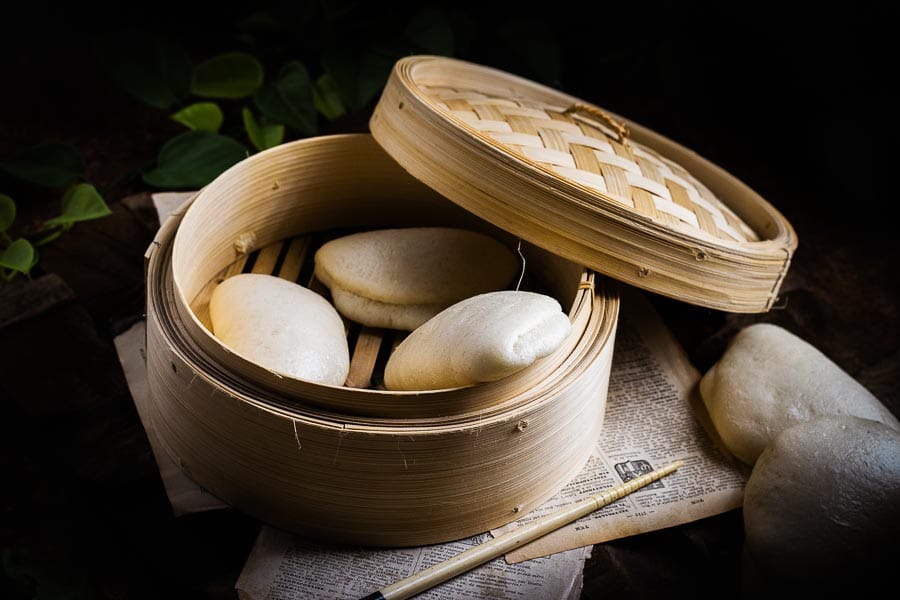
Soft enough to fold, sturdy enough to hold a generous BBQ filling: that is what I want from a homemade bao bun. These steamed buns have no crust, so the dough stays light and the filling gets to shine. I’ll show you how I make the dough, what I learned from a few less-than-perfect batches, and how to steam and freeze the buns. But first, a little background on the bread itself.
Disclosure: This post may contain affiliate links, including links to Amazon. If you buy through one, I may earn a small commission at no extra cost to you. My opinions and recipe choices are my own.
Homemade bao buns: the short answer
To make these soft folded buns, mix and knead a yeast dough, let it rise, shape it into small ovals, fold each one, and steam until light and fully cooked. This batch makes about 35 small buns. Allow about 3 hours 35 minutes for preparation, proofing, and one 10-minute steam batch. If you have a small steamer basket, additional batches take more time. The complete ingredient list and steps are in the English recipe card below.
What are bao buns?
Bao is often used as a broad name for soft steamed buns. The dough is light, gently sweet, and cooked with steam instead of baked in dry oven heat. That is why the buns stay soft rather than developing a crust. Their mild flavor also gives the filling room to do its thing.
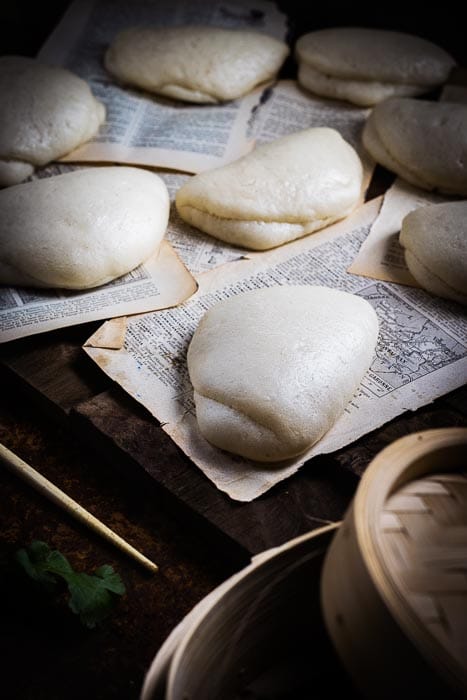
There are several ways to shape steamed buns. For this recipe, I make a folded bun you open after steaming and fill at the table. I love it with gochujang glazed pork belly from the BBQ. Other buns have their filling sealed inside the dough before steaming; you only see what is in them after the first bite. If you want another filling for the folded version, my quick pulled pork is an option. Cook the pork separately, then tuck it into the warm bun just before serving.
The story behind steamed buns
Start reading about Chinese steamed buns and you soon run into two appealing stories. One places their beginnings roughly 1,800 years ago, around the Han dynasty. Another describes convenient food carried by travelers or soldiers. The problem is that the different kinds of steamed bread developed over a long time; those neat origin stories do not establish a date or an inventor for the folded buns I am making here.
I still like the image of a warm bun eaten out of hand. It helps explain the appeal of this kind of streetfood today, even if it cannot prove exactly how a particular bun traveled across Asia. If the history interests you, this overview of steamed buns and their stories is a good starting point. Read the tales as culinary tradition, rather than a precise timeline.
What we can enjoy without arguing about a single point of origin is the variety: buns filled with roasted pork, versions with vegetables or tofu, and folded buns that can hold something straight from the grill. That is where my BBQ instincts kick in.
How do you make soft bao buns?
Where does the fluffy texture come from?
Flour, liquid, yeast, and sugar are the starting point. For my version, I chose Hong Kong-style bao flour from an Asian grocery store. It gave me the light, soft texture I wanted. Regular all-purpose flour is the alternative in the recipe card. Flour alone does not decide whether a bun succeeds, though. Kneading the dough well, giving it time to rise, and shaping it gently all make a difference.
Knead for about 10 minutes, until the dough forms a soft ball around the hook and is only slightly tacky. Doing this by hand is a great arm workout, but if you prefer to let machinery do the heavy lifting, a reliable stand mixer equipped with a dough hook makes the job effortless without heating up the dough.
Why use baking soda and baking powder?
This dough uses yeast as well as small amounts of food-grade baking soda and baking powder. Yeast works while the dough rises. Baking soda, or sodium bicarbonate, can release carbon dioxide when it reacts with acid in the dough or is heated. Baking powder already contains an acid component and can release additional gas when moistened and heated. Those gas bubbles help lighten the dough. More is not necessarily better: stick to the amounts in the recipe card so the buns keep their mild flavor.
Check the label: by baking soda I mean food-grade sodium bicarbonate. Household washing soda is a different product and does not belong in the dough.
What gives the buns their flavor?
For this part, I took inspiration from the steamed buns in David Chang’s book Momofuku (available on Amazon). Milk powder and fat give the dough a fuller flavor and soft bite. I doubt I would have thought of adding milk powder if I had not read the book. The result still tastes gentle enough to carry a strong BBQ filling, but the bread has character of its own.
What I learned while making these buns is to give the dough the time it actually needs. Don’t stare at the clock when the dough clearly has other plans: look for it to rise. I use sunflower oil because its lighter taste suits the fillings I like. Chang uses animal fat in his version, which takes the flavor in a richer direction. Choose what works with the filling you want to serve.
How to steam bao buns
Steaming is what keeps these buns tender instead of giving them a baked crust. A bamboo steamer is useful, but it is not the only way. Whichever setup you use, keep the buns above the water, trap the steam with a lid or steam oven, and leave room for each bun to expand.
1. Use a covered pot and steamer basket
Bring water to a gentle boil in a pot with a well-fitting lid. Set a Bamboo steamer basket or the steaming basket insert from your pot above the water. Place the shaped buns on their individual parchment squares, leaving a little space between them so they do not stick together. Cover and steam for about 10 minutes per batch, as described in the recipe card. Keep an eye on the water level so the pot does not boil dry.
2. Steam bao buns without a bamboo steamer
A sturdy, heat-safe colander can work as a makeshift insert if it sits securely above the water and you can cover it properly. Give the buns room to rise. This setup is less convenient than a proper basket: depending on the shape of your colander, you may only fit one or two at a time, and the buns can come out a little crooked. They will still taste good, but steaming a batch of 35 this way takes patience.
3. Steam oven or regular oven?
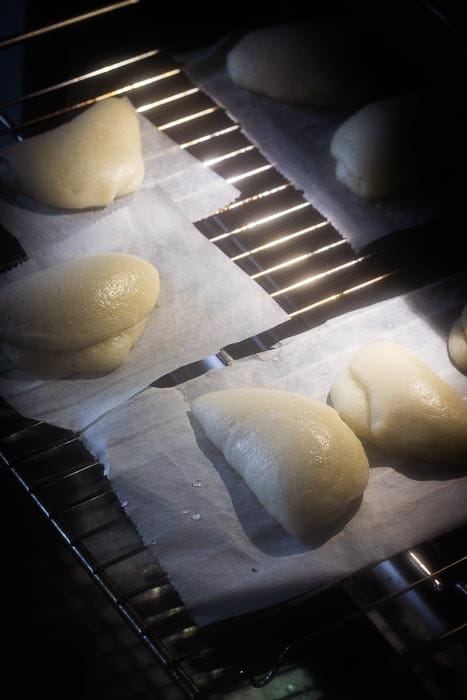
A real steam oven is an excellent option if you have one. Set it to 212°F (100°C) for the recipe and leave enough space around each bun. A regular oven with a tray of water is a different story. The regular oven does not create the same enclosed, humid environment as a steamer or steam oven. The surface can dry or set differently, a simple bamboo steamer is a much better alternative.
How to store and freeze bao buns
The buns are at their best fresh from the steamer. But when you are making a batch this size, freezing the extras makes sense. That leaves you free to focus on the filling when you want to eat them. Keep any cooked meat filling separate, and follow its own storage and reheating directions.
- Let the buns cool. Cool them before packing so you do not trap unnecessary moisture inside. Do not leave them sitting at room temperature longer than needed.
- Keep them from sticking. Lay the buns apart or separate them with parchment. Then you can take out only the number you need.
- Pack them airtight. Use a freezer-safe bag or container. If you use a bag, press out excess air gently without squashing the buns.
- Date the package. You will know which batch to use first.
- Freeze without flattening them. Give the buns space until they are firm, then arrange them more compactly if you need to.
How long can you keep frozen bao buns?
For the best texture, I prefer to use them within about two months. If they stay tightly wrapped and constantly frozen, three months is really the outer limit for maintaining quality. That is how they keep their taste and structur, though it naturally depends on your freezer, and storing them longer can cause them to dry out or pick up unwanted odors.
How do you reheat frozen bao buns?
Take out the buns you need and steam them until soft and fully hot all the way through. The recipe suggests about three minutes, but thicker buns or a crowded steamer may need longer. You do not have to leave them out to thaw at room temperature first. Heat the meat filling separately, then assemble just before serving.
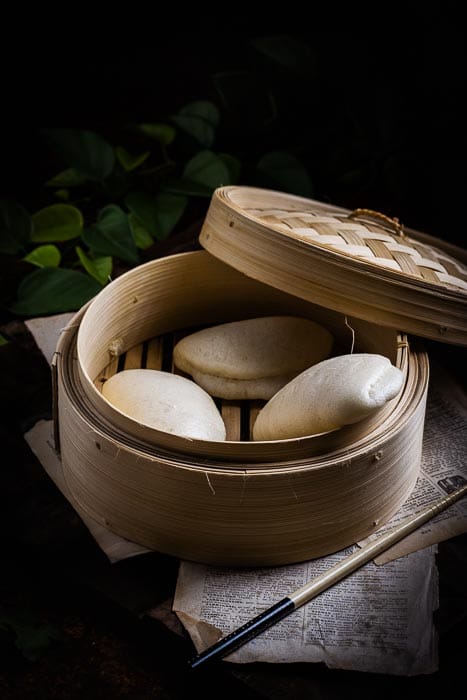
These buns did not come easily to me at first. It took a few failed attempts before the dough and the folding technique started to make sense. Practice helped, and the last ones finally looked pretty good. At least, I thought so.
Then my son asked to make the final bun and, with just a little guidance, shaped what might have been the best one of the whole batch. A little humbling for me, and a great job by him. If you make these at home, let me know how they turn out.
What would you put inside your bao buns?
Glazed pork belly, pulled pork, vegetables, or something completely different? Leave a comment and an honest star rating once you have tried the recipe. It helps other cooks, and it tells me what you want to see next.
Share your result and tag @the_bbq_bastard.
Instagram · Facebook · Pinterest
Recipe: homemade steamed bao buns
Homemade Bao Buns: Soft Steamed Buns
Equipment
- Mixing bowl
- Rolling Pin
- Chopsticks
- Parchment paper
- Steamer pot optional
- Steam oven optional
Ingredients
Bao Dough
- 4 tsp active dry yeast
- 150 ml water at room temperature; used to activate the yeast
- 200 ml milk at room temperature
- 550 g bao flour or all-purpose flour Hong Kong-style bao flour if available;
- 6 tbsp granulated sugar
- 3 tbsp nonfat dry milk
- 1 tbsp salt the quantity in the original recipe; verify it against the batch you tested before publishing
- 1/2 tsp baking powder
- 1/2 tsp food-grade baking soda sodium bicarbonate; never washing soda
- 80 ml sunflower oil plus a little extra for shaping; about 1/3 US cup
Instructions
Mix the Dough and First Rise
- Stir the active dry yeast into the 150 ml (5 fl oz) water at room temperature. Let it sit for about 10 minutes until you see signs of activity. This water is part of the listed ingredient amount; do not add extra.
- In the mixing bowl of a stand mixer, combine the bao flour, nonfat dry milk, baking powder, food-grade baking soda, sugar, and salt. Mix until evenly distributed.
- Fit the dough hook and start the mixer on low. Slowly pour in the water with the yeast, then the milk, and finally the sunflower oil. Knead for about 10 minutes, until the dough forms a soft ball around the hook and is only slightly tacky.
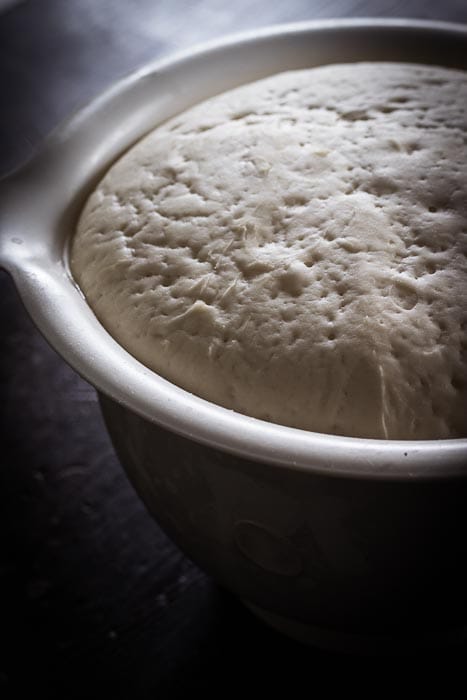
- Lightly oil a large bowl, add the dough, and cover. Leave it at room temperature for about 1 hour 30 minutes, or until visibly doubled in size. Watch the dough rather than the clock: a cool room can slow the rise.
Divide, Shape, and Proof
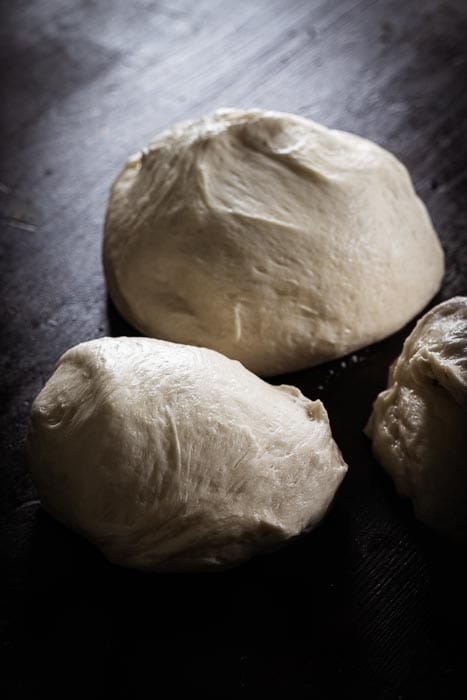
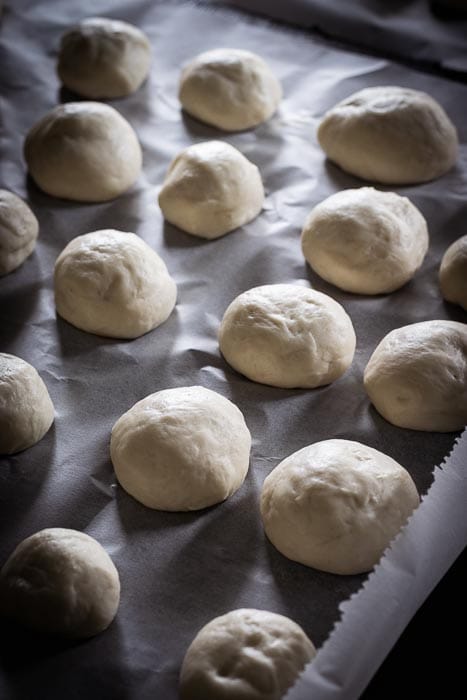
- Gently press the dough down on a clean work surface. Divide it into about 35 equal pieces, roughly 30 g (about 1 oz) each, and roll them into smooth balls.
- Place the dough balls on parchment with a little space between them. Cover loosely and let rest for about 30 minutes.
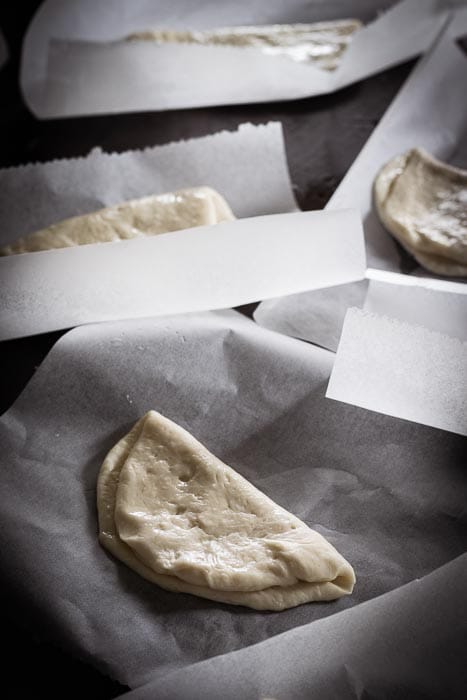
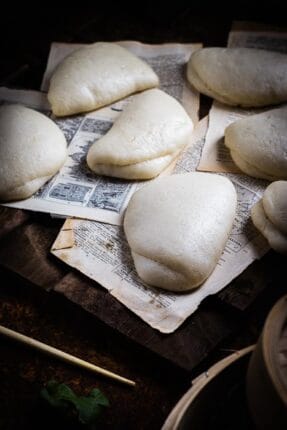
- Lightly oil the rolling pin and a chopstick. Flatten a dough ball, then roll it into an oval about 4 inches (10 cm) across. Oil slightly on the surface. Place the oiled chopstick across the middle, fold the dough over it, and gently slide it out. Transfer the folded bun to its own small square of parchment. Repeat with the remaining dough.
- Space the shaped buns apart, cover loosely, and let rest for about 45 minutes. Toward the end, prepare the steam oven or steamer pot.
Steam and Serve
- Preheat a steam oven to 212°F (100°C), or bring the water in a covered steamer pot to a gentle boil. Put the buns on their parchment squares in the steam oven or steamer basket, leaving room for them to expand. Steam for about 10 minutes per batch until fluffy and fully cooked. A small basket will require several rounds, adding to the total elapsed time.
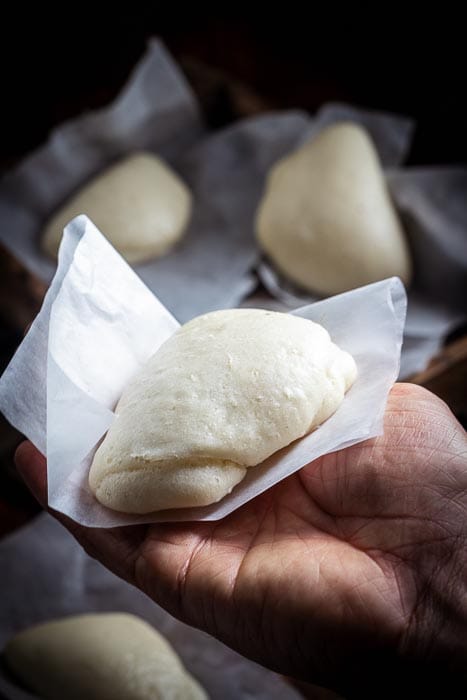
- While the buns are still warm, gently open each fold a little so the sides do not stick together as they cool. Serve warm with pulled pork, glazed pork belly, vegetables, or another filling of your choice.
- Let the unused buns cool and pack them airtight for the freezer. For reheating, the original recipe suggests steaming frozen buns for about 3 minutes; check that the centers are fully hot, and give them more time if needed. Store and reheat cooked meat fillings separately.
Notes
Once the buns are ready, the BBQ can join the party. My quick pulled pork is a good make-ahead filling. Looking for a completely different bread project next time? Try my beer bread baked on the grill.
Frequently asked questions about bao buns
Can I make bao buns without a bamboo steamer?
Yes. Use a suitable steamer insert in a covered pot or a sturdy heat-safe colander that sits above the water. Give the buns room to expand. A real steam oven also works. A regular oven with a water tray will not give the same result.
Why are my bao buns not fluffy?
Check your yeast, give the dough enough time to rise, and handle it gently when shaping. I use Hong Kong-style bao flour, plus the small amounts of baking soda and baking powder listed in the card. The steam setup also matters: keep the lid closed and leave space between the buns.
How long do you steam bao buns?
For the small buns in this recipe, steam for about 10 minutes per batch at 212°F (100°C) in a steam oven or over gently boiling water in a covered steamer. The buns should look expanded and be cooked through. A bigger or thicker bun may need longer.
How long can I freeze homemade bao buns?
Freeze the cooled buns airtight and aim to use them within about two months for the best texture. Reheat by steaming until fully hot; the three-minute guideline from the original recipe is a starting point, not a guarantee for every bun or steamer.
Where did bao buns originate?
Steamed buns have a long history in Chinese food, with many regional shapes and fillings. Claims that this exact folded bun was invented at a precise date or by one person are harder to verify. I treat those stories as culinary folklore rather than established history.


