
I still remember the early days of this blog. One of the first recipes I shared was my BBQ take on a turkey roulade by Belgian cookbook author Pascale Naessens, made for a birthday party. Years later, I realized I hadn’t made another turkey roulade since. Time to fix that! The plan: turchetta, a smoked turkey breast rolled with herbs in the spirit of Italian porchetta. No crispy pork crackling here, but plenty of flavor from the herbs and smoke. How do you keep the breast juicy, what goes in the filling, and how do you cook the roll on the grill? Let me walk you through it.
Disclosure: This post may contain affiliate links. If you buy through one, I may earn a small commission at no extra cost to you. My experiences and opinions remain my own.
Smoked turkey roulade: the short answer
Turchetta is a porchetta-inspired turkey roulade filled with herbs, coppa, and mozzarella. Brine a boneless turkey breast for 8–12 hours in the refrigerator using 60 g salt per liter of water. Butterfly and dry the breast in the fridge, spread on the herb paste, add the filling, and tie it tightly. Cook over indirect heat, ideally at 225–250°F (107–120°C) for the slower smoked version. Check that both the thickest part of the turkey and the center of the filling reach 165°F (74°C) before removing the roll. Rest for 10–15 minutes before slicing.
Step 1: Brine the turkey breast for a juicy turchetta
The idea comes from porchetta: herbs, a tight roll, butcher’s twine, and patient cooking. I add one extra step for turkey. Pork belly brings plenty of fat to a traditional porchetta; turkey breast is much leaner and can dry out more easily.
So I brine the breast in 60 g salt per liter of water (about 2.1 oz salt by weight per 4¼ US cups water). The brine seasons the meat and helps it retain moisture as it cooks. Onion, star anise, thyme, rosemary, bay, sage, and optional lemon verbena also go into the pot; you’ll meet some of those flavors again in the filling. Let the cooked brine cool completely, then submerge the turkey and refrigerate it, covered, for 8–12 hours. Overnight works nicely. Use a food-safe container or a suitable vacuum bag sealed with a foodsaver, and make sure the breast stays covered by brine. If you need more liquid, keep the same salt-to-water ratio.


Step 2: Butterfly and dry the turkey breast
Pat the brined turkey breast dry and place it on a clean cutting board. Slice horizontally with a sharp chef’s knife or deboning knife into the thickest side without cutting all the way through. Open it like a book and, if needed, make another shallow cut so you have a reasonably even sheet to roll up. I leave about ½ inch (1.5 cm) at the bottom of the cut. What matters most is keeping it in one piece without creating paper-thin spots.
Place the opened breast on a rack, smooth uncut side facing up, and let its surface dry for about two hours in the refrigerator. A tray beneath the rack will catch any drips. You can also pat the surface thoroughly dry with paper towels. A drier exterior takes on smoke more evenly. While the turkey is in the fridge, make the filling.


Step 3: Make the turchetta herb filling
Like porchetta, this turkey breast gets a generous coating of herb paste before I roll it. Crush garlic, black peppercorns, and finely grated lemon zest with a little lemon-infused olive oil in a mortar and pestle. If you want some heat, add a red chile here as well. The breast has already been brined, and the coppa brings salt of its own, so I don’t add any more to the paste.
Next come thyme, rosemary, and sage. I also added lemon verbena from the garden for a fresh lift, though it’s optional. A nice extra when you have it! Spread the paste across the cut side of the turkey, layer on the coppa or pancetta, and finish with shredded mozzarella. Roll the breast as tightly as you can and secure it with butcher’s twine. If tying a roast feels awkward, this short demonstration shows a simple knot.


Step 4: Smoke the turkey roulade over indirect heat
Now that the turchetta is tied, all that’s left is the cook. There’s no pork skin to crisp, so you can choose how much time you give the smoke. For the slower version, set up the grill for indirect heat at 225–250°F (107–120°C) and add a modest amount of smoking wood. For a quicker dinner, roast it indirectly at about 350°F (180°C), adding smoke if you like. Aim for a steady cooking temperature; the slow option should not sit below 225°F (107°C).
At the higher temperature, the turkey spends less time in the smoke. On a charcoal grill, wood chunks may burn through faster as well. If you’re using a pellet grill, check its settings: on compatible Traeger models, Super Smoke runs only when the grill is set between 165 and 225°F (74–107°C), so it won’t be available for the 350°F (180°C) cook. Follow your own grill’s instructions rather than assuming every pellet cooker behaves the same way. My low and slow BBQ guide explains how to manage a steady indirect cook for each type of smoker.
When a pellet smoker tube helps
For extra smoke during the quicker cook, a pellet smoker tube can be useful if your grill manufacturer permits one. It lets pellets smolder away from the heat source. Light one end for a gentler smoke, or both ends for more smoke, but keep the flavor in balance. There’s no need to bury the delicate turkey under a cloud of harsh smoke.
Check the roulade with an instant-read thermometer in the thickest part of the turkey and the center of the filling. Both should reach 165°F (74°C) before it leaves the grill. At 350°F (180°C), about 1½ hours is a planning estimate. The slower 225–250°F (107–120°C) cook may take several hours. Thickness, shape, and actual grill temperature decide when dinner is ready.

Let the turchetta rest, then serve
Once the roulade is golden and both the turkey and its filling have reached the right temperature, take it off the grill. Let it rest for 10–15 minutes under loosely tented foil, then slice it into generous rounds. I served mine with a tray of Italian vegetables and potatoes: simple, festive, and a great match for those herbs and that touch of smoke.
If you’re looking for another side from the grill, my grilled butternut squash with honey and thyme makes a lovely fall pairing. Feeding a larger holiday crowd and want a whole bird instead? Take a look at my Peking-style whole BBQ turkey. I would love to hear which version you put on your table.
Did you make this turchetta?
Which herbs did you choose for the filling, and how did the roulade turn out on your grill? Leave a star rating and tell me about it in the comments. Your experience helps other cooks get more out of this recipe.
Recipe: smoked turkey roulade (turchetta)
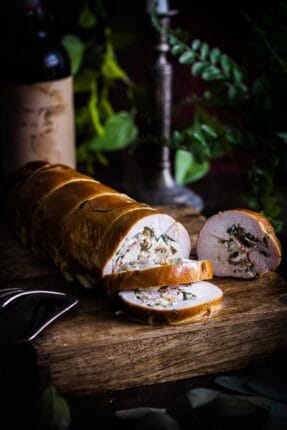
Smoked Turkey Roulade (Turchetta) with Coppa and Herbs
Equipment
- Lidded grill
- Large pot For the brine
- Food-safe container Optional choice for brining
- Vacuum sealer bags Second optional choice for brining
- Vacuum sealer Second optional choice for brining
- Wire rack For drying
- Cutting board
- Butcher's twine
- Pellet smoker tube (optional)
Ingredients
For the turkey roulade and smoke
- 1 boneless turkey breast one whole breast piece that can be butterflied; size and thickness affect cooking time
- 8 slices coppa or pancetta for the filling
- 1 handful shredded mozzarella for the filling
- smoking wood chunks or hardwood pellets as needed for your grill; use a restrained amount
For the brine
- 1 tbsp oil to cook the aromatics briefly
- 2 onions roughly chopped
- 2 whole star anise
- 5 sprigs rosemary for the brine
- 2 bay leaves
- 5 sprigs thyme for the brine
- 20 sage leaves for the brine
- 20 lemon verbena leaves optional; for the brine
- 1 liter water use more if needed to submerge the breast, keeping the same salt-to-water ratio
- 60 g salt weigh the salt; 60 g per liter water (about 2.1 oz per 4 1/4 US cups); volume measures vary by salt type
For the herb filling
- 2 tbsp lemon-infused olive oil
- 1/2 tbsp whole black peppercorns
- 1 lemon finely grate the zest only
- 1 clove garlic or more to taste
- 1 handful sage leaves for the filling
- thyme a few sprigs, for the filling
- rosemary a few sprigs, for the filling
- 1 red chile optional
- 1/2 handful lemon verbena leaves optional
Instructions
Brine and prepare the turkey
- Heat the oil in a large pot. Add the roughly chopped onions, star anise, rosemary, bay, thyme, sage, and optional lemon verbena. Cook for about 5 minutes. Pour in the water, add the salt (60 g per liter; about 2.1 oz per 4¼ US cups), and simmer for about 5 minutes until the salt dissolves. Cool the brine rapidly and completely, for example in an ice bath, before adding the raw turkey.
- Place the turkey breast in a food-safe covered container or a suitable vacuum bag. Pour the cold brine over it and make sure the turkey remains submerged. If you need more brine, keep the ratio at 60 g salt for every liter of water. Cover or seal and refrigerate for 8–12 hours. If vacuum sealing liquid, follow the instructions for your sealer.
- Lift the turkey from the brine and pat dry. With a chef’s knife, butterfly the breast into a reasonably even sheet. Set it on a rack, smooth uncut side up, and let the surface dry for about 2 hours in the refrigerator. Keep the raw turkey refrigerated during this step.
Fill and roll
- Crush the garlic, black peppercorns, and lemon zest with the lemon-infused oil in a mortar and pestle. Add the red chile if using. Finely chop the sage, thyme, rosemary, and optional lemon verbena; mix into the paste. Do not add more salt: the turkey is already brined and the coppa or pancetta is salty.
- Spread the paste over the cut side of the turkey. Arrange the coppa or pancetta over it and scatter on the mozzarella. Roll the breast tightly and secure it with butcher’s twine. Refrigerate the roulade until the grill is ready.
Choose one cooking method
- Set up your grill for indirect cooking at 225–250°F (107–120°C) and keep it steady in that range. Add a little smoking wood or use a compatible pellet smoker tube. Cook the roulade with the lid closed. Allow roughly 3 hours as a planning estimate, but let the internal temperature decide: before removing it from the grill, both the thickest part of the turkey and the center of the filling must reach at least 165°F (74°C).
- Instead of the slow-smoked step above, roast the roulade over indirect heat at about 350°F (180°C), adding smoke only if you wish and if your setup permits it. About 1½ hours is a rough planning estimate. As with the slow option, cook until both the thickest part of the turkey and the center of the filling reach at least 165°F (74°C).
- Rest the finished turchetta for about 15 minutes under loosely tented foil. Slice into generous rounds and serve with roasted Italian vegetables and potatoes, or another side you enjoy.
Notes
Frequently asked questions about turchetta
What internal temperature does a stuffed turkey roulade need?
Use a clean thermometer to check both the thickest part of the turkey and the center of the filling. For this stuffed roulade, cook both to at least 165°F (74°C) before removing it from the grill. Don’t rely on a reading near the surface: the middle can lag behind.
How long should I brine the turkey breast?
For this recipe, 8–12 hours in the refrigerator in a fully cooled brine containing 60 g salt per liter of water. Lift the breast out and pat it dry. Keep the turkey cold throughout the brining and drying steps.
Can I make turchetta on a kamado or pellet grill?
Yes. Cook indirectly: fit the heat deflector in a kamado, or use your pellet grill’s normal indirect setup. Adjust the smoke to the cooking temperature and let the thermometer, rather than the clock, tell you when it’s done. For a closer look at that setup, see my guide to direct and indirect grilling.


