
In Belgium, steak frites needs little introduction. But this version begins before the fire is even lit, with a local breed, a conversation at the butcher counter and a bone-in steak that deserves more than a rushed trip over hot coals. This reverse seared bone-in ribeye, or côte à l’os as we call it, cooks gently in wood smoke before meeting blazing-hot cast iron. Add homemade Béarnaise and crisp fries, and one of Belgium’s simplest classics becomes a meal worth slowing down for.
Disclosure: This recipe was originally created as part of a paid partnership with Lekker van bij ons. All opinions are personal and honest. This post may also contain affiliate links.
☰ On this page
Red Cattle of West Flanders: local beef with a story
When I asked my butcher for a beautiful côte à l’os from the Red Cattle of West Flanders, another customer wanted to know where it came from. The butcher simply pointed toward the pasture beside his shop, where the animal had grazed. That direct connection between an animal, a farmer, a butcher and the food on our plate can feel uncomfortable, but I believe meat lovers should be willing to acknowledge it.
Respecting meat starts with asking how it was raised and choosing quality over quantity whenever possible. It ends with cooking the cut carefully enough to do justice to the work behind it. That is why this recipe is as much about provenance as it is about fire.
Red Cattle of West Flanders descend from the historic red cattle of Cassel, a region spanning French and Belgian Flanders. The breed became endangered around the turn of the century, but renewed interest in local cattle helped revive it. In 2012, its meat was officially recognized as a Flemish traditional regional product.
The official specification describes dark-red, fine-grained beef with light marbling, an intense flavor and a creamy quality from its fat. Qualifying cattle are born, raised and finished in West Flanders and receive predominantly local grass or grassland products. You can read more at the official Flemish regional-product register.
What is côte à l’os?
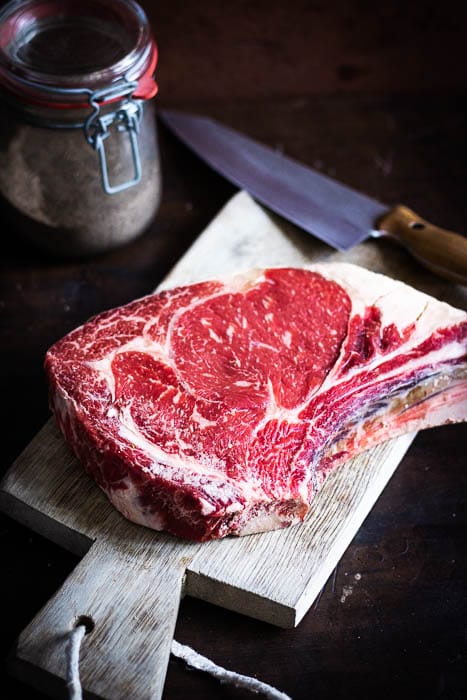
Butchery names change from one country, and sometimes one butcher, to the next. In Belgium and France, côte à l’os generally refers to a thick beef rib steak served on the bone. American readers will recognize it most easily as a thick bone-in ribeye or cowboy steak.
The central eye is tender, while the outer spinalis, often called the ribeye cap, carries generous marbling and beefy flavor. The bone makes the cut impressive to serve, but thickness matters more than the bone for this cooking method. Ask for a steak at least 2 inches (5 cm) thick so the gentle first stage can create an evenly cooked interior before the final sear.
You may also hear côte de boeuf. In practice, those terms overlap considerably and regional cutting traditions are not completely standardized. When ordering, describe the thickness, weight and number of ribs you want instead of relying on the name alone.
Heritage alternatives around the world
If you cannot find West Flemish Red beef locally, look for heritage or dual-purpose cattle breeds raised with a similar focus on grass feeding and proper aging. In Europe, breeds like the French Normande, Aubrac, or Salers, as well as Spanish Galician Blond (Rubia Gallega), offer a similarly rich, deep beef character with exceptional fat quality.
In the US and UK, seek out grass-fed or grass-finished Angus, Hereford, or Devon beef from small local farms. Rather than hunting for a specific label, ask your butcher for a thick, bone-in ribeye from a pasture-raised animal with good natural marbling, that balance of grass-fed intensity and subtle fat is what makes this cut shine over the fire.
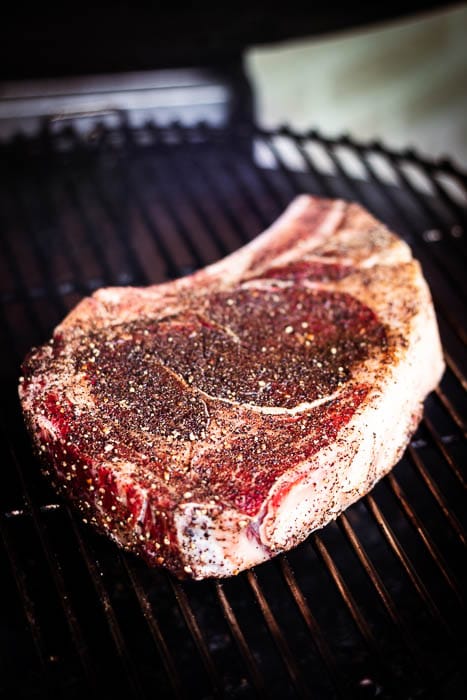
Why reverse sear a bone-in ribeye?
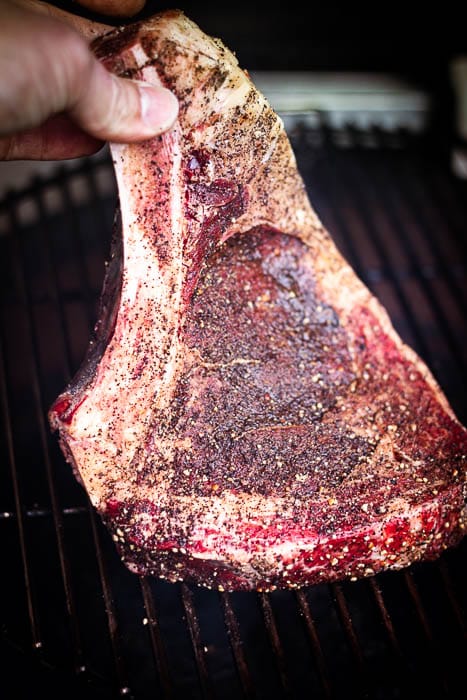
A traditional steak often meets high heat first and then finishes more gently. A reverse sear flips that sequence. The steak cooks over low indirect heat until it is a couple of degrees (°C) below the desired final temperature, rests briefly while the grill or cast iron becomes extremely hot, and then receives a short, fierce sear.
The gentle stage creates a more even pink interior with a thinner gray band near the surface. It also dries the outside, giving you a better starting point for browning. At these steak temperatures, the method does not meaningfully break down collagen as a long barbecue cook would; its real strengths are temperature control, light smoke, surface drying and gradual fat rendering.
This recipe uses the two-zone logic explained in my direct vs. indirect grilling guide: indirect heat first, then intense direct heat for the crust. The initial stage resembles low-and-slow BBQ in temperature control, but a steak is removed long before collagen conversion becomes the goal.
Extra for pellet users: A pellet smoker is convenient for holding the low first-stage temperature and adding clean wood smoke. Its standard indirect design will not always produce the strongest crust, which is why I finish on thoroughly preheated cast iron. My pellet grill guide explains that tradeoff in more detail. If your cooker produces a very mild smoke profile, an optional stainless pellet smoker tube like this one on Amazon can add a little more hickory smoke during the first stage.
How to get a better crust on reverse-seared steak
It took me longer than I care to admit to produce a reverse-seared crust I was genuinely happy with. I once relied on a thin coat of mayonnaise to encourage browning. That method can work, but it is unnecessary once you control the two factors that matter most: surface dryness and stored heat.
1. Dry-brine and dry the surface
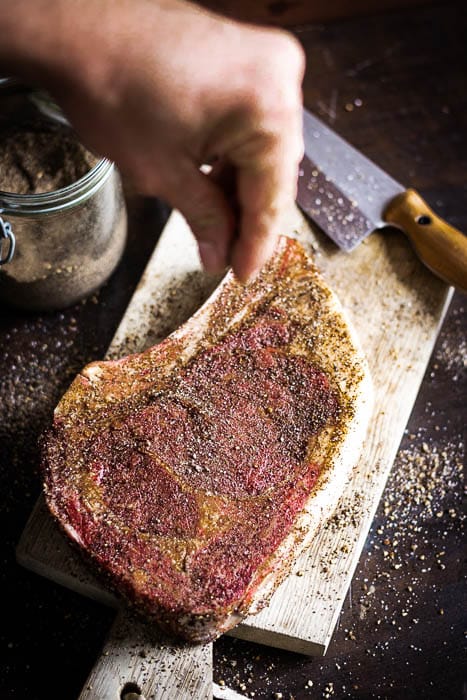
Season the steak generously with salt and leave it uncovered in the refrigerator for at least one hour. Longer is even better when your planning allows it. The salt seasons beyond the surface, while the circulating cold air removes moisture. After the indirect stage, blot away any visible moisture again before searing.
2. Preheat cast iron thoroughly
A blazing charcoal fire can create flare-ups when ribeye fat drips onto the coals. Cast iron absorbs and stores heat while shielding the fire from much of that fat. Give a heavy griddle or skillet about 15–20 minutes to preheat; five minutes is rarely enough for the metal to heat evenly through its mass. When looking for a heavy cast-iron skillet you might want to take a look on Amazon (link).
3. Sear briefly and keep moving
Once the cast iron is smoking hot, sear the steak for roughly 45–90 seconds per side, checking the color rather than blindly following the clock. Sear the fatty edge as well. If the surface begins turning black instead of deep brown, move it: burned fat tastes bitter, while the Maillard reaction creates the roasted, savory crust you want.

Reverse sear temperature for bone-in ribeye
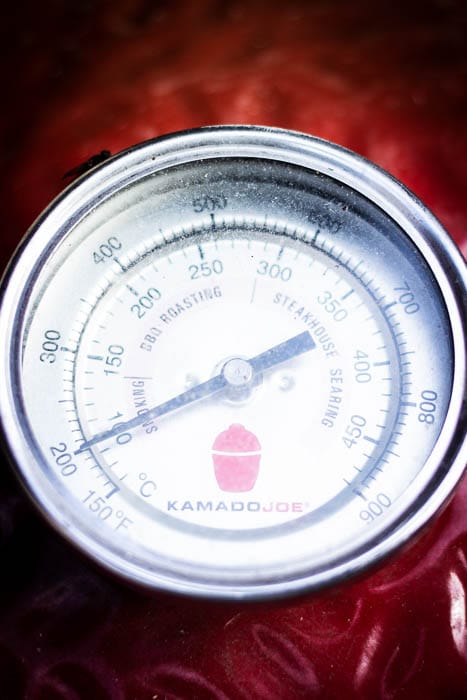
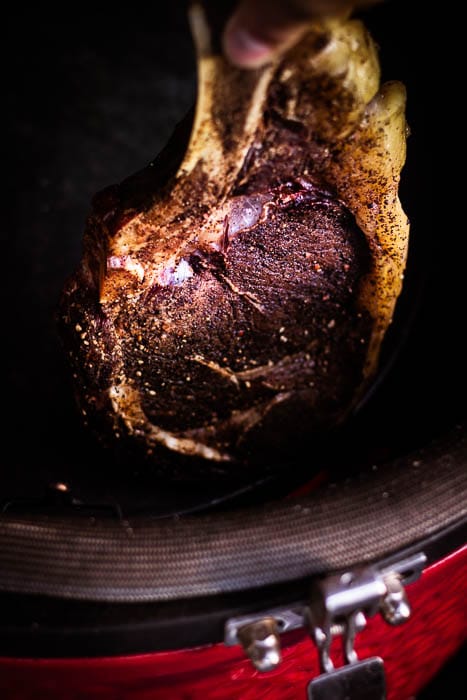
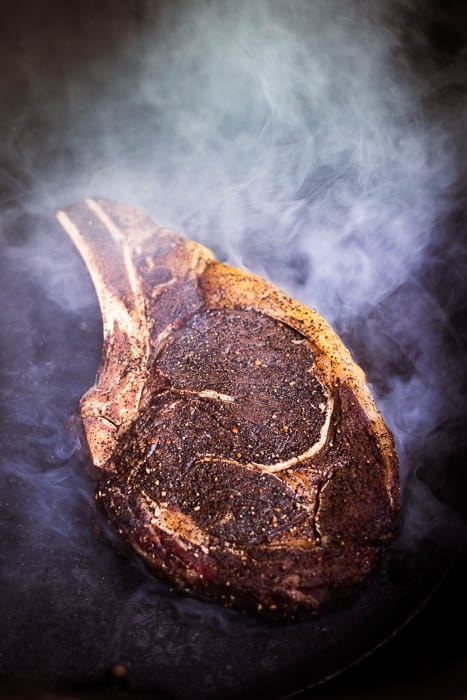
For my preferred medium-rare result, I smoke the steak at 167–212°F (75–100°C) and remove it from the indirect zone at about 111°F (44°C). The final sear and carryover heat usually bring the center into the 129–135°F (52–57°C) range. Thickness, cooker temperature and searing time all affect that rise, so measure before, during and immediately after searing.
A leave-in probe makes the first stage easy; a fast instant-read thermometer is better during the sear. Insert the probe into the thickest meat, away from the bone and large seams of fat. You can find a fast instant read thermometer over here! I have some good experience with the inkbird IHT-IP.
Food-safety note: Medium-rare is a culinary doneness preference below official U.S. consumer guidance. The USDA recommends cooking whole beef steaks to 145°F (63°C) followed by at least a three-minute rest. Use that target for higher-risk guests or whenever food safety takes priority.
Steak temperature guide
| 120–125°F (49–52°C) | Rare. Cool-red to warm-red center; below USDA consumer guidance. |
| 129–135°F (54–57°C) | Medium-rare. Warm red center; my preferred texture for this cut, but below USDA consumer guidance. |
| 135–145°F (57–63°C) | Medium. Pink center and firmer texture. Ideal for more marbled steaks to render the internal fat. |
| 145°F (63°C) | USDA minimum for whole beef steaks, followed by a rest of at least three minutes. |
Why Béarnaise belongs with Belgian steak frites
The steak may carry the smoke and crust, but Béarnaise completes the Belgian brasserie experience. This warm emulsion starts with a sharp tarragon gastrique made from white wine, tarragon vinegar, shallots and peppercorns. Egg yolks give it structure; clarified butter makes it rich; lemon and fresh tarragon keep that richness in check.
Make the gastrique ahead if you like, but whisk the final sauce shortly before serving. Work over gentle heat and add the clarified butter gradually. If the yolks become too hot or the butter goes in too quickly, the sauce can split. The recipe card below gives the complete method.


Local beef, a controlled fire and a proper Belgian sauce
A reverse sear is not complicated once you understand what each stage must achieve. The indirect stage gives you control and dries the surface; the final burst of stored heat builds the crust. Starting with carefully raised local beef makes the cook more meaningful, while Béarnaise and fries keep the result firmly rooted in Belgian food culture.
Have you tried a reverse-seared bone-in ribeye on your grill? Share your result in the comments or tag The BBQ Bastard on social media. I would especially like to know which local cattle breeds are worth seeking out where you live.

Reverse-Seared bone-In Ribeye with Béarnaise
Equipment
- Pellet smoker or lidded grill with an indirect setup
- Small saucepans
- Fine-mesh sieve
- Whisk
Ingredients
Bone-In Ribeye
- 1.2 kg bone-in ribeye steak côte à l’os; at least 5 cm or 2 inches thick
- kosher salt and black pepper to taste; season the steak generously with salt
Tarragon Gastrique
- 50 ml dry white wine
- 50 ml tarragon vinegar
- 50 ml water
- 1 bouquet garni
- 3 shallots finely chopped
- 10 black peppercorns lightly crushed
Béarnaise Sauce
- 250 g unsalted butter clarified
- 3 egg yolks use pasteurized eggs when appropriate
- 45 ml prepared tarragon gastrique approximately 3 tablespoons; add more to taste
- 0.5 lemon juice to taste
- 3 sprigs fresh tarragon leaves finely chopped
- salt and black pepper to taste
Instructions
Make the Tarragon Gastrique
- Combine the tarragon vinegar, white wine and water in a saucepan and heat to just below a boil.
- Add the chopped shallots, crushed peppercorns and bouquet garni. Simmer gently until approximately one-third of the original liquid remains.
- Strain out the solids and reserve the gastrique. It can be prepared ahead and refrigerated.
Dry-Brine and Smoke the Steak
- Season the bone-in ribeye generously with salt and black pepper. Place it uncovered on a rack in the refrigerator for at least 1 hour.
- Set up the pellet smoker or grill for indirect cooking at 167-212°F (75-100°C). Add a modest amount of hickory smoke if desired and wait until the smoke is thin and clean.
- Place the cold steak over indirect heat and cook until the center reaches approximately 111°F (44°C) for the author’s preferred medium-rare finish.
Preheat and Sear
- Remove the steak and blot away any visible surface moisture. Let it rest loosely covered while the cast iron preheats over the highest available heat for 15-20 minutes.
- Sear the steak on the smoking-hot cast iron for approximately 45-90 seconds per side, plus the fatty edge, until a deep-brown crust forms. Check the internal temperature frequently and avoid burning the fat.
- For the author’s preferred medium-rare result, stop at approximately 129-135°F (54-57°C). The USDA consumer minimum for whole beef steaks is 145°F (63°C), followed by at least a 3-minute rest.
Finish the Béarnaise
- Melt the butter gently, skim away the milk solids and reserve the warm clarified butter.
- Whisk the egg yolks with 3 tablespoons (45 ml) of gastrique in a small saucepan or heatproof bowl. Warm very gently while whisking constantly until pale, foamy and thick enough for the whisk to leave visible trails. Do not scramble the yolks.
- Remove from direct heat. Add the warm clarified butter gradually while whisking continuously until the sauce is light, smooth and emulsified.
- Season with lemon juice, salt, black pepper and more gastrique if desired. Fold in the chopped fresh tarragon.
Serve
- Slice the steak against the grain and serve with the warm Béarnaise and freshly cooked fries.
Notes
Nutrition
Frequently asked questions about reverse seared bone-in ribeye
What is the American equivalent of côte à l’os?
A Belgian or French côte à l’os is best understood as a thick bone-in rib steak. In American butcher terminology, ask for a thick bone-in ribeye or cowboy steak. Cutting conventions vary, so specify that you want a steak at least 2 inches (5 cm) thick.
What temperature should I use to reverse sear a ribeye?
Cook the steak indirectly at 167–212°F (75–100°C). For a medium-rare culinary result, I remove it at approximately 111°F (44°C), then sear until it reaches about 129–135°F (54–57°C). The USDA consumer minimum is 145°F (63°C) followed by a three-minute rest.
Why is reverse searing good for thick steaks?
The low-temperature first stage heats a thick steak more evenly and dries its exterior. That gives you greater control over doneness and a drier surface that browns quickly during the final high-heat sear.
Do you need to bring steak to room temperature before reverse searing?
No. A thick steak warms very slowly at room temperature, while the uncovered refrigerator rest helps dry the surface. Season it in advance, refrigerate it uncovered and place it on the cooker straight from the refrigerator.
How do I get a dark crust without burning the steak?
Dry the steak thoroughly and preheat heavy cast iron for 15–20 minutes. Sear for roughly 45–90 seconds per side while watching the color. Move or flip the steak when the crust becomes deep brown; do not wait for the fat to turn bitter black.
Can I reverse sear steak on a pellet grill?
Yes. A pellet grill is excellent for the controlled, smoky first stage. Unless your model has effective direct-flame access, finish the steak on a thoroughly preheated cast-iron griddle, skillet or separate high-heat grill for a stronger crust.


