
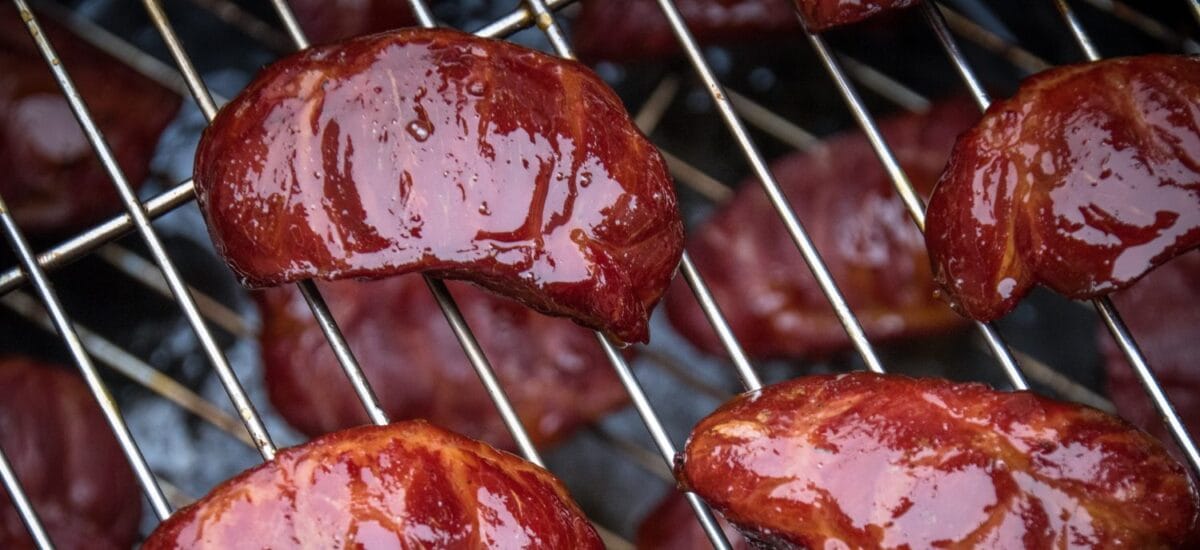
I rarely call my own food a signature dish, since I believe that is usually for guests to decide. But these smoked pork cheeks with whisky glaze earned every bit of it. Starting with clean smoke, turning melt-in-your-mouth tender in a whisky-apple bath, and finishing under layers of sticky glaze, they hit every note of the BBQ style I live for: bold, unapologetically slow-cooked, and just sharp enough to surprise you when tucked into a taco with crisp fennel slaw.
This post may contain affiliate links. If you buy through one of them, I may receive a small commission at no extra cost to you. All opinions are personal and honest.
Smoked pork cheeks: the quick answer
To get wonderfully juicy pork cheeks, you can adapt the classic 3-2-1 method like used for ribs, though it is not a literal six-hour cook. Pork cheeks are much smaller, so the working rhythm is closer to 1.5-1-0.75, yet the staged approach remains the same: smoke, covered braise, then glaze.
Brine the pork cheeks for 4–6 hours, dry them well and smoke them indirectly at 230°F (110°C) for about 90 minutes. Cover them with whisky, apple juice and herbs for another hour, then cook uncovered for roughly 45 minutes while brushing on a reduced honey-whisky glaze. They are ready when a probe slides in with almost no resistance, usually around 198–205°F (92–96°C).
| Phase | Time and temperature | What you are looking for |
|---|---|---|
| Brine | 4–6 hours, refrigerated | Even seasoning and a little extra margin against drying out. |
| Dry | 1–2 hours, uncovered in the refrigerator | A dry, slightly tacky surface that takes smoke well. |
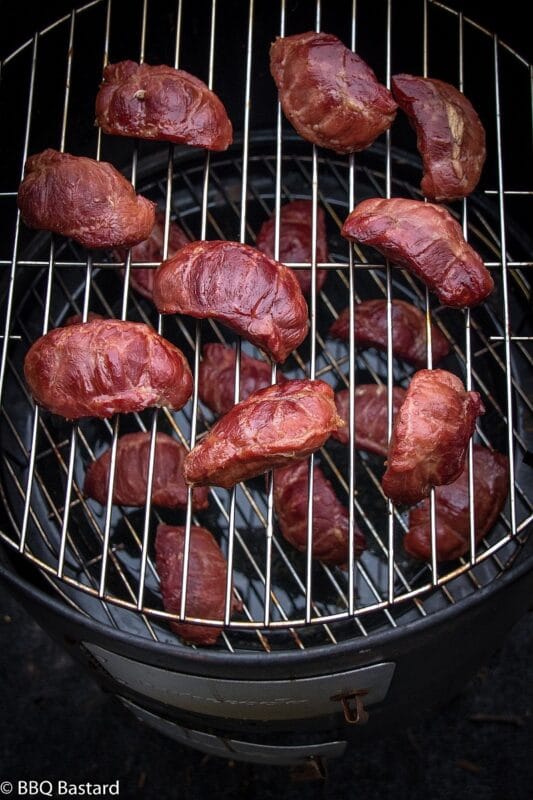
| Smoke | 90 minutes at 230°F (110°C) | A mahogany surface and clean, noticeable smoke flavor. |
| Covered braise | About 60 minutes at 230°F (110°C) | Connective tissue begins to soften without washing away the bark. |
| Glaze | About 45 minutes, uncovered | Glossy, tacky glaze and probe-tender meat at roughly 198–205°F (92–96°C). |
Why pork cheeks are made for low and slow BBQ
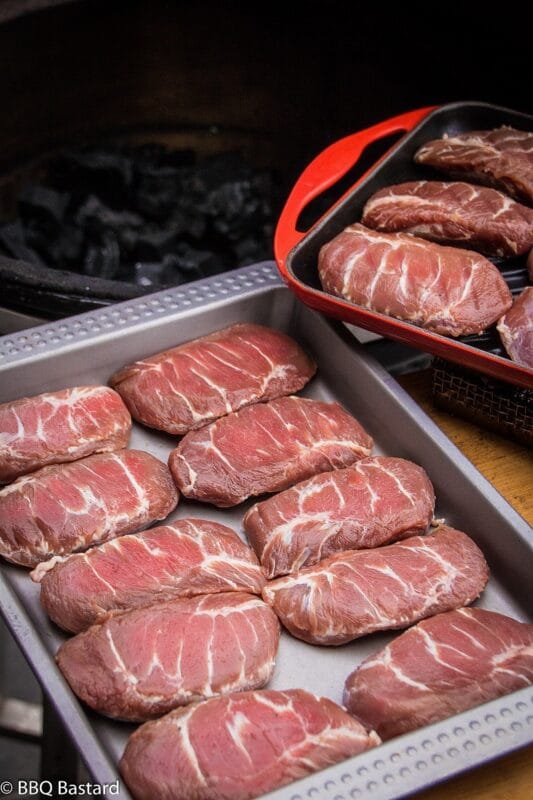
Pork cheeks are small but hard-working muscles with plenty of connective tissue. Cook them quickly and they can be stubborn. Give them gentle heat and time, and that collagen gradually turns to gelatin. The result has some of the richness of ribs or pork shoulder, only in compact, boneless portions with a wonderfully meaty bite.
My first experiments with cheeks were closer to Belgian stew. They were good, but smoke was the missing layer. That discovery eventually turned this recipe into one of the dishes I am happiest to put in front of friends. If you are new to this style of cooking, my low and slow BBQ guide explains heat control, clean smoke and why tenderness matters more than a rigid clock.
The 3-2-1 method—adapted for pork cheeks
The classic 3-2-1 method was developed for large racks of spare ribs: three hours in smoke, two hours wrapped, and one hour to set the sauce. Copy that exact timing onto individual pork cheeks, and you risk taking them far beyond tender. I borrow the logic, not the stopwatch. Each phase still has a job, but the timeline is shortened to suit the cut.
The first phase builds smoke and color. The covered phase creates a moist environment that speeds up tenderizing. The final uncovered phase concentrates and sets the glaze. For a deeper look at why the traditional method needs adjusting to the meat in front of you, see my 3-2-1 ribs guide or compare the five ways to cook BBQ ribs.
Timing is a framework, not a finish line. Pork cheeks vary in size and thickness. Use the times to plan your cook, but let color, tenderness and the probe test decide when you move on to the next step.
1. Wet-brine and dry the pork cheeks
I used to dry-brine these cheeks, but I now prefer using a milder wet brine made with 40 g salt per liter of water. It seasons the small pieces evenly and gives you a little more margin during the long cook. Four to six hours in the refrigerator is enough. The brine does not melt the collagen, that happens during cooking itself, but it does help the meat hold on to moisture and seasons it beyond the surface.
After brining, give the cheeks a brief rinse, pat them thoroughly dry and leave them uncovered on a rack in the refrigerator for 1–2 hours. That final drying step matters: the surface takes on smoke more cleanly and develops a better color than wet meat would.
Keep the brine cold. Cool it completely before adding the pork, keep the container covered at 40°F (4°C) or colder and discard the used brine afterwards.
2. Smoke the pork cheeks at 230°F
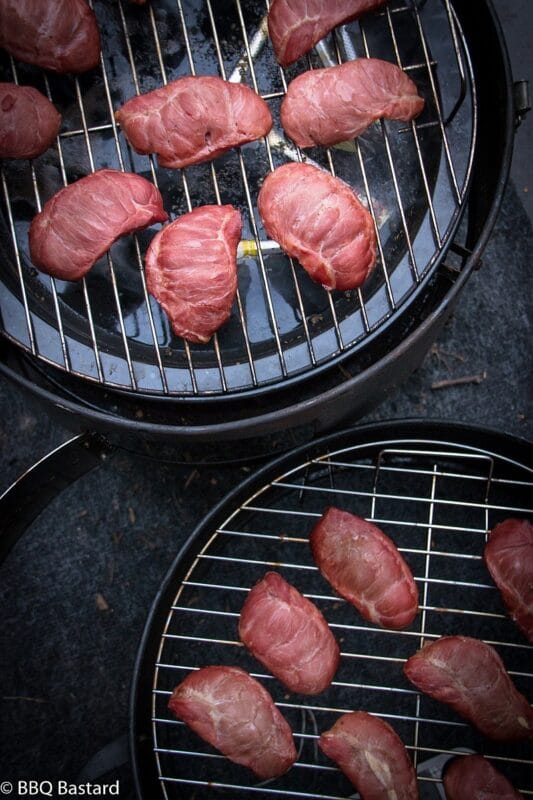
Set up the BBQ for indirect heat at 230°F (110°C). Add one or two small chunks of apple or cherry wood (Amazon) for a soft, slightly sweet smoke. Whisky-barrel oak (also available on Amazon) also works beautifully with the glaze, but use it with restraint: the cheeks are small and can pick up more smoke than you think.
Smoke the cheeks for about 90 minutes, with the lid closed, until the surface has a deep reddish-brown color. I sometimes fill the water pan with lime tea because it fits the fresh note I want in the finished dish. Though it’s more show/in the mind than proven to be working. Plain hot water works just as well for humidity and temperature stability; do not expect water-pan liquid to season the meat as strongly as smoke, brine or glaze. Read more about when it helps in my guide to using a water pan in a smoker.
3. Cover with whisky, apple juice and herbs
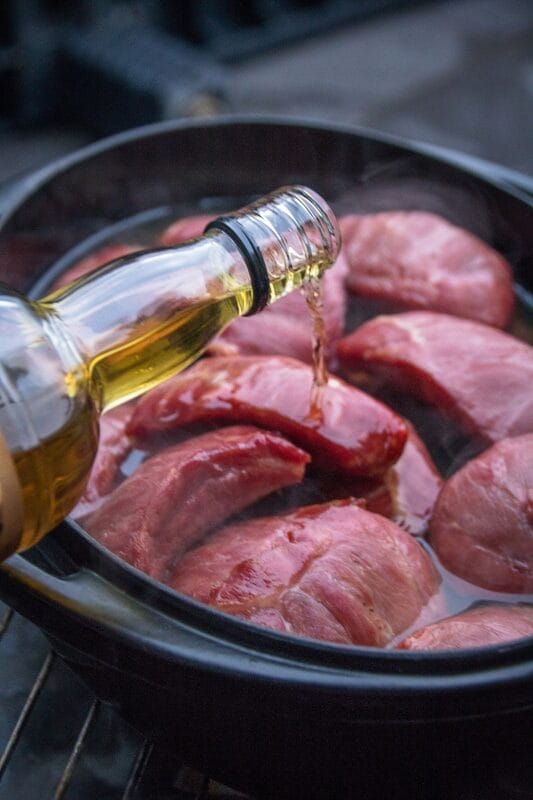
Once the cheeks have taken on enough smoke and color, place them in a cast-iron roasting pan. Add whisky, apple juice and a bouquet garni so the liquid comes roughly one-third of the way up the meat. They should not be completely submerged. Cover the pan tightly with foil and return it to the indirect side of the BBQ for about one hour at 230°F (110°C).
This is the tenderizing phase. The covered pan limits evaporation and lets the meat slowly soften in an aromatic, humid environment. Check after about 45 minutes if your cheeks are particularly small. Once they have softened noticeably, lift them from the pan and save every drop of the cooking liquid. That concentrated mixture forms the backbone of the glaze.
4. Reduce the whisky glaze and cook until probe-tender
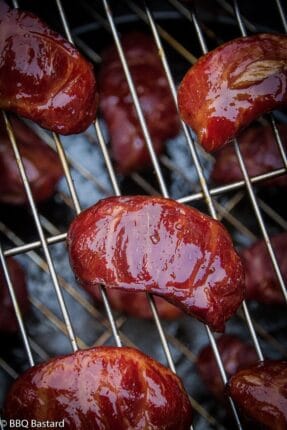
Strain the reserved liquid into a saucepan (like this one on Amazon). Add honey and apple cider vinegar, then reduce it gently until it lightly coats the back of a spoon. Taste before you start brushing: more honey rounds out a sharp glaze, while a touch more vinegar keeps sweetness and smoke from becoming heavy.
Keep the pork cheeks uncovered on the BBQ for roughly 45 minutes of low-heat finishing. Brush on a thin layer of glaze every 15 minutes. You do not need more smoking wood now. If the glaze still looks pale near the end, raise the heat briefly and watch closely. Honey can move from caramelized to burnt in a hurry. A very light spray of white wine or apple cider vinegar just before serving wakes everything up.
Hoe weet je wanneer je varkenswangen klaar zijn?
| Check | Ready | Not ready yet |
|---|---|---|
| Probe feel | A thin probe slides into the thickest cheek with almost no resistance. | The probe still meets a firm or rubbery center. |
| Internal temperature | Often around 198–205°F (92–96°C). | Below that range can still be tough, but temperature alone does not decide tenderness. |
| Glaze | Glossy and tacky, with distinct layers. | Watery means it needs reduction; black edges mean the heat or sugar is too aggressive. |

How to serve whisky-glazed pork cheeks
I prefer to slice the cheeks rather than pull them. You keep more of their structural integrity, beautifully expose the juicy interior, and get a touch of that sticky glaze on every single slice.
Tuck them into warm tortillas with a crisp apple-fennel slaw or a sharp cabbage slaw. The crunch, acidity, and fresh anise note cut straight through the rich, smoky meat. Soft brioche rolls work wonders too, but keep the garnish bright rather than adding another heavy sauce. If you are serving a larger low-and-slow spread, let these glazed pork cheeks take center stage alongside something light and refreshing.
For smaller BBQ bites, tuck a few slices of glazed pork cheek and a little apple-fennel slaw into soft homemade bao buns. Go easy on the extra glaze so the buns stay easy to eat. Want to make the bao buns the main event? My pork belly bao buns with gochujang glaze use a different cut and sauce, with quick-pickled cucumber to balance the rich meat.
Did you try these whisky-glazed pork cheeks?
★★★★★
Leave a star rating and share your thoughts in the comments below! Which whisky did you choose for the glaze, and did you serve them sliced in warm tortillas or straight off the cutting board? Your feedback helps fellow pitmasters on their outdoor cooking journey.
Follow The BBQ Bastard on:
Recipe: smoked pork cheeks with whisky glaze
Smoked Pork Cheek Wraps with Fennel Apple Slaw
Equipment
- Lidded BBQ / grill with indirect setup
Ingredients
Pork cheeks and brine
- 600 g Fresh pork cheeks about 1 lb 5 oz; trimmed of tough membrane
- 1 liter Water about 4 1/4 US cups
- 40 g Salt about 2 US tablespoons plus 1 teaspoon, depending on crystal size
- 1 Star anise
- 1 Bay leaf
- 1/2 tsp Black peppercorns
- 2 Juniper berries lightly crushed
- 1/2 tsp Smoked chili powder
Whisky-apple cooking liquid and glaze
- 75 ml Whisky about 1/3 US cup
- 200 ml Unsweetened apple juice about 3/4 US cup plus 1 tablespoon
- 3 sprigs Fresh thyme
- 2 tbsp Honey add gradually and adjust to taste
- 1 tbsp Apple cider vinegar plus more to balance the glaze if needed
Fennel-apple slaw and wraps
- 1 Fennel bulb very thinly sliced
- 1 Crisp apple cut into thin matchsticks or slices
- Olive oil to taste
- Apple cider vinegar to taste
- Honey to taste
- Mustard to taste
- Salt and black pepper to taste
- Soft wraps enough for serving
- Pine nuts toasted; as needed
- Raisins as needed
Instructions
Brine and dry
- Make the brine: Combine the water, salt, star anise, bay leaf, peppercorns, juniper and smoked chili powder. Heat just enough to dissolve the salt and release the spices, then cool the brine completely.
- Brine the pork: Submerge the pork cheeks in the cold brine, cover and refrigerate for 4–6 hours.
- Dry: Remove the cheeks from the brine and pat them thoroughly dry. Place them uncovered on a rack in the refrigerator for 1–2 hours.
Smoke, cover and glaze
- Prepare the BBQ: Set up a lidded BBQ or smoker for indirect cooking at 230°F (110°C). Add one small chunk of apple, cherry, whisky-barrel oak or hickory when the fire burns cleanly.
- Smoke: Place the pork cheeks in the indirect zone and smoke for about 90 minutes, until they have taken on a deep color. They will not yet be tender.
- Cook covered: Transfer the cheeks to a cast-iron pan or heatproof tray. Add the whisky, apple juice and thyme. The meat should sit partly, not completely, in the liquid. Cover tightly and cook for another 60–90 minutes.
- Make the glaze: Remove the cheeks and reserve the liquid. Simmer the liquid in a saucepan with the honey and cider vinegar until it lightly coats a spoon. Taste and balance with extra honey or vinegar only if needed.
- Glaze and finish: Return the cheeks to the indirect zone uncovered. Brush them with glaze every 10–15 minutes for 30–45 minutes. They are ready when a probe enters with almost no resistance, usually around 195–205°F (91–96°C).
Make the slaw and assemble
- Make the slaw: Combine the thinly sliced fennel and apple. Dress with olive oil, cider vinegar, mustard, honey, salt and pepper to taste. Keep the slaw fresh and tangy rather than sweet.
- Prepare the toppings: Toast the pine nuts in a dry pan. Warm the wraps briefly over direct heat until flexible and lightly marked.
- Assemble: Add fennel-apple slaw to each wrap, followed by sliced or gently pulled pork cheek. Finish with a little glaze, raisins, toasted pine nuts and fresh apple. Serve immediately.
Notes
Frequently asked questions about smoked pork cheeks
What is the 3-2-1 method for pork cheeks?
The name refers to the three phases of the rib technique: smoke, wrap and glaze. A full 3-2-1 cook is too long for small pork cheeks. This recipe adapts it to about 90 minutes smoking, 60 minutes covered and 45 minutes glazing.
What is the best temperature for smoked pork cheeks?
Cook them indirectly at about 230°F (110°C). For tenderness, they commonly finish around 198–205°F (92–96°C), but use the probe test: a thin thermometer probe should slide into the thickest part with almost no resistance.
Why brine pork cheeks before smoking?
A mild wet brine seasons the small pieces evenly and helps them retain moisture. It does not break down collagen; heat and time do that during the cook. Four to six hours in a cold 4% brine is enough.
Which smoking wood works best with pork cheeks?
Apple and cherry are mild, slightly sweet choices that will not easily overpower the small pieces. Whisky-barrel oak complements the glaze but is more assertive, so use only one or two small chunks and aim for thin, clean smoke.
Can I make these pork cheeks in the oven?
You can complete the covered and glazing phases in an oven at the same temperature. For the characteristic smoke flavor, do the first phase on a lidded BBQ or smoker. An oven-only version will still be tender, but it is a different result.
Can I prepare the pork cheeks ahead?
Yes. Cook them until tender, cool them quickly and refrigerate them covered. Reheat gently with a splash of reserved glaze, then finish uncovered so the surface becomes tacky again. Follow local guidance for chilling and reheating cooked meat.
What should I serve with smoked pork cheeks?
Slice them into warm tortillas with apple-fennel slaw, acidic coleslaw, pickled onion or a crisp salad. The fresh, sour elements balance the rich meat and sweet whisky glaze.